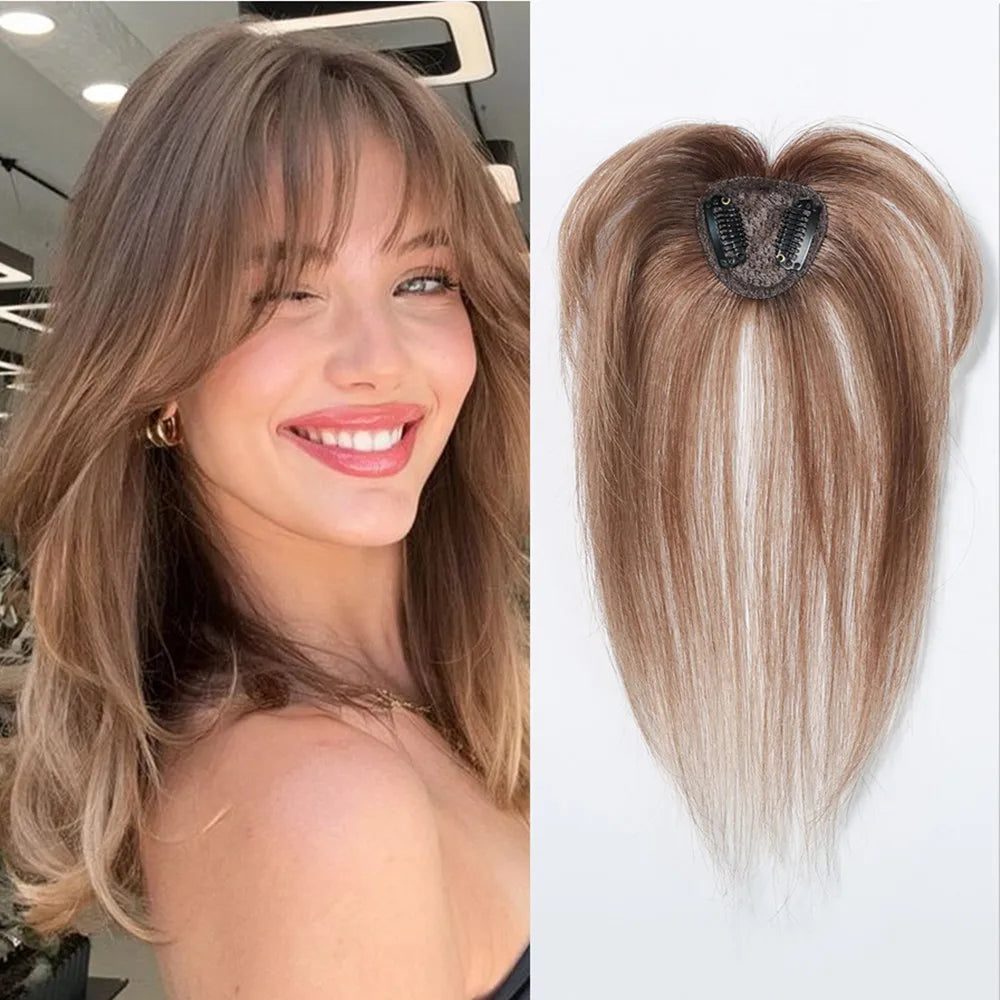

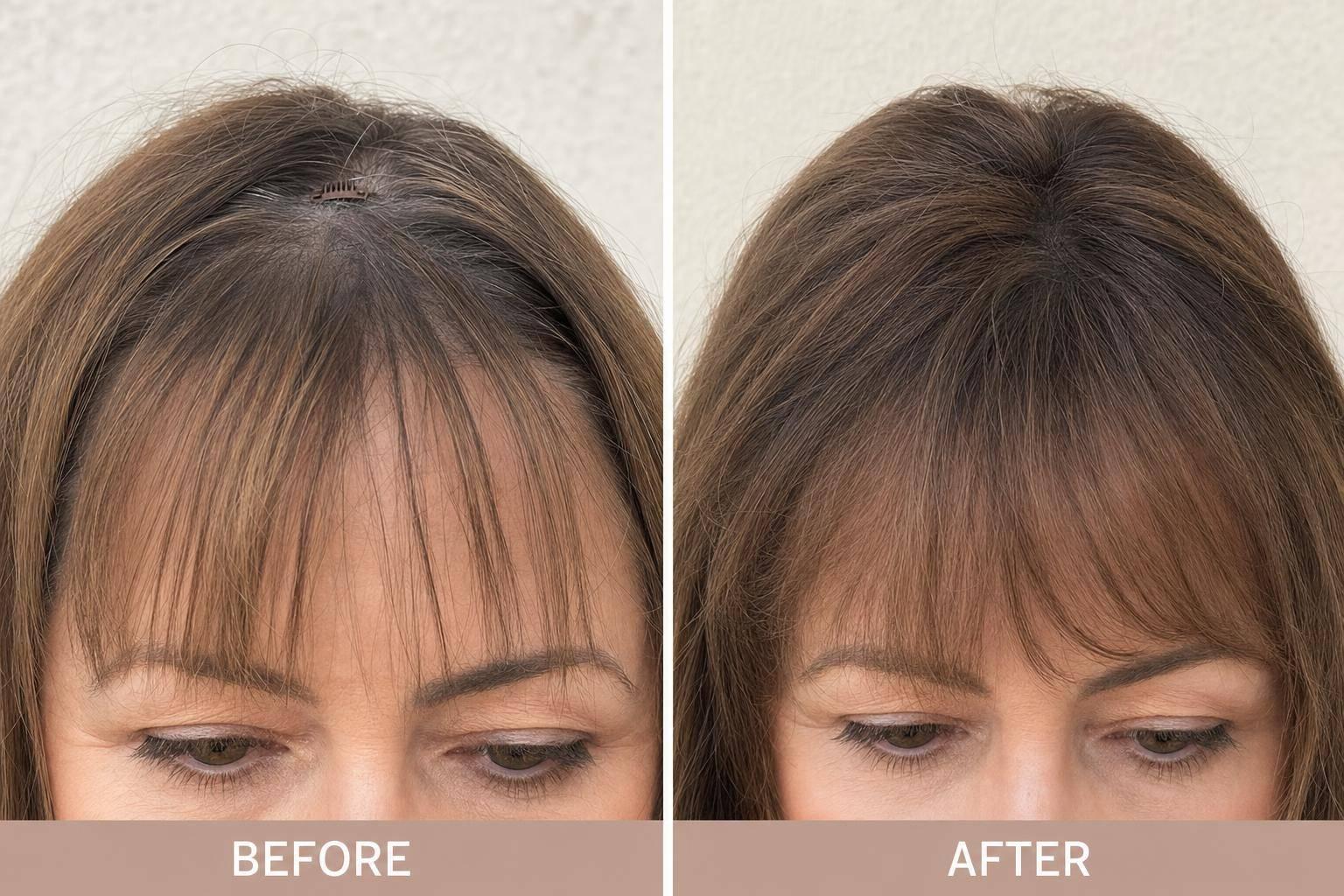
If you can see the clips, your bangs are usually sitting too close to the hairline or your roots are too smooth. In most cases, I’d fix it by moving the section back a few centimetres, adding grip with dry shampoo or light teasing, and checking that the top layer has enough hair to cover the base.
Here’s the short version:
- Placement comes first: if the parting is too close to the front, the clips can show.
- Smooth roots slip: clips hold better on hair with a bit of texture.
- Fine hair has less cover: that makes clips easier to spot.
- Blend matters: density, colour, and styling can make the join stand out.
- If clips still show: a topper with bangs may work better than a clip-in fringe.
A few details matter more than most people think. Even moving the parting back by 2–3 cm can help give the clips more cover. And if your hair is freshly washed, there’s a higher chance of slip because the roots are often too soft and clean for clips to grip well.
If I wanted the fastest fix, I’d do this first:
- Make the parting a few centimetres back from the hairline.
- Tease only where the clips will sit.
- Add a small mist of dry shampoo or texture spray.
- Clip the centre first, then flatten the side clips.
- Check it from the front, side, and in daylight.
If your hair is thin at the front or crown, the issue may not be the fringe piece at all. It may just be that there isn’t enough hair to hide the clips, and that’s when a topper can make more sense.
Below, I’ll go through the main causes and the fixes in a simple order: placement, grip, blend, then backup options for fine hair.
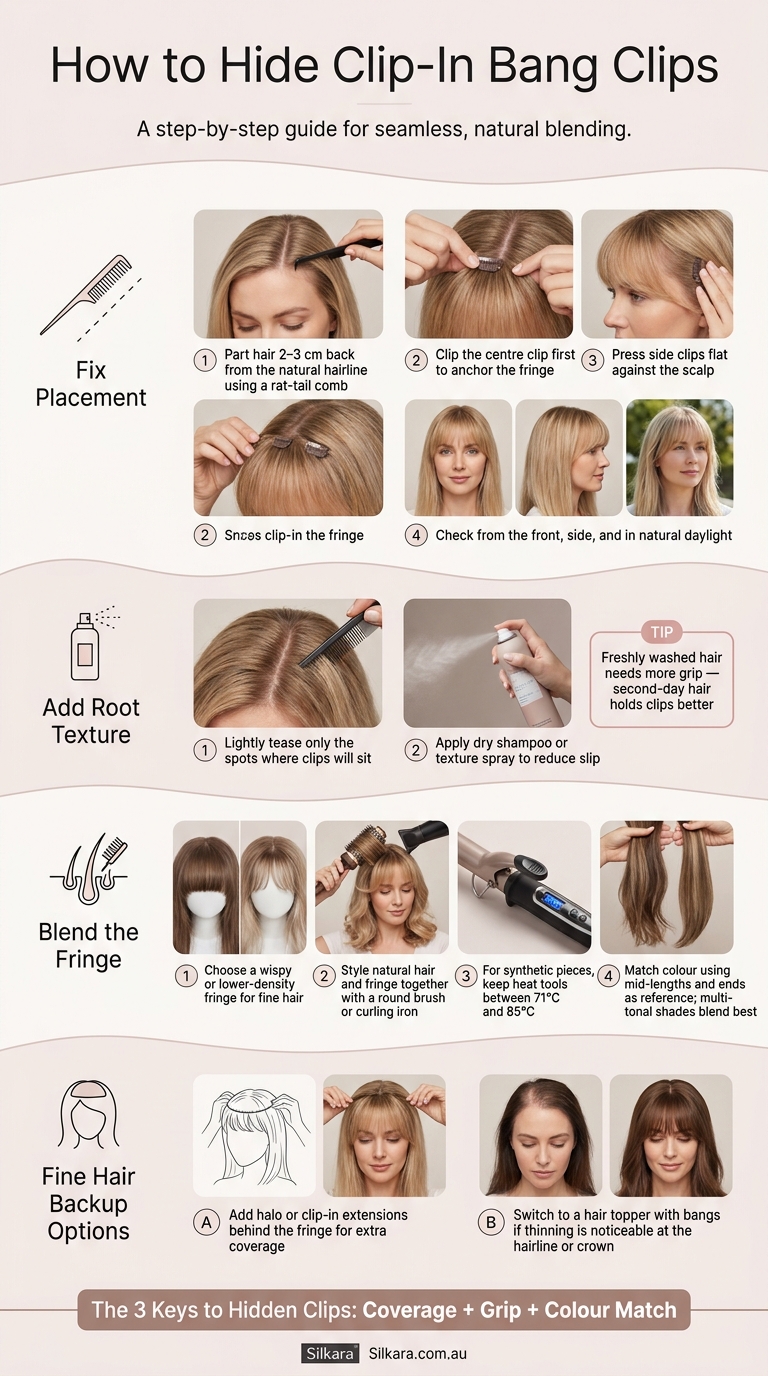
How to Hide Clip-In Bang Clips: Step-by-Step Fix
How to Hide a Clip in Your Bangs : Hair We Go!
sbb-itb-08feb2f
Fix placement first: sectioning and clip position
Once the roots have some grip, the next thing to sort out is placement. This is where a lot of people get tripped up. If your parting sits too close to the hairline, the clips can peek through. Shift it back a few centimetres and the top layer has more hair to cover the base.
Part the hair a few centimetres back from the hairline
Use a rat-tail comb to make a clean horizontal parting a few centimetres behind your natural hairline. This gives the top layer enough coverage to hide the base. Lift that top section and have a look. If you can still see scalp clearly, move the parting a bit lower.
Clip the centre first, then press the side clips flat
Once the parting is set, clip the centre first so the fringe sits where it should. Secure the centre clip first to lock the fringe in place. Then press the side clips flat so the base stays close to the scalp. Flat is the goal.
Check the fringe from the front, side and in natural daylight
Check the fringe from the front, from the side and in natural daylight. If the clips show, tweak the placement.
If the clips still shift, add root texture next.
Add root texture so clips stay in place
Placement on its own won't do much if the roots are too smooth. You need a bit of grip at the root so the clips sit flat and stay put. Once that base has some texture, the clips are easier to hide and less likely to shift.
Light teasing gives clips something to grip
Use a rat-tail comb or teasing brush to lightly tease only the spots where the clips will sit. A few short strokes towards the scalp is enough. You're not trying to build big volume here - just a slightly rough base so the clips don't slide down the hair.
Apply dry texture before clipping in bangs
If your hair is very fine or silky, teasing on its own might not hold. In that case, use a light mist of dry shampoo or a light texture spray at the roots before teasing. That takes away some of the slip and helps the clips fasten better. Keep it targeted to the sections where the clips will attach.
Freshly washed hair usually needs dry shampoo and light teasing. Very fine hair often needs extra texture powder. Silky hair tends to do better with focused teasing. Second-day hair usually holds clips better because natural oils give the roots more grip.
With the base secure, the next step is blending the fringe so the attachment area disappears.
Blend the fringe so the attachment area disappears
Once the placement and root grip are sorted, blending does the last bit of work. Even if the fringe sits in the right spot, the join can still show if the density or colour is off.
Choose a softer fringe when your hair is fine
If the piece is still visible, look at density next. A thick, heavy fringe can stand out on fine hair because your own hair may not be enough to hide the attachment point. A wispy or lower-density fringe sits flatter and makes less of a ridge where the join sits.
A thinner base is also easier to hide, and Silkara Hair's Wispy Full Fringe in human hair is a lower-density option[2].
Style the top layer and sides together
Once density looks right, styling helps pull everything into one shape. Style your natural hair and the fringe together with a round brush or curling iron so both layers move as one, not as two separate sections.
For synthetic fringe pieces, keep your heat tool between 71°C and 85°C to avoid damaging the fibres[1][2]. Human hair pieces can be styled with heat tools and blended with your own hair for a more natural finish.
Use Silkara Hair colour matching for a closer result
If the shape works but the seam still shows, check the colour. Even a small mismatch can create a visible edge where the fringe ends and your natural hair begins.
Silkara Hair offers a free colour match service where you send through a photo and their team recommends the right shade based on your mid-lengths and ends[1][2]. Multi-tonal or gradient shades often blend better than flat, single-tone colours, especially if your hair has highlights or dimension. A well-matched fringe helps hide the clips.
Solutions for fine or low-density hair and key takeaways
When to use clip-in bangs and when to switch to a topper with bangs
If the clips still show even after proper placement and root prep, the problem is usually simple: there isn’t enough hair at the hairline or crown to hide them.
Clip-in bangs tend to work best when you have enough natural hair at the crown to sit over the attachment points. That top layer doesn’t need to be thick, but it does need to be enough to mask the clips. If your cover layer is very fine or sparse, the clips can still peek through.
When thinning is more noticeable at the hairline or crown, a hair topper with bangs is often the better pick. It sits over the top of the head and brings its own coverage, so the attachment points are much easier to hide.
How added volume can help hide front attachments
If you’d like to keep using clip-in bangs, add more coverage behind them. Halo hair extensions or extra clip-in extensions placed behind the fringe piece can create a thicker layer over the back edge.
That extra volume helps soften the line between your natural hair and the fringe piece, so the blend looks less obvious from the front and sides.
What to remember before your next application
When coverage, grip, and colour match are on point, the clips should stay hidden from normal viewing angles.
Use the same placement, grip, and blending steps each time you put them on. With fine hair, the rule is pretty straightforward: you need more cover, more grip, and better blending.
FAQs
How far back should I place clip-in bangs?
For a natural finish, place clip-in bangs about 2.5 to 5 centimetres back from your front hairline. Put them too close to the front and you can end up with extra lift, or worse, visible clips.
Setting them a little further back gives your own hair room to fall over the base, which helps everything blend in more smoothly. Check the placement in the mirror, then gently backcomb a small section of hair over the seam to keep the clips out of sight.
Why do clips show more on fine hair?
Clips tend to show more on fine hair because there’s less natural density to cover the attachment points. Fine hair is also often smoother, so the clips can slip or sit less flat against the scalp. That makes any bumps or bulges easier to spot.
Standard wefts can create a thicker ridge under thinner strands too. A better option is to use lightweight, flat-based pieces. It also helps to build some grip first by teasing the roots or dusting on a little texturising powder before you clip them in.
When should I use a topper with bangs instead?
A topper with bangs is a smart pick if you want to hide thinning at the crown, a receding hairline, or a part that doesn’t sit evenly.
Because bangs frame the face and add coverage at the front, they help mask the front edge of the hairpiece and any gaps in your natural hair. The result is a smooth, polished look that blends in nicely.