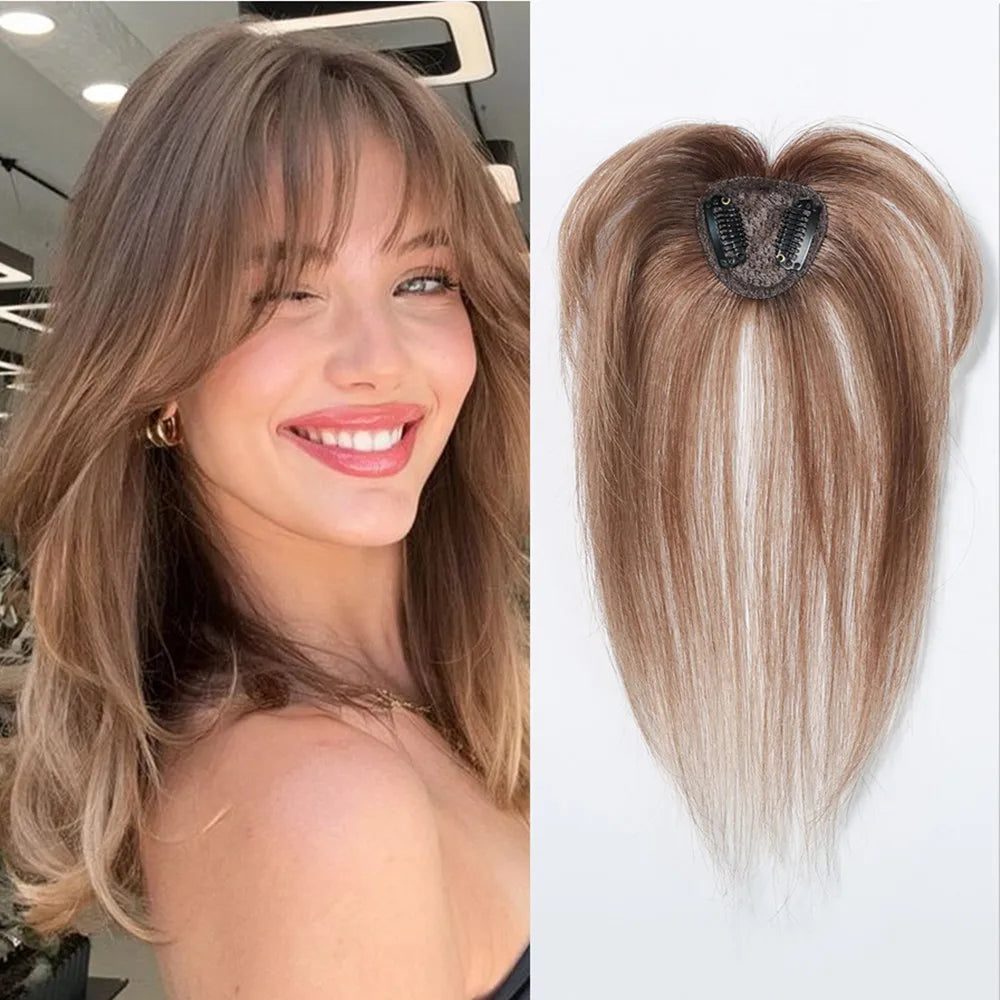

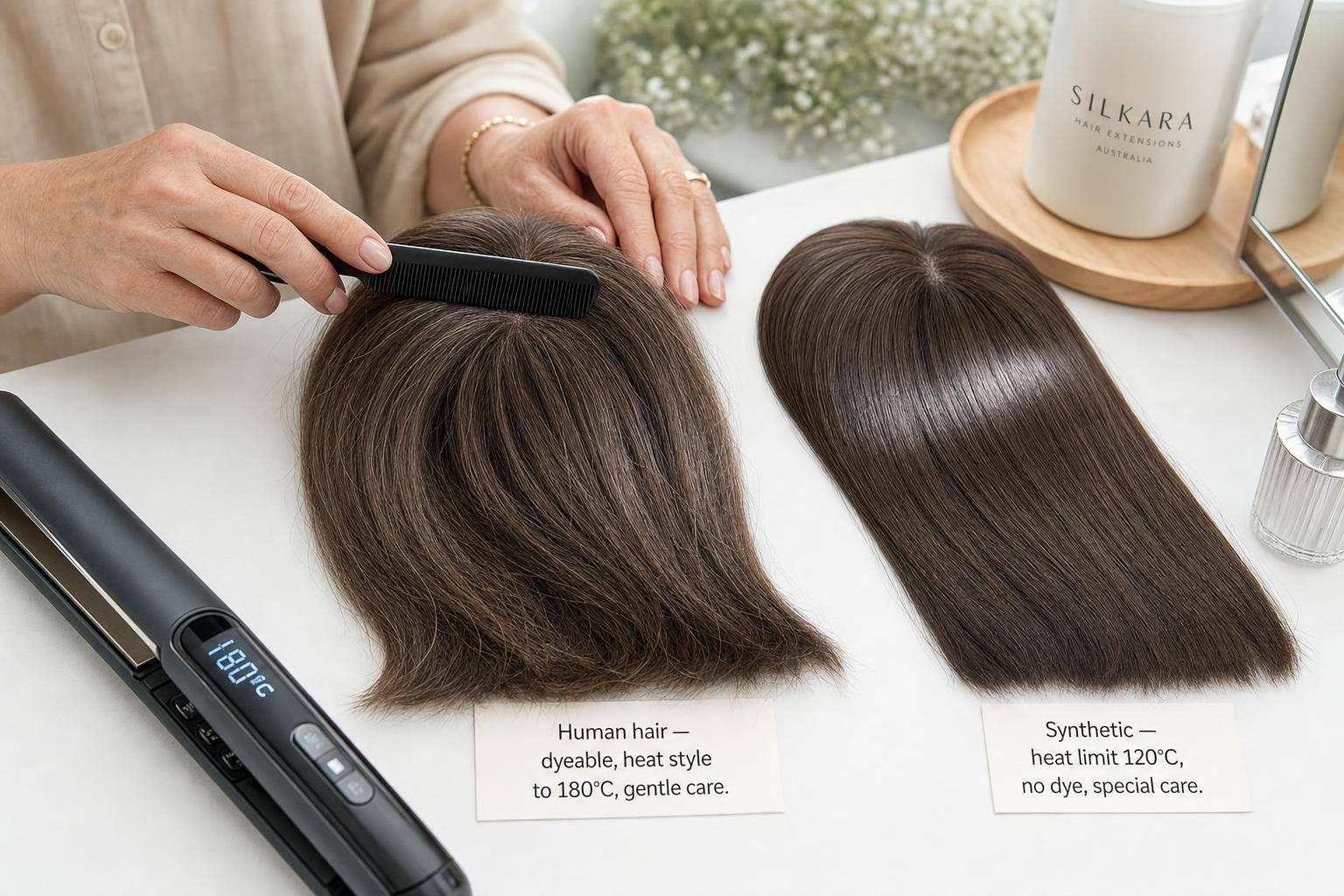
The fastest way to check a Silkara Hair product is simple: read the title, then confirm the material in the description and specs. If it says 100% Human Hair or Remy Human Hair, it’s human hair. If it says Japanese Fiber, it’s synthetic.
I’d also check the heat limit, care notes, and dyeing info before paying. As a rule, human hair can usually handle up to 180°C, while synthetic fibre may be damaged above about 85°C. That one detail alone can stop you from buying the wrong product.
Here’s the short version:
- Title first: look for 100% Human Hair, Remy Human Hair, or Japanese Fiber
- Specs next: make sure the material line matches the title
- Heat check: 180°C points to human hair; around 85°C points to synthetic
- Care check: human hair often needs co-washing and sulphate-free products; synthetic usually needs fibre-care products
- Dyeing check: human hair can often be dyed darker; synthetic usually cannot
- Price last: use it as a clue only, not proof
Human Hair Extensions vs. Synthetic Hair Extensions - 5 General Differences | Instant Beauty ♡

sbb-itb-08feb2f
Quick Comparison
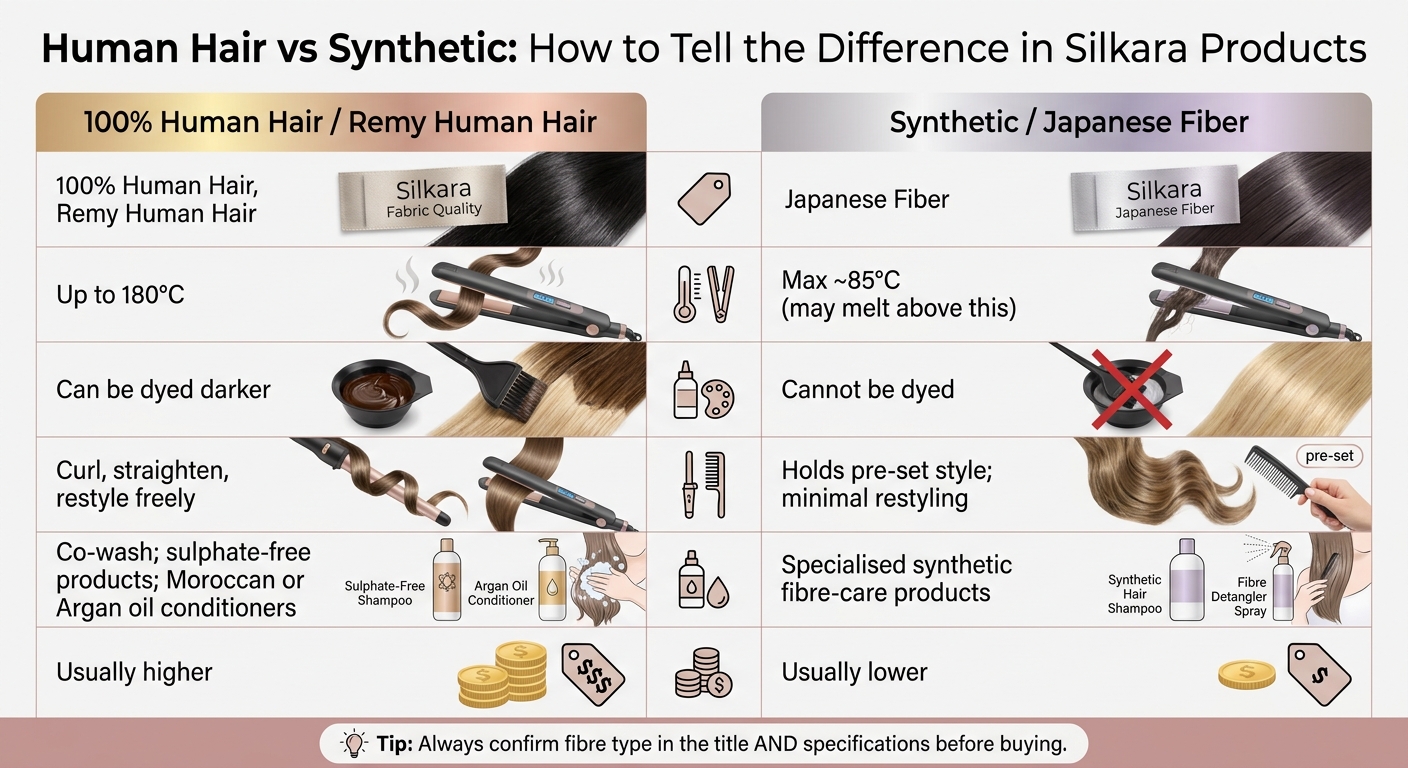
Human Hair vs Synthetic Hair: Quick Comparison Guide for Silkara Products
| Check | Human Hair / Remy | Synthetic / Japanese Fiber |
|---|---|---|
| Label words | 100% Human Hair, Remy Human Hair | Japanese Fiber |
| Heat use | Up to 180°C | About 85°C max |
| Dyeing | Usually can be dyed darker | Usually cannot be dyed |
| Styling | Can be curled or straightened | Holds its set style |
| Care | Co-wash, sulphate-free products | Synthetic fibre-care products |
| Price | Usually higher | Usually lower |
If I saw vague wording, mixed details, or specs that don’t match the title, I’d stop and double-check before buying.
Step 1: Read the product title first
Start with the product title. It’s the fastest way to check the fibre.
Look for these exact terms: 100% human hair, Remy human hair, or synthetic fibre (often labelled Japanese Fiber)
In Silkara product titles, look for clear material wording. The phrases "100% Human Hair" and "100% pure Remy Human Hair" confirm the product is made from real human hair. [2]
Remy human hair means the cuticles are aligned in the same direction, which gives the hair a smoother, more natural finish. [3]
For synthetic options, Silkara uses the term Japanese Fiber. That’s Silkara’s synthetic fibre, made to look and feel like real hair. [2][3]
| Term in title | What it means | Fibre type |
|---|---|---|
| 100% Human Hair | Real human hair | Human hair |
| Remy / Remy Human Hair | Human hair with aligned cuticles | Human hair |
| Japanese Fiber | Silkara's synthetic fibre | Synthetic |
Treat vague wording as a reason to keep reading
If a title only gives the style name and says nothing about the fibre, don’t assume anything yet. A style-led title does not confirm the material.
If the wording stays vague, check the description and specifications next to confirm the fibre.
Step 2: Use the description and specifications to confirm the material
After the title, check the description and specs to confirm the fibre. If something doesn’t line up, trust the specifications over the title and pause before buying.
Check the description for material claims, fibre notes, and processing details
For 100% human hair, look for notes about colouring. Human hair can usually be dyed darker [2][4].
For Remy human hair, check for aligned cuticles. That helps the hair stay smoother and tangle less [1].
If the description uses terms like "memory curl", "pre-set style," or "shake and go," you’re looking at synthetic hair. Those phrases point to fibre that keeps a fixed shape instead of being restyled by the wearer [3][4]. It also helps to check the brand’s own fibre wording, such as Japanese Fiber or 100% Remy Human Hair.
Check the specifications for material, heat tolerance, and care notes
The material line in the specifications should match the title. If the title and specs don’t match, stop and verify the product [1][3].
Heat tolerance is another strong clue. Human hair usually handles heat up to about 180°C, while synthetic fibre may melt above about 85°C [2][3]. So if the heat limit is low, that’s a strong sign the fibre is synthetic.
Care notes can also tell you a lot. Human hair specs often mention co-washing, sulphate-free products, and Moroccan or Argan oil-based conditioners. Synthetic specs usually point you to specialised fibre-care products [1][2].
| Spec signal | Human hair (Remy) | Synthetic (Japanese Fiber) |
|---|---|---|
| Heat limit | Up to 180°C | May melt above about 85°C |
| Dyeing | Can be dyed (light to dark) | Cannot be dyed |
| Care instructions | Co-wash; sulphate-free products and Moroccan or Argan oil-based conditioners | Specialised synthetic fibre-care products |
When the description and specifications both point to the same fibre type, you’re on much safer ground. After that, the next step is to look at how the hair feels, styles, and wears in day-to-day use.
Step 3: Match the label to how the hair will feel, style, and wear
Once you've checked the fibre type, the next step is simple: look at how the hair will feel, move, and fit into everyday wear.
How human hair, Remy human hair, and synthetic hair feel and blend
100% human hair and Remy human hair usually feel soft and light on the scalp. Remy hair has its cuticles kept intact and lined up in the same direction, which helps it stay smoother for longer and makes it less likely to tangle [1][3]. It also moves more like natural hair, so blending tends to be easier.
Silkara's synthetic fibre is made to look natural while keeping its set shape. The trade-off is movement: instead of flowing as freely as human hair, it stays more controlled [4]. That can work well if you want a ready-to-wear style that stays put without much effort.
How each hair type responds to styling, washing, and restyling
Human hair and Remy human hair can be heat-styled much like your own hair, as long as you stay under 180°C and use thermal protection [2]. You can curl, straighten, and restyle them when needed [2][1].
Synthetic fibre is lower-fuss from day to day. Because it keeps its fixed style, you don't need to restyle it after washing - a gentle shake brings the style back [4]. The main catch is heat. Standard synthetic fibre can melt or suffer permanent damage above about 85°C, so heat tools only work if the product is clearly marked Heat Defiant [2][3][4].
| Feature | 100% Remy Human Hair | Synthetic Fibre |
|---|---|---|
| Everyday feel | Soft and silky [1][3] | Soft; holds a fixed style [2] |
| Blending | Moves naturally with your own hair [2] | Natural-looking for everyday wear [2] |
| Heat limit | Up to 180°C [2] | About 85°C max [2][3] |
| Restyling | Full flexibility - curl, straighten, dye [2][1] | Holds fixed style; minimal restyling needed [4] |
Use price as the final cross-check before you buy.
Step 4: Use price as a clue, then run a pre-purchase checklist
Why price helps but should not be the only test
Once the title, description, and specs all match, use price as a final sense-check - not as your first filter.
Price often reflects fibre type and sourcing. Synthetic hair is usually cheaper. Remy human hair costs more because it is keratin-based human hair that is sourced and processed with more care.[2][5]
Still, price on its own isn't a safe test. A mid-range price doesn't prove the hair is Remy, and a lower price doesn't always mean it's synthetic. The safer move is to check the title, description, and specifications first. If all three point to the same material, the price should back up what you've already found - not do the job for you.
Pre-purchase checklist for buying a Silkara Hair product
Before you check out, run through this quick list:
- Material label confirmed - the title and specs use the same fibre term.[2]
- Description and specs match - fibre type, heat tolerance, and care notes all line up.
- Heat limit suits your styling routine - make sure it matches the tools you use.[2][5]
- Care requirements suit your routine - check whether the product needs sulphate-free care or co-washing with Moroccan or Argan oil-based conditioners.[3] Synthetic is lower-maintenance but can't be dyed.[4]
- Colour checked before purchase - use Free Colour Match or Virtual Try-On to compare the shade with your hair.[2]
If each point checks out, you're in a much better spot to buy with confidence.
FAQs
What if the title and specs don’t match?
If the product title and specs don’t line up, hold off on ordering. Go through the full product page and make sure the hair type, base size, length, and density are all clearly shown and match each other.
Still not sure? Contact Silkara Hair’s support team before you buy. If you’re worried about colour, use the free colour match service and send a clear photo taken in natural daylight.
Can I use heat on all synthetic hair?
No. Not all synthetic hair is heat-safe. Many synthetic fibres can melt when exposed to heat, so check the product title, description, and specifications before you go near it with styling tools.
If a product is heat-friendly, stick to low heat only. Too much heat can still damage the fibres or make them lose their shape.
How do I know if human hair is worth the higher price?
100% Remy human hair often earns its higher price tag. It tends to last longer than synthetic hair, moves more like natural hair, and gives you more freedom when it comes to styling.
There is a trade-off, though. It needs more upkeep. But if you look after it well, it can last a year or more.
It also tends to look and feel more like your own hair. You can use heat tools on it, and it can be professionally coloured, which gives you far more room to change your style.