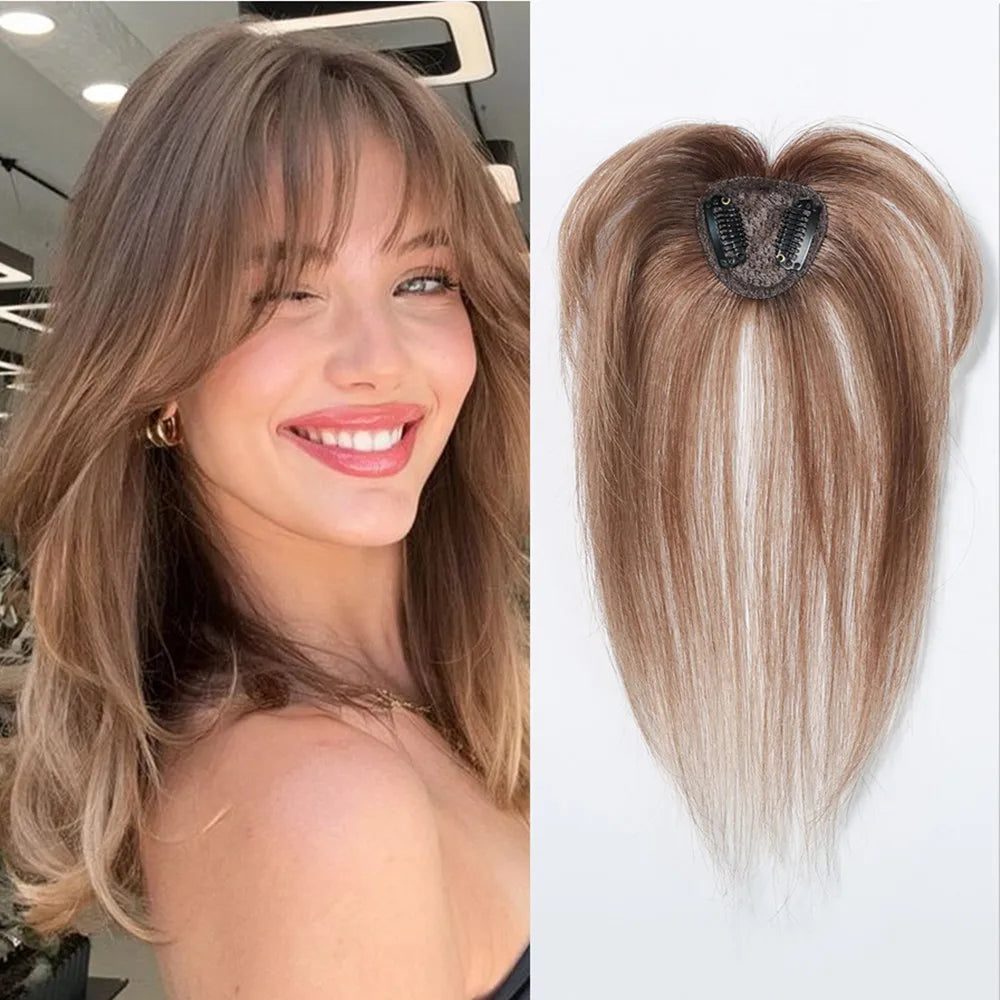

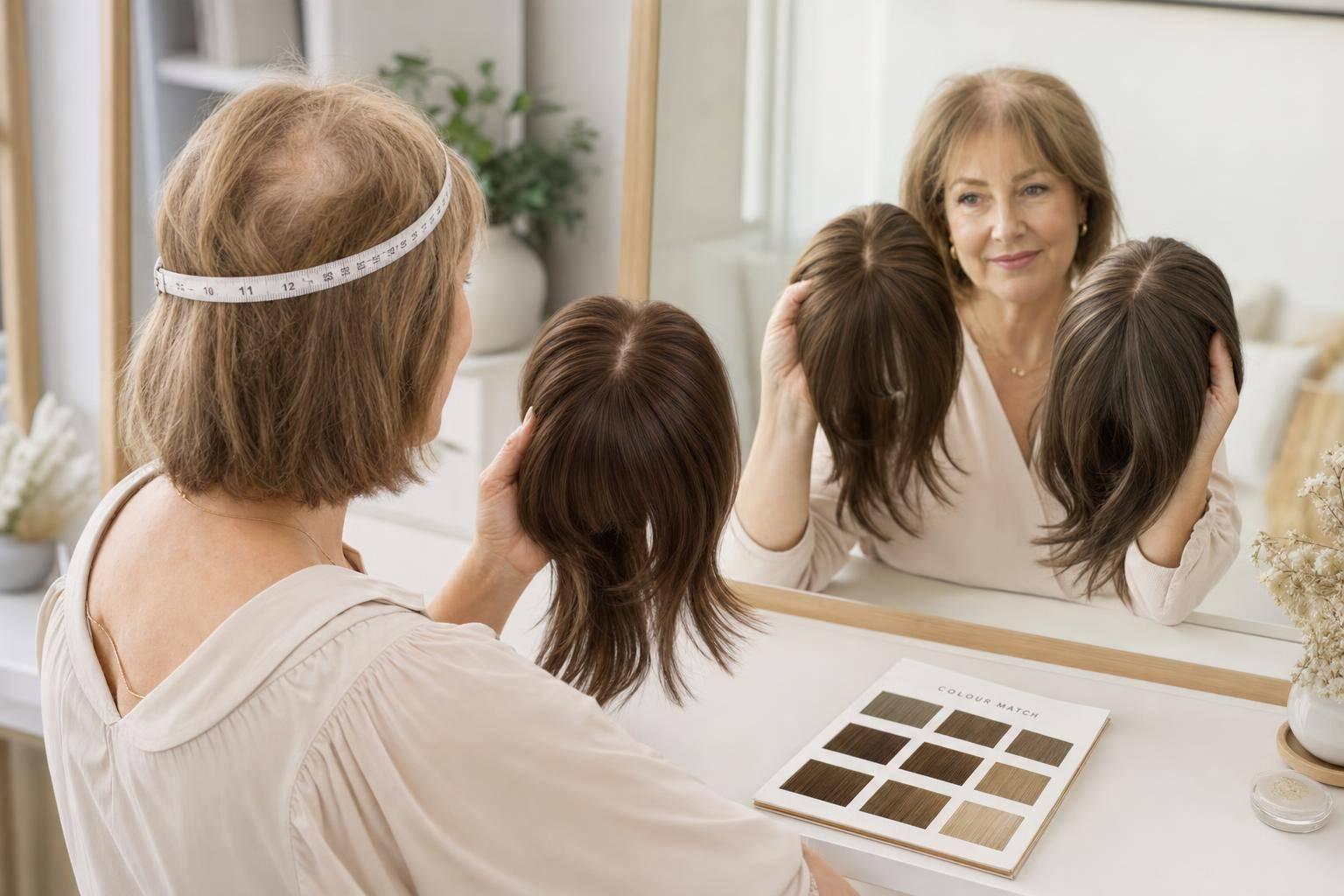
If your hair topper looks wrong, the fix is often an exchange, not giving up on toppers. In most cases, I’d check four things first: colour, base size, coverage, and fringe shape. The best first step is simple: send clear daylight photos and measure the thinning area in centimetres, then add 2 to 2.5 cm so the clips can sit on stronger hair.
Here’s the short version:
- I’d match the topper to the crown and mid-lengths, not the ends
- I’d use front, crown, part-line, hairline, and back photos
- I’d measure side to side and front to back
- I’d look at whether the issue is:
- too warm, too cool, too dark, or too light
- too small or too large at the base
- too thick or too flat for my own hair
- too heavy, too blunt, or wrong at the fringe
About 4 common exchange issues come up again and again: shade, coverage, base fit, and fringe style. And one small measuring step - adding 2 to 2.5 cm - can make a big difference because clips need healthy hair outside the thinning area.
A quick check like this can save time, cut back on back-and-forth, and make the next topper a much closer match.
| Issue | What I’d notice | What I’d change |
|---|---|---|
| Colour | Too warm, cool, flat, dark, or light | New shade or deeper root |
| Base size | Slips, buckles, or clips into weak hair | New base size after re-measuring |
| Coverage | Thinning still shows at the edges | Larger base |
| Fringe/style | Too heavy, straight, or hard to blend | Wispy, side-swept, or free-part |
If I were starting the exchange process, I’d begin with photos and measurements before making any guess about what went wrong.
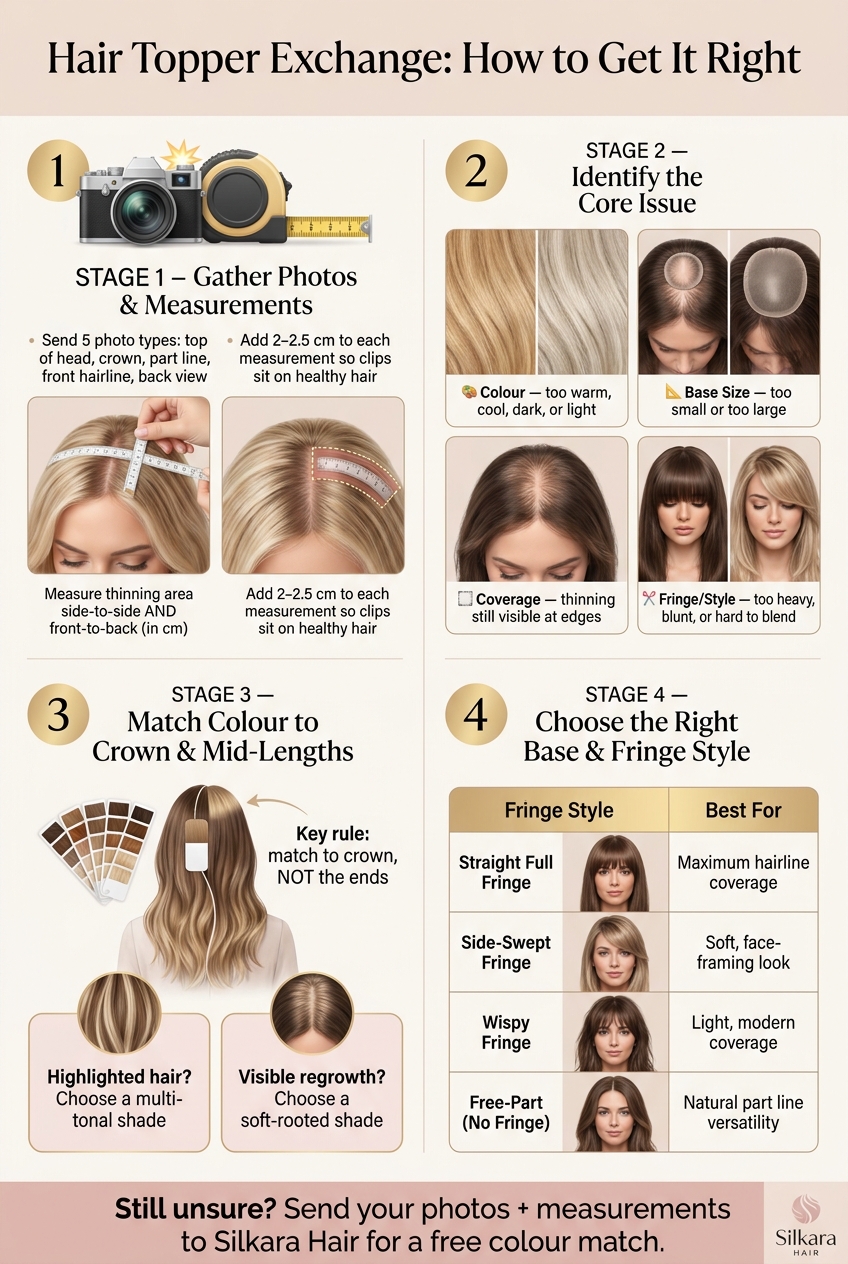
Hair Topper Exchange Process: 4 Steps to the Perfect Fit
Step 1: Send the right photos and measurements before exchanging
Start with clear photos and accurate measurements. That gives Silkara Hair what they need to assess the exchange fast and point the issue in the right direction.
The goal is simple: work out whether the exchange comes down to colour, coverage, or fringe shape. When those details are clear, Silkara Hair can tell the difference between a shade mismatch and a fit issue linked to coverage or fringe style.
What photos to send for colour, coverage and fringe assessment
Use the daylight photos you’ve already taken. Send shots of:
- the top of your head
- the crown
- your part line
- your front hairline
- one overall back view with your hair down
Front-facing photos matter too. They help Silkara Hair judge whether a full fringe, side-swept fringe, or free-part style will suit your fringe line.
How to measure the thinning area in centimetres
Once your photos are clear, measure the thinning area in centimetres. Use a soft tape measure and measure:
- side to side
- front to back
These two measurements show whether the base size is a fit.
After that, add about 2 to 2.5 cm to each dimension [1]. This helps make sure the topper clips attach to stronger, healthier hair instead of sitting right on the thinning area.
What Silkara Hair can recommend from your photos and measurements
| What to Provide | What It Helps Decide |
|---|---|
| Natural daylight photos | Shade and root depth |
| Front-facing photos | Fringe shape |
| Top and crown photos | Coverage and density |
| Part-line photos | Natural placement and fit |
| Thinning area measurements (cm) | Base size |
With those details, Silkara Hair can tell whether the fix is the shade, root depth, base size, density, or fringe style.
sbb-itb-08feb2f
Step 2: Exchange for a better colour match
Most colour mismatches come down to three things: shade, undertone, or root depth. When you choose a replacement, match it to the crown and mid-lengths because that’s where the topper sits and where people will notice it most.
Match to the crown and mid-lengths, not just the ends
A topper clips in at the crown, so the blend has to work there first. That’s the make-or-break area. Natural ends are often lighter than the hair at the top, especially if your hair has had sun, heat styling, or old colour through it. If you match the topper to those lighter ends, it can look too pale at the crown.
Undertones matter just as much as the main shade. A warm, golden colour can look off in person next to cooler natural hair. On the flip side, an ashy shade can look flat or dull beside warmer, honey-toned hair. If your hair is highlighted, a multi-tonal shade will often blend better than a single, solid colour.
If your hair has a shadow root or visible regrowth, a topper with soft rooting will usually sit more naturally at the scalp.
Signs your topper needs a different shade or root depth
These signs can help you narrow down the best exchange option:
| Visible Colour Problem | Likely Cause | Exchange Direction |
|---|---|---|
| Visible line where the topper clips in | Root depth too light | Exchange for a deeper root or soft-rooted shade |
| Topper looks orange or brassy against your hair | Undertone mismatch - topper too warm | Exchange for a cooler or ashier shade |
| Topper looks flat or dull against your hair | Undertone mismatch - topper too ashy | Exchange for a warmer, golden or honey shade |
| Topper is noticeably darker than your crown | Incorrect level selected | Exchange for one shade lighter |
| Topper blends at the ends but shows at the top | Matched to the ends, not the crown | Exchange for a shade that matches the crown and mid-lengths |
| Colour looks flat or lacks dimension | No highlights or lowlights in the piece | Exchange for a blended or highlighted shade |
Send daylight photos so Silkara Hair can check the best shade before you exchange.
If the colour is right but the topper still looks off, the next thing to check is base size, density, or fringe shape.
Step 3: Exchange for a better base size, density or fringe shape
If the shade looks close but the topper still seems off, the issue is often the base size, density, or front shape. Once colour is sorted, the next thing to check is how the topper sits and how it shapes the front.
When the base is too small, too large or not covering the crown properly
If the base doesn’t cover the crown the right way, the topper can sit unevenly and show thinning around the edges. Check your thinning-area measurements and make sure the base extends past the sparse area. It should cover the thinning spot and rest on healthy hair beyond it.
On the flip side, a base that’s too large can look bulky or too wig-like. When that happens, a smaller base or a lower-density option may suit you better.
How density affects the look on fine or thinning hair
More hair isn’t always better. If the topper feels too heavy or sits too high, try swapping to a lower-density or flatter-density version. A professional cut can also help it sit in a more natural way.
Changing from a straight fringe to side bangs, wispy bangs or a free-part option
A full straight fringe covers the hairline fully, which suits some women well. But for others, it can feel too heavy or too blunt. If the base fits but the front still feels wrong, the fringe shape is often the reason.
| Fringe Style | Best For | Swap To |
|---|---|---|
| Straight Full Fringe | Maximum forehead and hairline coverage | Wispy or side-swept if the look feels too heavy |
| Side-Swept Fringe | Soft, face-framing look | Free-part option if more forehead exposure is desired |
| Wispy Fringe | Light, modern coverage | Full fringe if more density is needed |
| No-Fringe (Free-Part) | Natural part line versatility | Full fringe if you need more forehead coverage |
The right front shape can change how natural the whole topper looks. Send photos to Silkara Hair, and the team can help guide you towards a better exchange before you give up on toppers.
Conclusion: Contact Silkara Hair before giving up on toppers
A topper that doesn’t match doesn’t mean toppers aren’t for you. In many cases, the fix is simple: an exchange for a better colour, more suitable coverage, or a fringe shape that sits right. The next move is to send Silkara Hair clear photos and your measurements so the team can work out what needs to change.
Good photos and accurate measurements make this much easier. They help Silkara Hair spot the issue fast and point you to the right replacement without the back and forth.
Start with Silkara Hair’s free colour match service. Upload your photos, explain what’s not working, and let the team help you find the right human hair topper.
FAQs
Can I exchange my topper if only the fringe looks wrong?
Yes, if your topper is in its original, unused condition and all packaging is still intact.
Because trimming the fringe is a permanent change, please contact Silkara Hair before you alter anything. Email info@silkarahair.com with your order number within 14 days of delivery.
If you can, include photos of the issue. That helps the team suggest a better replacement.
How do I know if my base size is causing the fit issue?
If your base size is off, the topper may not cover thinning spots well, sit flat, or feel right when you wear it. It can also feel too heavy or add more volume than you want.
A good fit should lie flat, with no gaps or bulges. If you don’t have enough hair around the edges to clip it in place, you likely need a larger base. Measure the thinning area and pick a base that extends 1–2 cm beyond it.
What photos help Silkara Hair recommend the right exchange?
Please send clear photos of the areas where the topper needs to blend:
- your roots and mid-lengths
- your part line/crown or thinning area
- a front profile showing your preferred fringe direction
Please also include:
- one photo in natural daylight
- one close-up of your current topper showing the shade, base coverage, and how the fringe falls