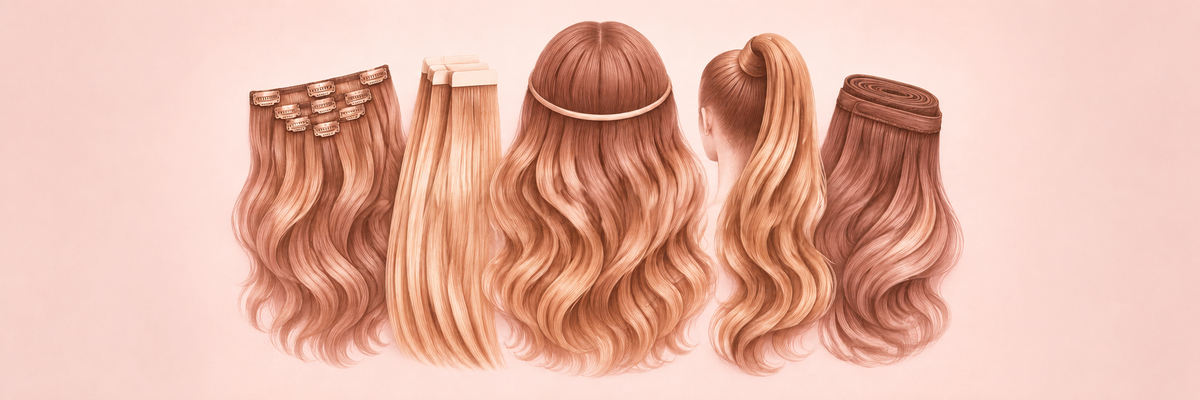
If you only check the colour, you can still end up with the wrong topper. I’d check 6 things before I buy: hair type, colour match, base size, length, fringe and parting, and density/base build.
Here’s the short version:
- Hair type matters first: human hair and synthetic hair wear and style differently
- Match colour to your roots and mid-lengths, not just the ends
- Measure the thinning area in cm, then add 1–2 cm so clips sit in stronger hair
- Check the base size against your measurements before you order
- Look at length, fringe, and part direction so it sits the way you expect
- Match density to your own hair for a better blend and day-long comfort
A few numbers can help. Many product pages list density around 80%, 100%, or 130%. They may also list topper lengths like 30 cm, 35–40 cm, or 45 cm. If your hair is wavy or curly, I’d allow about 5 cm extra when judging where the length will fall.
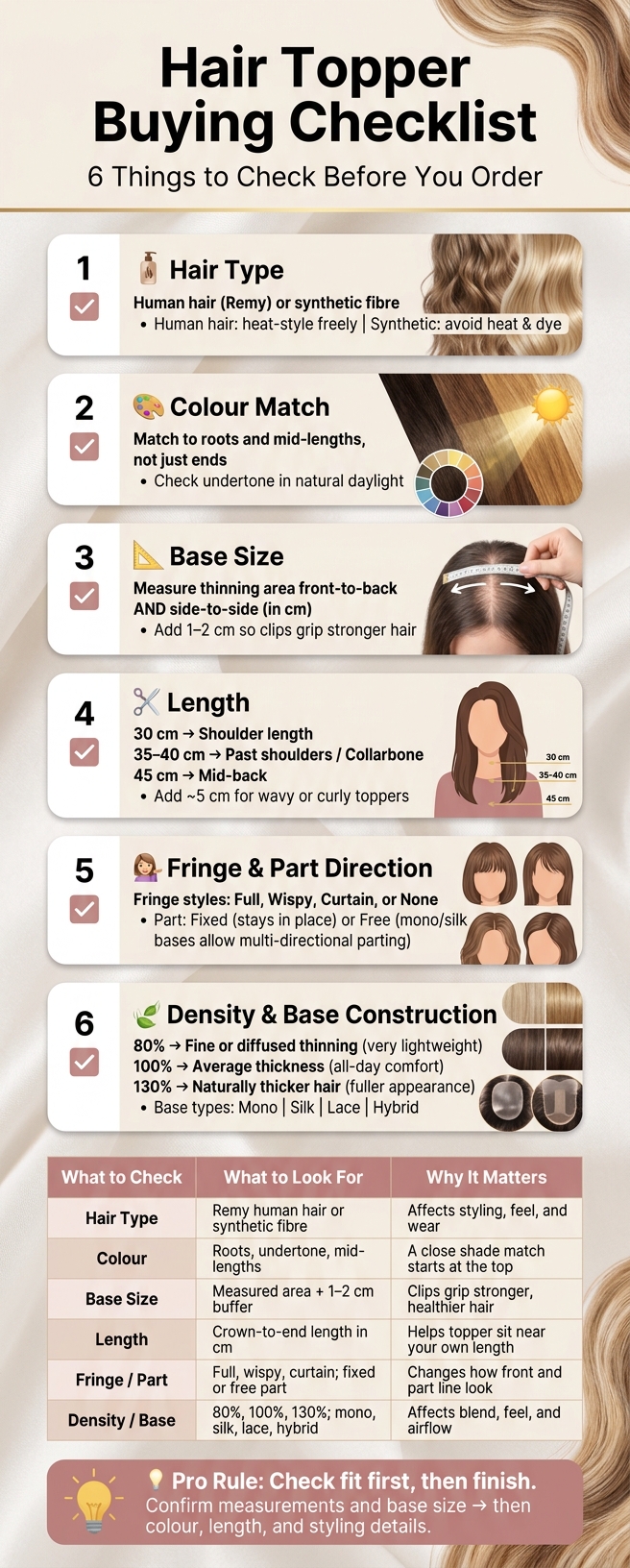
Hair Topper Buying Checklist: 6 Things to Check Before You Order
Quick comparison
| What I check | What I look for | Why it matters |
|---|---|---|
| Hair type | Remy human hair or synthetic fibre | Changes styling, feel, and wear |
| Colour | Roots, undertone, mid-lengths | A close shade match starts at the top |
| Base size | Measured coverage area + 1–2 cm | Helps clips grip stronger hair |
| Length | Crown-to-end length in cm | Helps the topper sit near your own length |
| Fringe / part | Full fringe, wispy, curtain, fixed or free part | Changes how the front and part line look |
| Density / base build | 80%, 100%, 130%; mono, silk, lace, hybrid | Affects blend, feel, and airflow |
My rule: check fit first, then finish. That means I’d confirm the measurements and base, then move to colour, length, and styling details.
sbb-itb-08feb2f
1. Check hair type, texture and colour first
Read the hair fibre and texture description
Start with the fibre and colour first. That’s what shapes the blend before fit details even come into play. Check if the topper is 100% Remy human hair or synthetic fibre. That choice affects how it blends, how it moves, and how much styling freedom you have.
Remy human hair toppers can be heat-styled to match your natural texture. With synthetic fibre, keep heat low and don’t dye it.
Match colour to your roots, undertone and mid-lengths
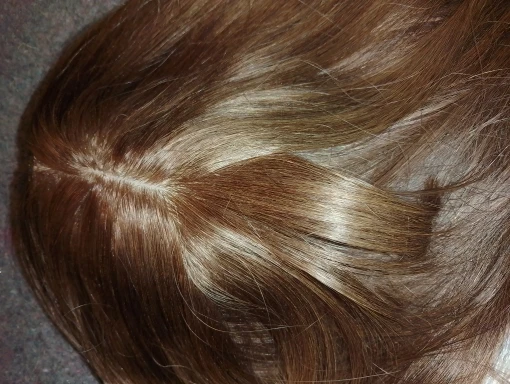
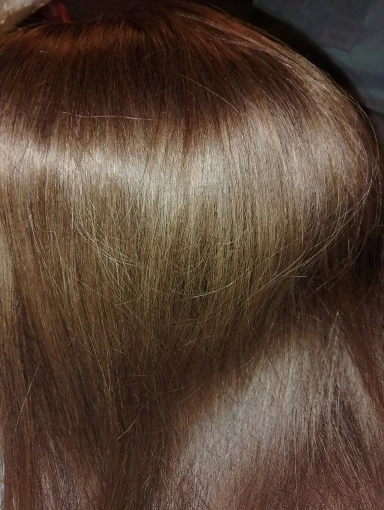
Match the colour to your roots and mid-lengths, not only the ends. Your roots matter most when you’re trying to get a close match. It also helps to check the undertone and look at product photos in natural daylight.
Use Silkara Hair colour support before you check out
If you’re unsure, use Silkara Hair's free colour match service before checkout. Once you’ve confirmed the colour, move on to the coverage area and base size.
2. Measure your coverage area and check the base size
Getting the base size right matters. If the base is too small, it may not cover the thinning area well. If it’s too large, it can feel heavier or give you more volume than you want.
Measure front-to-back and side-to-side in centimetres
Use a soft tape measure, like the kind used for sewing, and measure the thinning area in two directions: front-to-back first, then side-to-side. Start and stop where you still have enough hair density, not at the outer edge of the thinning zone.
Once you have both numbers, add 1–2 cm to each measurement. That extra space helps the clips sit in stronger, healthier hair instead of right on the edge of the thinning area.
"What’s most crucial is that the area you’re clipping to can support the weight of the hair system to avoid causing hair loss to your biological hair." - Kristina Young Hair Additions [1]
Clips fastened to weak or sparse hair can lead to traction and more hair loss, so that extra buffer matters. [1]
Compare your measurements with the base dimensions on the product page
Now compare your measurements with the base dimensions listed on the product page. The base should be at least as large as the thinning area, with enough reach to clip into denser hair on all sides.
A smaller base works well for a widening part line. A larger base is a better fit when you need broader coverage.
Base size comparison table
| Base Size (approx. cm) | Coverage Area | Thinning Stage | Typical Feel on Head |
|---|---|---|---|
| 7.5 × 12.5 cm | Widening part line | Beginning to mid-stage | Lightweight, discreet blending [3] |
| 10 × 10 cm | Partial coverage | Mid-stage thinning | Secure, focused coverage [4] |
| 16.5 × 16.5 cm | Fuller coverage | Mid-to-advanced | Fuller coverage; integrates with bob styles [2] |
If there isn’t enough hair around the edges to hold the clips well, you’ll likely need a larger base size. [1]
3. Check length, fringe style and part direction
Once you’ve sorted the base size, look at the details that shape the final result: length, fringe, and part direction.
Check where the listed length will sit on your frame
Measure from your crown down to the listed length so you can see where the ends are likely to fall. If you’re looking at a wavy or curly topper, add about 5 cm, because texture makes the hair look shorter than it measures.[5]
| Topper Length | Where it falls | Use when |
|---|---|---|
| 30 cm (12 inches) | Shoulder length | Medium-length styles [2] |
| 35–40 cm (14–16 inches) | Past shoulders / Collarbone | Long layers, fuller coverage [2][3] |
| 45 cm (18 inches) | Mid-back | Long hair integration [3] |
If your own hair sits at a different length, it’s usually safer to buy a slightly longer topper and trim it to blend.
Confirm the fringe style before you order
Check the product page closely and look for the fringe description: full fringe, wispy bangs, curtain fringe, or no fringe. These aren’t the same thing, and they won’t sit the same way once the topper is on. A wispy fringe looks lighter, while a full fringe gives more weight across the front.
It’s also smart to check this before any cutting starts, because once a fringe is trimmed, that change is permanent.[5]
Check whether the part is fixed or free part
Part direction comes down to the base type. Mono and silk bases often let you part the hair freely, so you can wear it left, right, or centre to match your own hair. A fixed part, by contrast, stays in one spot.[3][5]
"The monofilament top helps mimic the appearance of natural hair growth... [allowing for] multi-directional parting flexibility." - Silkara Hair [3]
Next, check density and base construction, because they affect comfort just as much as coverage.
4. Check density, base construction and daily comfort
Once you've checked the length and part direction, look closely at density and base construction. These two details make a big difference to how a topper blends, feels, and wears across the day.
Before you order, read the written specs for density, base type, and wear comfort.
Choose a density that matches your natural hair
Density refers to how much hair is attached to the topper base. The goal is simple: match the density to the hair at your sides and back so the blend looks seamless [4].
Light density, at around 80%, suits fine hair or diffused thinning. It feels very light and tends to sit softly. Light to medium density, at around 100%, works well for average hair thickness and gives a clear boost without looking too heavy. Medium density, at around 130%, suits people with naturally thicker hair and fuller volume. It also pairs well with sturdier bases such as mono or silk [4].
Put another way, density affects the blend, while base construction affects comfort.
Read the base construction details: mono, silk, lace or hybrid
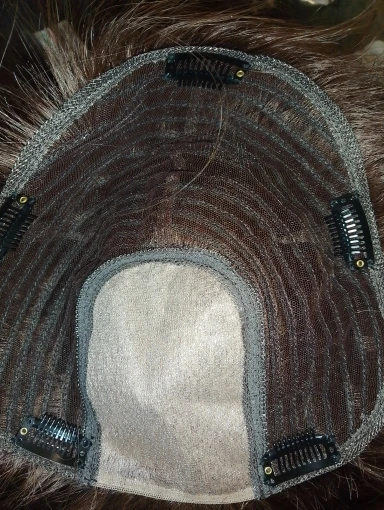
The base is the material the hair is tied into. That choice affects scalp realism, breathability, and how the topper feels during all-day wear.
A monofilament (mono) base has individual hairs tied into a mesh. This helps mimic natural hair growth. It's also thicker and more durable than lace, and can last over 6 months with proper care [4].
A silk base uses a tri-layer construction that hides the knots, so the hair appears to grow straight from the scalp [4].
Lace bases are soft, lightweight, and breathable. That makes them a good pick for warmer weather and lighter-density toppers [4].
A hybrid base combines a mono top with a PU (polyurethane) perimeter, which gives a more structured and secure feel through the day [3][4].
Density comparison table
| Density Level | Recommended Natural Hair Thickness | Look | Comfort Considerations |
|---|---|---|---|
| Light (80%) | Fine or diffused thinning | Natural, soft volume | Very lightweight; highly breathable [4] |
| Light to Medium (100%) | Average thickness | Easy to blend | Good for all-day wear [4] |
| Medium (130%) | Naturally thicker hair | Full appearance | Requires a sturdy base such as mono or silk [4] |
Conclusion: Run through the product page before you order
Before you place an order, go through the whole product page, not just one detail. Check all six points: hair type, colour, base size, length, fringe or bangs, part direction, and density. Each one should be listed clearly on the page.
Colour is the one that catches people out most often. Screens can make shades look lighter or darker than they are in person [3]. That’s why it helps to view the shade on a normal screen and compare it with your roots and mid-lengths. If you’re still unsure, Silkara Hair's colour match support can help you line it up with your roots and mid-lengths.
Then check the fit. Measure your coverage area in centimetres, compare it with the base size, and match the density to your natural hair thickness. Even a small mismatch can make a topper look or feel off. The good news? It’s one of the easiest problems to avoid if you check before checkout.
Use the checklist before you order, not after.
FAQs
How do I know if the base size will feel comfortable?
A comfortable base size should sit flat against your scalp, without gaps or bulges. For the most secure, natural fit, choose a base that extends 1–2 cm beyond your thinning area so the clips fasten to healthy hair, not weak spots.
The clips should feel secure, not tight, and the topper should feel light and breathable. If you’re between sizes, it’s usually better to go a little larger for comfort.
Can I trim the fringe or length after I buy?
Yes, you can trim the fringe to get the look you want.
For the most natural result, it’s best to have it trimmed by a professional while you’re wearing the topper. That helps the layers blend in well and makes sure the length works with your hairline and face shape.
What should I do if I’m between two densities?
If you’re torn between two density levels, go with the lighter one. It tends to blend better and adds less bulk, which matters even more if your hair is fine or thinning.
Silkara says 110% to 130% density often looks natural on thinning hair. And if you’re not sure about size, it’s usually safer to choose a slightly larger topper, since it can often be trimmed without making the density feel too heavy.