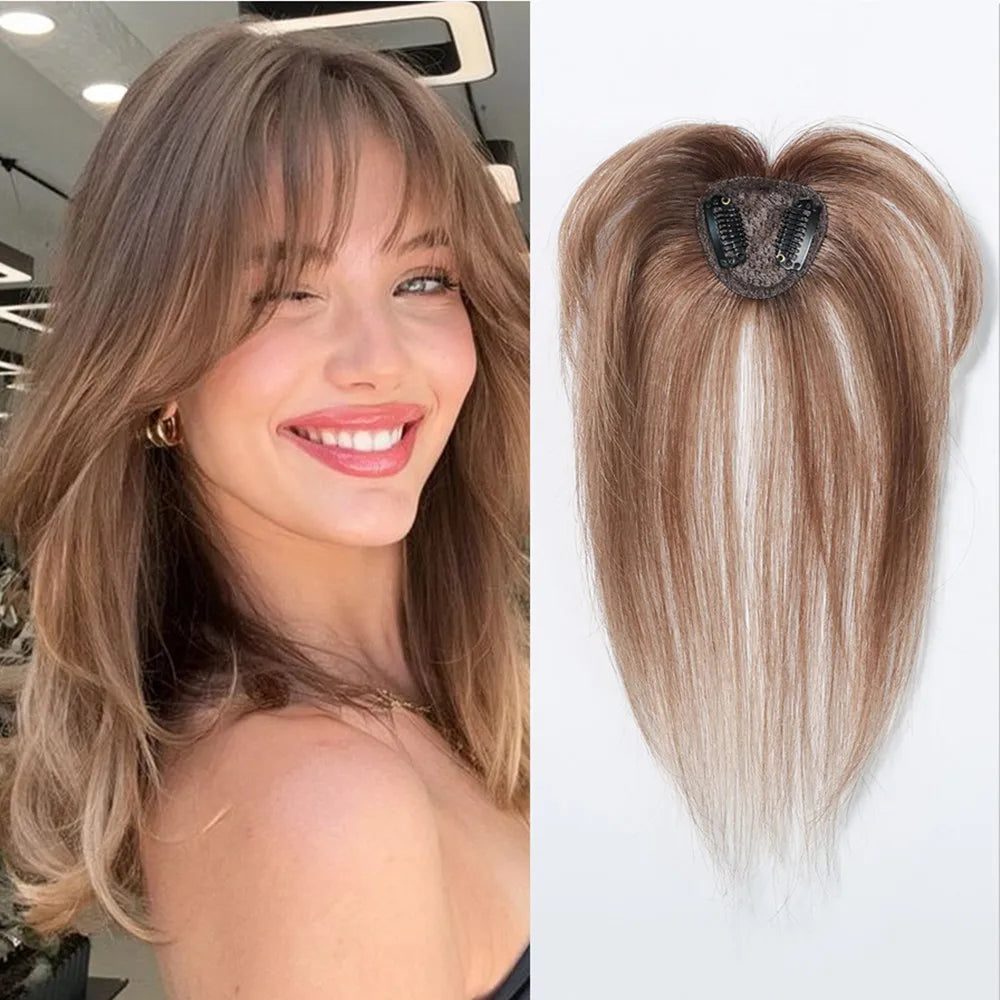

When dealing with thinning hair, choosing the right hair topper can make a big difference. A topper is a partial hairpiece that blends with your natural hair to provide volume and coverage in specific areas like the crown or hairline. It doesn’t stop hair loss but offers a quick, non-surgical way to boost confidence. Here's what you need to know:
- Base Types: Lace bases are lightweight and great for frontal thinning, silk bases mimic a natural scalp, and monofilament bases allow flexible parting.
- Hair Types: Human hair toppers, like Remy hair, offer a natural look and styling options but cost more. Synthetic options are cheaper but less versatile.
- Attachment Methods: Most toppers use clips, while some rely on tape or adhesives. Proper placement and scalp care are essential to prevent damage.
- Blending and Styling: Match the topper to your hair's colour, texture, and density. Use root sprays, powders, or teasing techniques to hide the transition line.
- Care and Maintenance: Wash every 10–14 days with sulphate-free products, avoid conditioning the base, and store in a cool, dry place to extend its lifespan.
Prices range from $469.00 AUD for synthetic toppers to around $999.00 AUD for premium human hair options. Careful selection and maintenance ensure a natural look and long-lasting wear.
How to Get an Undetectable Hairline with a Lace Front Topper | Step-by-Step Guide! | UniWigs

sbb-itb-08feb2f
Choosing the Right Base for Your Hairline
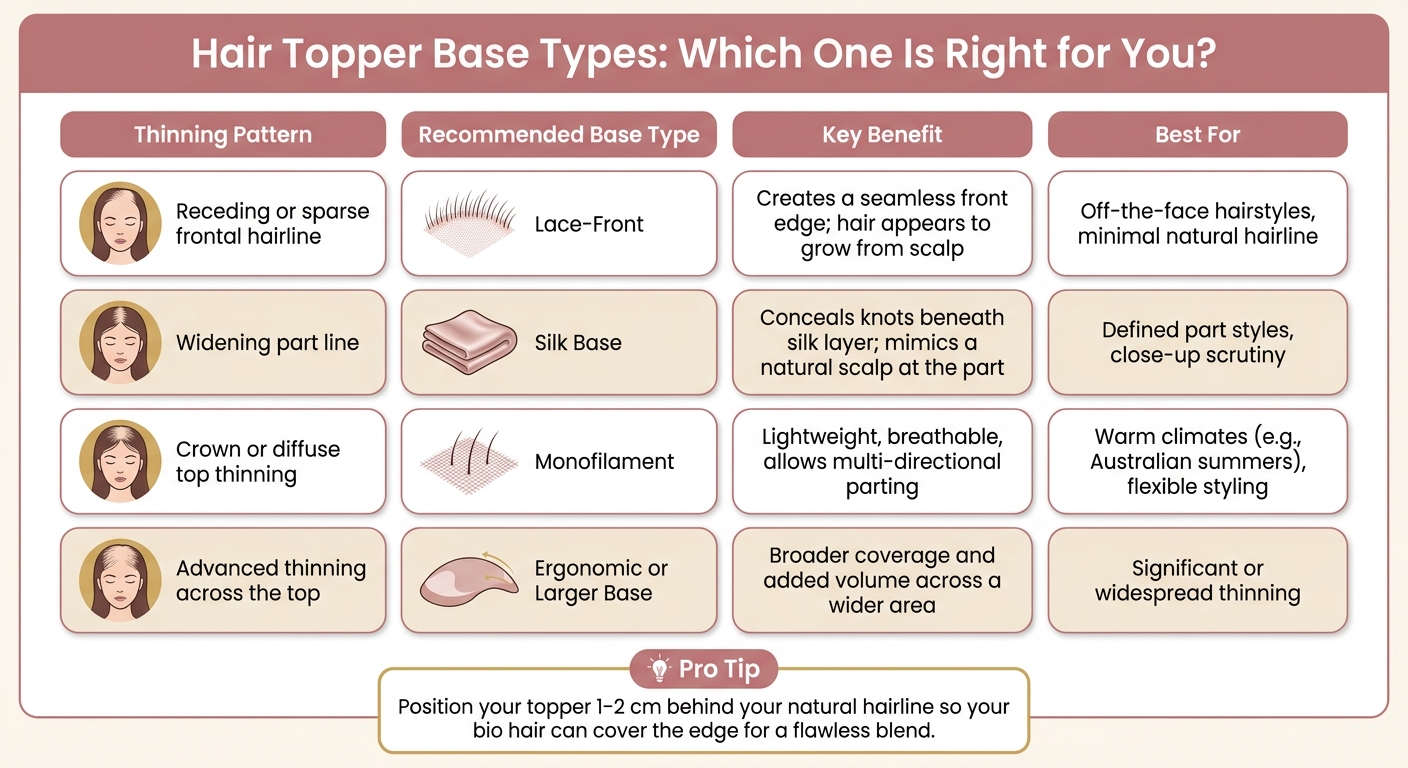
Hair Topper Base Types: Which One Is Right for You?
The base of your hair topper plays a key role in how natural it looks. It affects how seamlessly the front edge blends with your skin and existing hair. Picking the right base can make all the difference between a flawless look and one that reveals the topper's presence. Here's how to choose the best option based on your thinning pattern.
Why Lace-Front Toppers Are Ideal for Frontal Thinning
For those dealing with a receding hairline or very sparse hair at the front, lace-front toppers are a standout choice. The sheer lace panel lies flat against the skin, creating the illusion that the hair is growing directly from your scalp. This makes it perfect for hairstyles that pull the hair away from the face, without the risk of exposing a visible edge.
"A topper clipped behind a very thin or missing hairline will always reveal that something has been added. No amount of styling can completely disguise that transition." - Karen Dowsey, Founder and Hair Loss Specialist, Frankie Hair Toppers [4]
Unlike non-lace-front toppers, which rely on your natural hair to conceal the seam, lace-front toppers eliminate the need for blending at the front. This makes them a better option for those with minimal or no hairline coverage. However, if your natural hairline is still intact, you might want to explore other base types.
When Silk or Monofilament Bases Make Sense
If your hairline is still in good shape but you're experiencing thinning along the part line or crown, silk or monofilament bases could work better for you.
- Silk bases: These hide the hair knots beneath a layer of silk, giving the part line a realistic, scalp-like appearance that’s hard to detect, even up close [3].
- Monofilament bases: These feature a fine mesh where each strand of hair is individually tied, offering flexibility to change your parting direction. They're also lightweight and breathable, which is especially useful in Australia's warmer weather.
To achieve the most natural look, position these bases 1–2 cm behind your natural hairline so your bio hair can cover the edge.
Matching the Base Type to Your Thinning Pattern
The table below simplifies the process of choosing a base type based on your specific thinning area:
| Thinning Pattern | Recommended Base | Why It Works |
|---|---|---|
| Receding or sparse frontal hairline | Lace-front | Creates a seamless front edge; ideal for off-the-face styles [3][4] |
| Widening part line | Silk base | Mimics a natural scalp at the part line by concealing knots [3][2] |
| Crown or diffuse top thinning | Monofilament | Lightweight and allows for flexible, multi-directional parting [2] |
| Advanced thinning across the top | Ergonomic or larger base | Offers broader coverage and added volume [6] |
Assess whether your natural hairline has enough density to blend with a topper. If it does, a silk or monofilament base might be your best bet. Otherwise, a lace-front topper will provide the most natural-looking result.
How to Measure, Position, and Secure Your Topper
Once you've chosen the right base, the next step is ensuring your topper fits perfectly and stays securely in place. Accurate measurements and proper positioning are key to achieving a natural, seamless look.
How to Measure and Position the Topper
- Style Your Hair First: Start by styling your hair as you normally would. This will help you clearly identify any thinning areas that need coverage.
- Measure Carefully: Use a soft tape measure to determine the length and width of the thinning area.
- Add Extra Space: To ensure a secure fit, add 1–2 cm to your measurements. This allows the clips to attach to healthy hair.
-
Position Correctly: Place the front edge of the topper about 2.5–5 cm behind your natural hairline. This positioning helps your natural hair blend with the topper, masking any visible seams.
"Always add about 1–2 cm to ensure the topper clips onto healthy hair for a secure hold." - Waks Wigs [2]
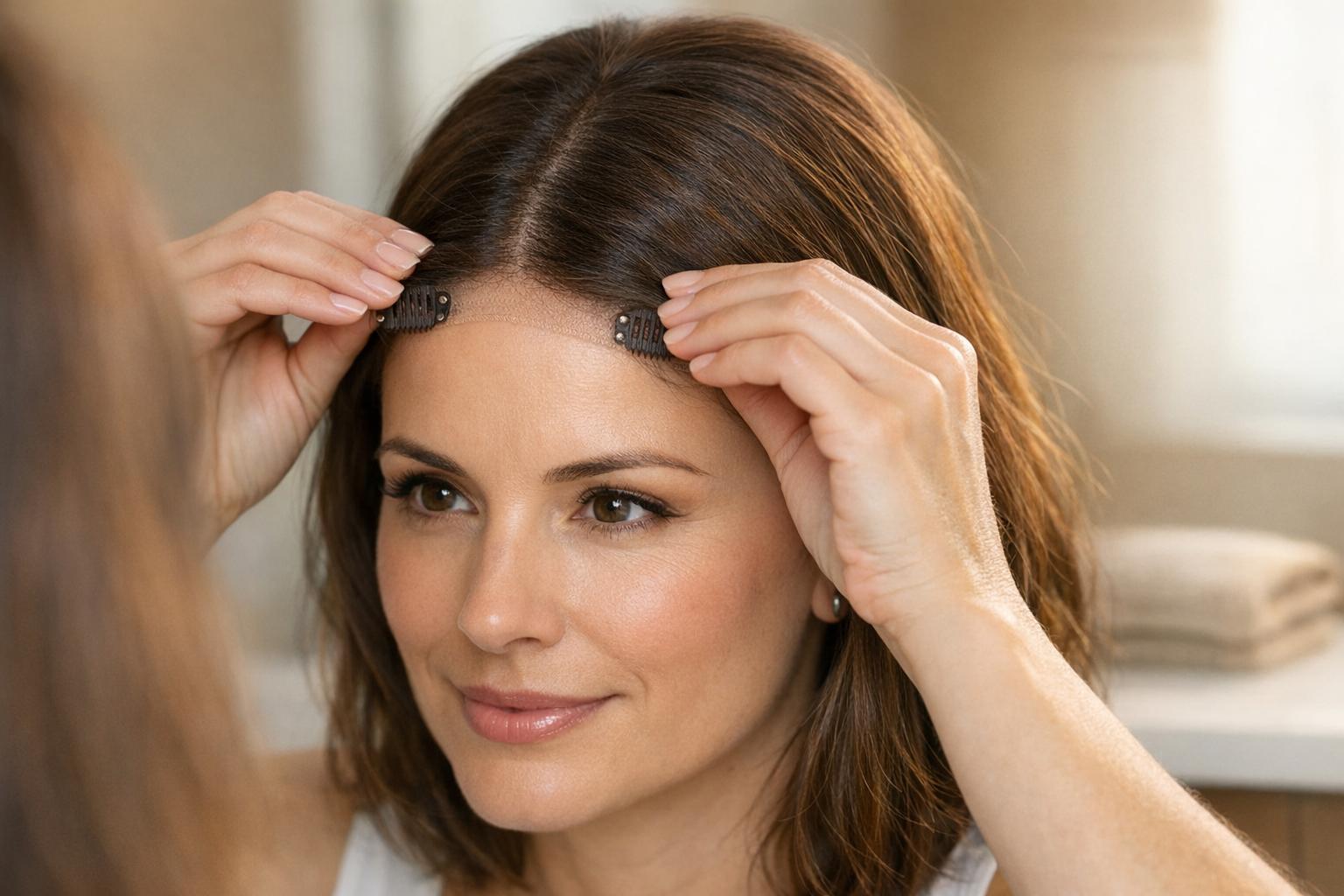
- Secure the Clips: Start by fastening the front clip, then attach the remaining clips gently to avoid tugging.
Clip Placement and Scalp Protection
Proper clip placement not only keeps the topper in place but also safeguards your natural hair. Repeated use of clips in the same spot can lead to traction alopecia, a condition caused by excessive tension on hair strands. To minimise this risk:
-
Shift Clip Positions: Adjust the placement of the clips every few months. As Transitions Hair suggests:
"Rotate their [clips] position every few months to avoid stress on any one area." [1]
- Tease for Grip: Lightly teasing the hair near the clip areas can help secure the topper and prevent it from sliding.
- Remove at Night: Take off your topper before bed to relieve your scalp of overnight tension [1][2].
Fit and Comfort Checklist
Before stepping out, run through this quick checklist to ensure your topper looks and feels just right:
- Flat Base: The topper base should sit smoothly against your scalp without any gaps or bulges.
- Comfortable Tension: Clips should feel secure but not tight enough to cause discomfort.
- Natural Blending: Your natural hair should cover the topper’s edge for a flawless finish.
- Secure Hold: The topper should stay firmly in place, even when you move or touch your hair.
- Lightweight Feel: The topper should feel breathable and comfortable for extended wear.
If anything feels off - like pulling or discomfort - take a moment to readjust. Following these steps ensures your topper not only enhances your look but also feels comfortable and secure throughout the day.
Matching and Blending Your Topper with Your Natural Hair
How to Match Colour and Texture
Getting the right colour and texture match is key to achieving a seamless look with your hair topper. Instead of comparing the topper to your roots, match it to your mid-lengths and ends, as these are the visible parts of your hair. Always check the colour under natural light, ensuring the topper’s undertones (warm or cool) align with your own hair.
Texture is equally important. If your natural hair is wavy, pairing it with a straight topper will look unnatural, no matter how well the colours match. Opt for a topper that reflects your usual hair texture or the style you wear most often. With human hair toppers, you can use heat tools to adjust the texture to match your hair.
Density is another factor to keep in mind. Too much density can look bulky, especially on fine hair. Hair specialist Lisa Liesmann explains, "The lighter the density, the more natural a hair topper will look." For women with thinning hair, a density range of 110% to 130% typically provides a balanced, realistic appearance. [6]
Step-by-Step Blending Routine
Once your topper is clipped in place (start with the front clip), follow these steps to create a flawless blend between your natural hair and the topper:
- Detangle both: Before styling, comb through your natural hair and the topper to eliminate any knots or tangles where the two meet.
- Pull your natural hair forward: Gently bring your bio hair over the edge of the topper’s base to help conceal the seam.
- Tease at the hairline: Lightly tease the area where your hair meets the topper to soften the transition.
- Style together: Use a straightener or curling iron on both your natural hair and the topper at the same time to merge the textures. Always apply a heat protectant to human hair toppers before using heat tools.
- Trim for perfection: Schedule a professional trim while wearing the topper to ensure the layers blend smoothly. [2][7]
Once the textures are blended, focus on refining the join to make it completely undetectable.
How to Hide the Transition Line
Even with a perfect colour match, the line where your topper meets your scalp can sometimes catch the light. A few finishing touches can help make this line disappear. Root touch-up sprays in a matching shade provide a quick fix - just mist lightly along the edge to blur the contrast between the topper’s base and your scalp. Hair fibres, such as Toppik, can also work wonders by bonding to fine hairs and filling in any gaps.
For a more polished finish, use a fine brush to apply a matching powder along the transition line. This technique mimics the natural appearance of a scalp and works especially well in bright lighting. Lastly, make sure your topper’s part perfectly lines up with your natural parting. Even a slight misalignment can draw unwanted attention, but when everything matches, your hairline will look effortlessly natural.
How to Care for Your Hair Topper
Daily and Weekly Care Routine
With the right care, a hair topper can last up to two years. Karen Dowsey, Founder of Frankie Hair Toppers, explains:
"A high-quality human hair topper can last up to two years when properly cared for, and in some cases even longer." [3]
Stick to washing your topper every 10–14 days, or more often if you exercise regularly or use a lot of styling products. Before washing, gently detangle the hair using a wide-tooth comb - this simple step helps prevent shedding and matting. Use a sulphate-free shampoo and conditioner designed for human hairpieces. When conditioning, avoid the base of the topper, as applying conditioner there can loosen the hand-tied knots over time. [1][2]
After washing, gently blot the topper with a microfibre towel and allow it to air dry by laying it flat or placing it on a wig stand. [2]
Caring for the topper's delicate base and front edge is just as important for maintaining its lifespan and natural appearance.
Looking After the Base and Front Edge
The base of your topper is its most fragile part, and the lace front edge is especially delicate. When putting on or removing your topper, make sure all clips are fully open to avoid damaging the lace. [5]
If you use tape or adhesive along the front edge, clean off any residue after each use. Adhesive buildup can weaken the lace and make it more noticeable against your skin. [1] To keep the hair hydrated, apply conditioner or oil sprays only to the mid-lengths and ends, steering clear of the base. This will help preserve the integrity of the topper and prevent unnecessary wear. [5]
Storage and Travel Tips for the Australian Climate
The hot and humid Australian summer can be tough on hair toppers. Keep your topper out of direct sunlight and away from high humidity when you're not wearing it, as both can cause the colour to fade and the texture to change. [2] At home, store your topper on a wig stand to retain its shape, or in a silk bag to protect it from dust and friction. [2]
When travelling - whether interstate or overseas - a silk bag is ideal for packing your topper. It prevents tangling and protects the hair from varying climates. [2] Finally, always remove your topper before bed. This not only gives your scalp a break but also reduces unnecessary wear and tear on the piece. [1]
Conclusion: Getting a Natural Hairline with the Right Topper
Creating an undetectable hairline starts with thoughtful choices before you even put on the topper. The base type, precise sizing, and careful placement all play a role in achieving a natural look. As Frankie Hair Toppers explains:
"The hairline is the most visible part of any hair solution... A topper clipped behind a very thin or missing hairline will always reveal that something has been added." [4]
To ensure a seamless blend between your natural hair and the topper, focus on the basics: measure accurately, add 1–2 cm for secure clipping, and position the topper just behind your natural hairline. This placement allows your natural hair to disguise the transition effortlessly. Opting for lighter density is another key tip. As Lisa Liesmann from the Australian Wig Company highlights, "The lighter the density the more natural a hair topper will look." [6]
Small finishing touches, such as teasing the hairline gently and rotating clip positions regularly, help maintain a fresh and natural appearance. With proper care, a high-quality 100% Remy human hair topper can last up to two years, making it a smart investment for everyday confidence. [3] Stick to these techniques and care routines to keep your look natural and polished for the long term.
FAQs
Do I need a lace-front topper for a receding hairline?
Yes, a lace-front topper works well for those with a receding or thinning hairline, particularly if blending your natural hair is challenging or if you experience alopecia at the front. The lace front is designed to replicate the appearance of hair growing directly from the scalp, offering a smooth and natural-looking transition. However, if your front hairline still has enough density, a standard topper can also be a good option. You can place it slightly behind your natural hairline and blend it with your existing hair for a cohesive look.
How do I know what topper size to buy?
To determine the correct topper size, use a soft tape measure to check the length and width of the thinning area - whether it's along your part line, crown, or front hairline. Add an extra 1–2 cm to these measurements. This extra space ensures the clips can securely attach to strong, healthy hair. For optimal results, consider consulting a professional who can help you choose a base size and shape that works best for your needs.
Will a hair topper damage my natural hair?
When applied properly, a hair topper shouldn’t harm your natural hair. Make sure it matches the shape of your scalp, feels lightweight, and clips securely without being overly tight. To minimise strain on specific areas, adjust or rotate the clip positions every few months. Taking care and positioning it correctly is essential for keeping your hair healthy.