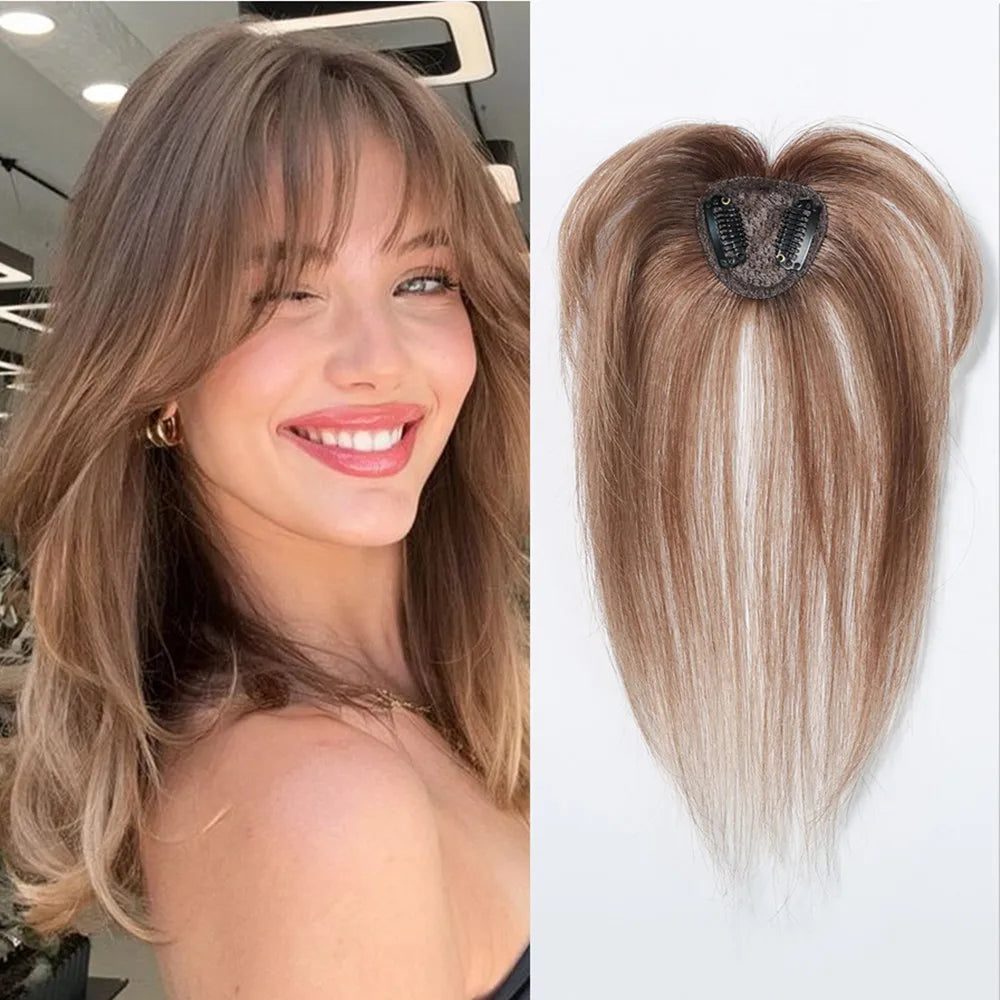

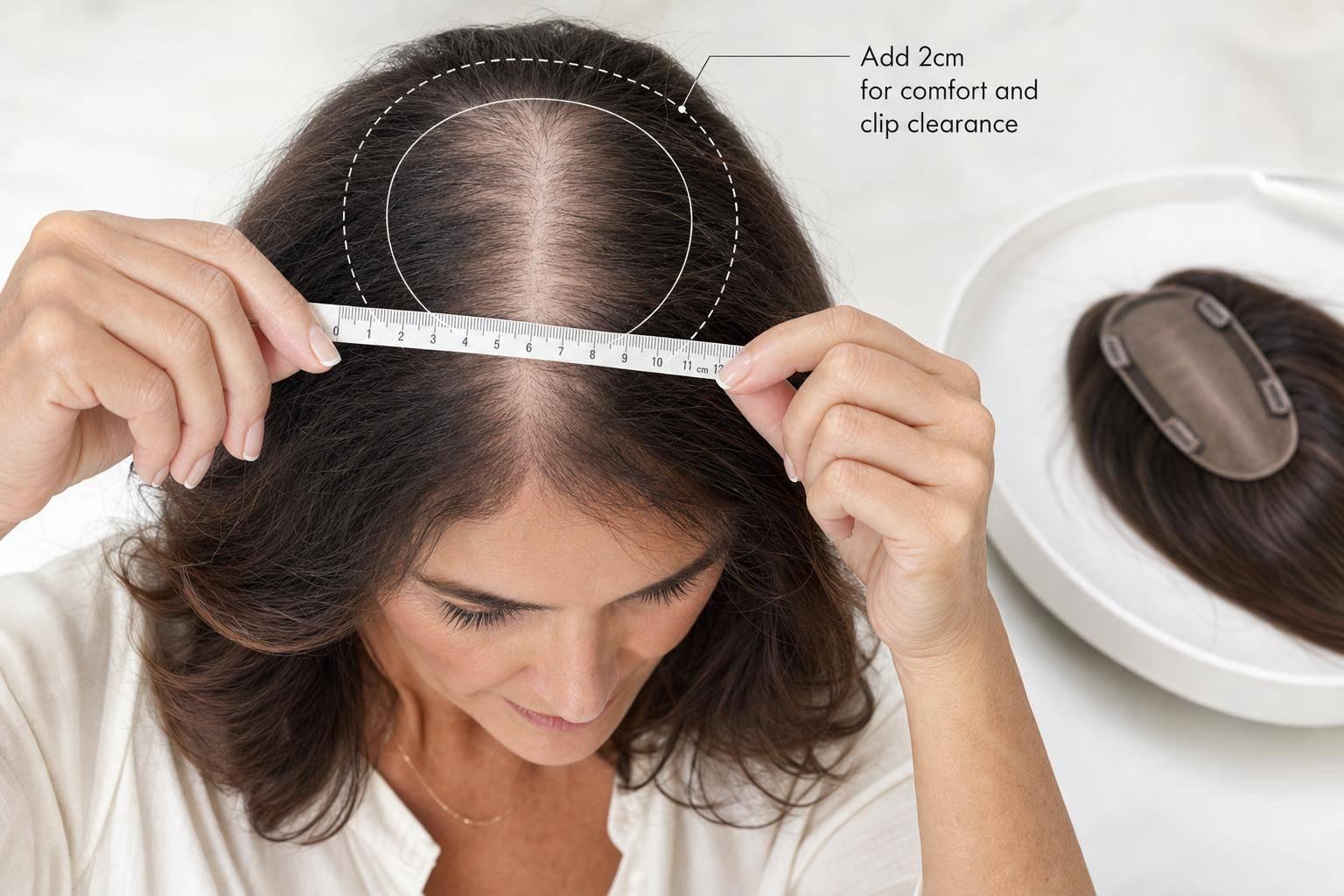
The right topper base should cover your thinning area plus an extra 1.5 cm to 2.5 cm on each measurement. That extra room helps the clips sit on stronger hair, which can make the topper feel more secure and look less obvious.
If I had to boil it down, I’d do this:
- Find where the thinning starts and ends
- Measure front to back and side to side in centimetres
- Add 1.5 cm to 2.5 cm to both numbers
- Choose the nearest base size, and go up if you’re between sizes
This matters because a base that’s too small can leave thin spots showing. A base that’s too big can feel bulky and harder to blend. For many people, thinning starts around 2.5 cm to 5 cm behind the hairline, and toppers tend to suit hair loss on the top third of the scalp.
A quick guide:
- Small bases suit part-line thinning or small crown spots
- Medium bases suit more visible crown or part thinning
- Large bases suit thinning across more of the top
- Extra large bases suit broad top coverage
| Base size | Best match |
|---|---|
| Small | Part line or small crown area |
| Medium | Crown thinning or a widening part |
| Large | Thinning across much of the top |
| Extra large | Broad thinning over the top of the head |
In short: measure the thin area, add clip room, then size up if you’re unsure.
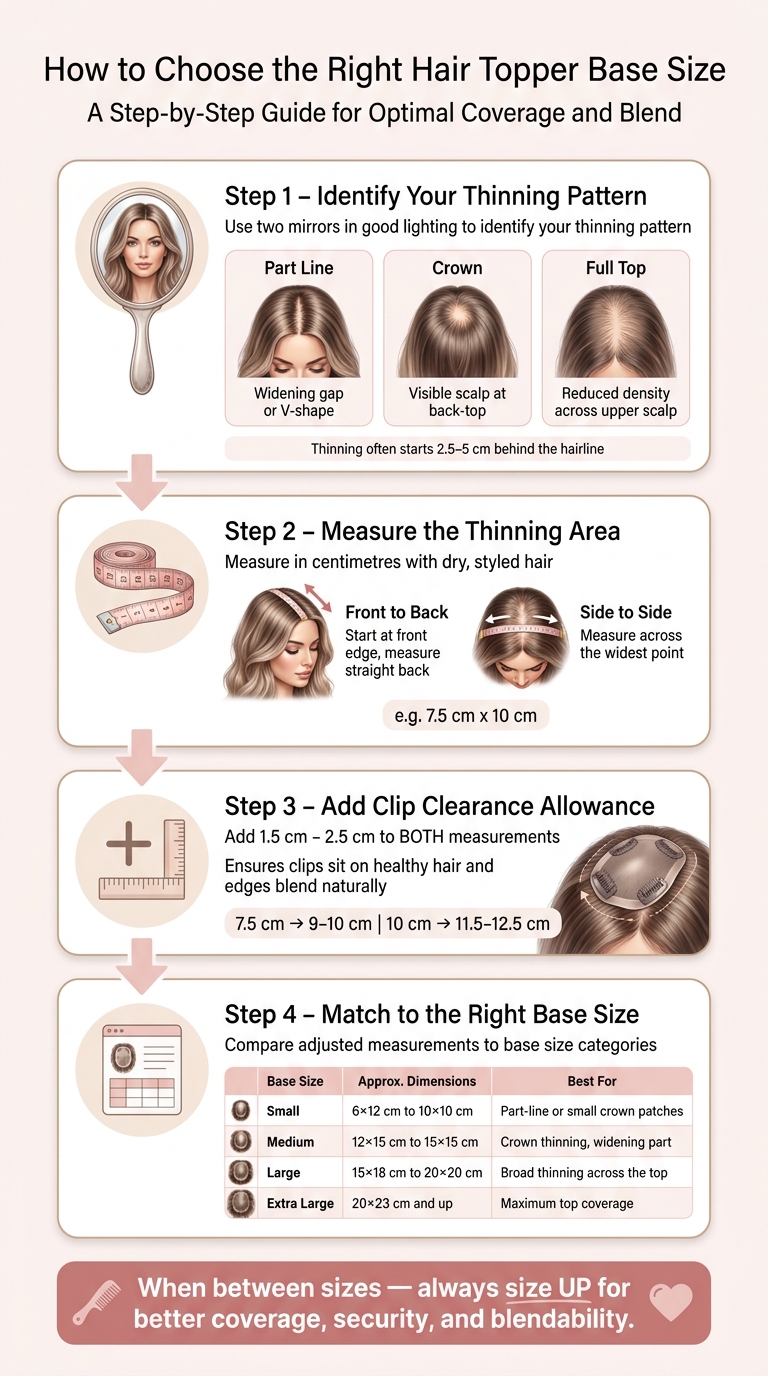
How to Choose the Right Hair Topper Base Size: Step-by-Step Guide
How To Choose a Base Size for your Hair Topper
Choosing the right size ensures your clip in hair topper with bangs sits naturally and securely.
sbb-itb-08feb2f
Identify Your Thinning Pattern Before You Measure
Before you grab a tape measure, check where your hair is thinning. That part matters more than people think. The spot and spread of the thinning area tell you how much coverage you need, which then tells you exactly what to measure.
Part Line, Crown or Full Top Thinning
Use a hand mirror and a wall mirror in good lighting to check the top and back of your head [4][5]. You’re looking for one of three common patterns:
| Thinning Pattern | What to Look For |
|---|---|
| Part line | A widening gap or "V" shape where you part your hair |
| Crown | Visible scalp at the back-top of your head in bright light |
| Full top | Reduced density across the entire upper surface of your head |
Mark where the thinning starts and ends. In many cases, that begins about 2.5 to 5 cm behind the hairline [4].
When a Topper Is the Right Choice
A topper tends to work best when thinning is focused on the top third of the scalp, including the part line and crown, and you still have enough healthy hair on the sides and back to blend the piece and hide the edges [6][7]. You also need enough healthy hair around the thinning area to hold the clips in place [1][2].
Once you’ve worked out the thinning pattern, measure the area in centimetres.
How to Measure Your Thinning Area in Centimetres
Tools and Setup for Accurate Measuring
Once you've marked the thinning area, measure the full zone in centimetres. You'll need a soft measuring tape, a mirror, and a notes app to write everything down. These numbers tell you how much coverage you need, which makes it easier to match the area to the right topper base size.
Measure your hair when it's dry and styled the way you normally wear it. That way, the base follows your usual part instead of some awkward version of it. Clip the hair around the area away so you can see the full thinning section. If you're measuring the crown, use mirrors to keep the tape level. If someone can help, even better - they can hold the tape flat and give you a cleaner reading.
Measure Front to Back and Side to Side
Start at the front edge of the thinning area and measure straight back to where the thinning stops. That's your front to back measurement. Then measure across the widest part from side to side. That's your side to side measurement.
Write both numbers down in centimetres, for example 7.5 cm x 10 cm.
| Measurement Step | Action | Purpose |
|---|---|---|
| Front to back | Front edge to back edge of the thinning area | Determines base length |
| Side to side | Widest point side to side | Determines base width |
| Allowance | Add 1.5 cm – 2.5 cm to both | Ensures clips land on healthy hair |
Add 1.5 cm to 2.5 cm for Clip Clearance
Your base should be a little larger than the thinning area itself. Add 1.5 cm to 2.5 cm to both measurements so the clips sit on stronger hair and the edges blend better [1][3]. This also helps reduce traction on thinning sections.
Record both figures for the next step.
Match Your Measurements to the Right Base Size
Now compare your front-to-back and side-to-side measurements with the closest base size.
Small, Medium, Large and Extra Large Base Categories Explained
If your numbers land between two categories, choose the larger size [1][3].
| Base Category | Approx. Size (cm, front to back x side to side) | Best For |
|---|---|---|
| Small | 6 x 12 cm to 10 x 10 cm | Part-line widening, small crown patches |
| Medium | 12 x 15 cm to 15 x 15 cm | Noticeable crown thinning, widening part |
| Large | 15 x 18 cm to 20 x 20 cm | Broad thinning across the top |
| Extra Large | 20 x 23 cm and up | Maximum coverage across the top of the head |
A bigger base is often the safer pick when you're in between. It gives you enough coverage, and it's usually easier to work with than a base that ends up too small.
Choose a Base That Works With Your Hair and Style
Once you've sorted the size, look at how the base fits your hair density and the way you wear your hair most days.
Base size is only one piece of the puzzle. Your topper also needs to blend with your natural hair density and your usual parting. If the density is too high, it can look bulky on fine hair.
If you're thinning near the front hairline as well as the crown, a topper with bangs can help soften the front edge while covering the part and crown.
Use Silkara Hair Support Before You Buy
Getting the size right before you order can save a lot of frustration later. Silkara Hair offers a free colour matching service. You send in a photo of your natural hair, and the team suggests the closest shade match.
Before you place an order, check each product's base size against your measurements.
Conclusion: Choose Coverage First, Then Size With Confidence
Once you’ve measured the thinning area, picking the right base size gets pretty straightforward. First, map the thinning zone. Then match your adjusted measurements to the base size that fits best. From there, you’re ready to order a natural-look hair topper. When the size is right, a topper sits flat, feels secure, and blends in naturally [3].
Key Takeaways Before You Order
Use this final check before you order:
- Map the thinning zone with a mirror and comb so you can spot the exact points where hair density starts to drop
- Match your adjusted measurements to the closest base size that fully covers the thinning area
- Size up if you’re between categories - a slightly larger base tends to blend better, sit more securely, and gives you extra room if the thinning area changes over time [1][3]
- Choose the base category that fits your final measurements and coverage needs
FAQs
What if I’m between topper base sizes?
If you’re between two base sizes, it’s usually best to go a little larger. That extra size gives you more coverage, often helps the topper sit more naturally, and can make blending much easier.
A larger base also gives you more room to place clips on healthy, strong hair around the thinning area. That can help the piece feel more secure. If needed, a professional can adjust it for a comfortable, natural fit.
Can I wear a topper if my thinning is near the hairline?
Yes. Measure the length and width of the thinning area, then add 1 to 2 centimetres so the clips can grip onto healthy hair.
For a natural look, line the topper up with your front edge instead of placing it too far forward. A base that reaches far enough forward helps create a smooth, secure fit.
How do I know if I have enough hair for topper clips?
You need enough healthy, dense hair around the thinning area so the clips can hold firmly.
Use a soft measuring tape to check the length and width of the thinning area, then add 1–2 cm. That extra space helps you place the clips onto your own strong, healthy hair instead of weaker spots.
If the thinning reaches beyond the sides or back, or your scalp is fully exposed, a topper may not be the right fit.