
Heat styling synthetic extensions can be tricky but manageable with the right approach. Synthetic fibres are sensitive to heat and can melt if not handled properly. Here's a quick summary of what you need to know:
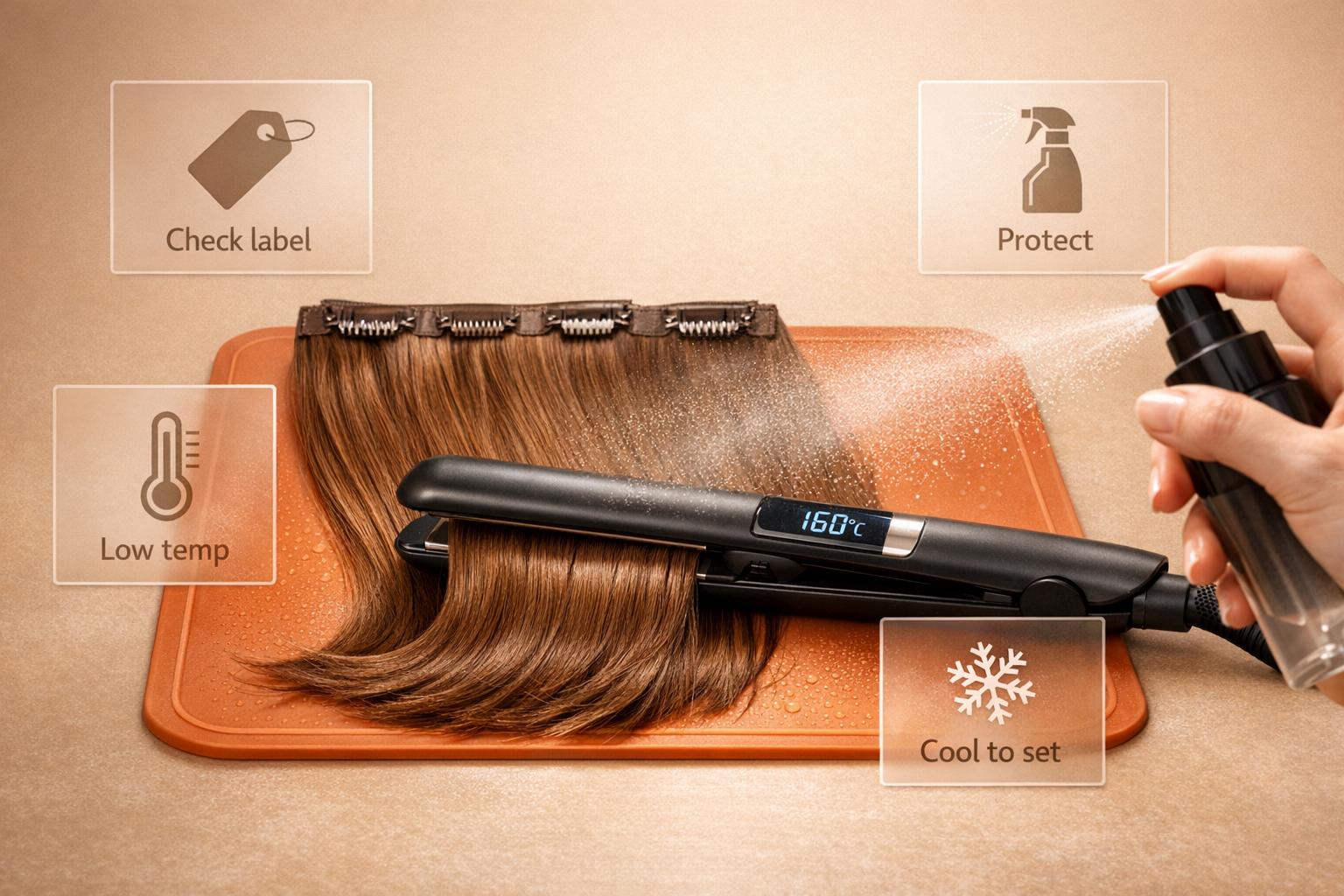
- Check heat-safe labels: Only heat-resistant extensions can handle temperatures up to 180°C. Always test a small section first.
- Prep before styling: Clean, detangle, and use a heat protectant spray designed for synthetic hair.
- Use the right tools: Opt for styling tools with adjustable temperature settings and ceramic plates for even heat distribution.
- Cool and set: Synthetic fibres need to cool fully to hold their shape after styling.
- Post-styling care: Let extensions cool completely, apply a lightweight serum, and store them properly to maintain their shape.
For curling, keep temperatures between 120°C and 180°C, and for straightening, stick to 120°C–150°C. Avoid titanium plates or high-heat blow dryers. If you're unsure, tools like heatless curlers are a safer alternative.
Silkara Hair offers heat-resistant synthetic extensions and tools like the Hollow Detangling Brush (AUD $35.00) and Heatless Curler Set (AUD $39.00–$49.00), making styling easier while protecting your extensions. Always follow these steps to keep your synthetic extensions looking polished and lasting longer.
Step-by-Step Guide to Heat Styling Synthetic Hair - Sage by Estetica

sbb-itb-08feb2f
Preparing Synthetic Extensions for Heat Styling
Getting synthetic extensions ready for heat styling is essential to avoid damage and achieve great results. Before grabbing your styling tools, make sure your extensions can handle the heat, are clean and tangle-free, and are treated with the right protective products.
Check for Heat-Safe Labels
Not all synthetic extensions are designed to handle heat. Regular synthetic fibres can melt when exposed to styling tools, so it’s crucial to check for labels like "heat-resistant" or "heat-safe" from the manufacturer [1]. Look for clear statements on the packaging or product description, and steer clear of vague claims.
Even with heat-friendly extensions, there are limits. Many are only safe up to 180°C, so it’s important to follow the manufacturer’s guidelines [1]. If you’re unsure, do a strand test on a small, hidden section of the extensions. Start with the lowest heat setting and check for melting, frizz, or any unusual changes in texture [3].
Clean and Detangle Extensions
A clean foundation is key for successful heat styling. As Rakis on Collins suggests: "Always style extensions that are clean and free from styling product buildup" [1]. Leftover hairspray, oils, or serums can bake into synthetic fibres when heated, causing permanent damage and an undesirable finish.
Make sure your extensions are completely dry before applying heat. Tara Hair warns: "Styling wet or damp extensions can lead to severe damage, as the heat can cause the moisture to turn into steam, which can weaken the hair strands" [3].
Detangling is another must. Use a wide-tooth comb or a brush specifically made for clip in hair extensions to gently remove knots and prevent breakage. Tara Hair explains: "This step is crucial to prevent breakage and ensure even heat distribution" [3]. Be gentle to avoid damaging the fibres or pulling on the tracks.
Use Heat Protectant Products
Even heat-safe extensions need extra care. Heat protectants act as a shield between the fibres and your styling tool, which is essential since synthetic hair is prone to melting and becoming brittle [3]. These products also help maintain smoothness, reduce frizz, and keep your extensions looking polished after styling.
Opt for a heat protectant spray or serum designed for synthetic hair. Avoid products with harsh ingredients like alcohol or sulphates, as these can dry out the fibres and cause buildup. Apply an even layer of protectant across all sections of your extensions and let it dry completely before styling.
As always, test your product on a small section to ensure compatibility. Once your extensions are prepped and protected, you’re ready to choose your heat styling tool.
Best Tools for Heat Styling Synthetic Extensions
Heat Styling Tools Comparison for Synthetic Extensions
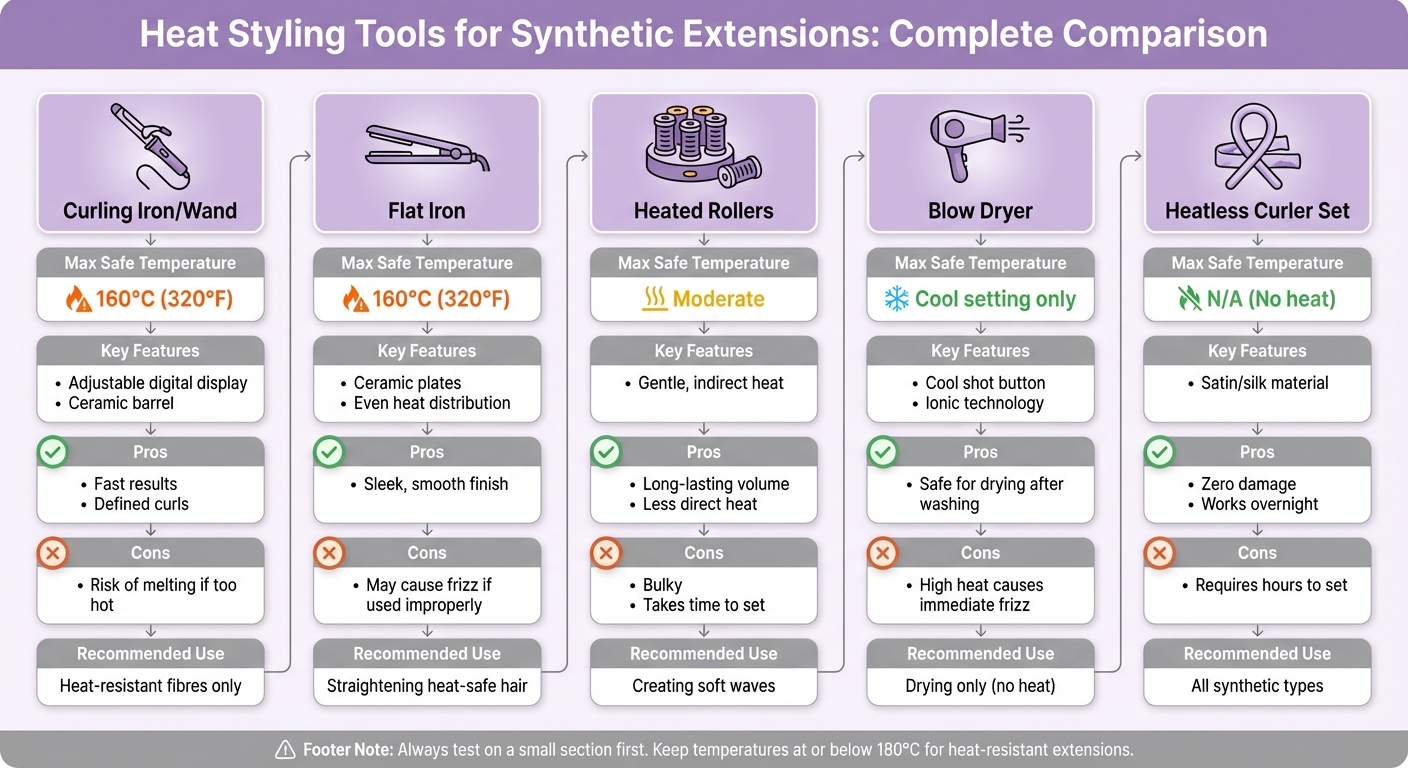
Once your synthetic extensions are prepped, the next step is picking the right heat styling tools. The key? Opt for tools with adjustable temperature settings. This is essential because synthetic fibres are sensitive to heat. Standard synthetic fibres can handle temperatures between 71°C and 85°C, while heat-friendly versions can go up to 160°C safely[4][6].
Curling Tools
When it comes to curling synthetic extensions, tools with precise temperature control and ceramic barrels are your best bet. Ceramic barrels distribute heat evenly, reducing the risk of hot spots that could damage the fibres[7]. Look for curling irons or wands with digital displays to set the exact temperature you need[1].
If you're after natural-looking waves, clamp-free curling wands are a great choice. They minimise mechanical stress on the fibres while creating soft, flowing curls[8]. For a gentler option, consider heated rollers. These use indirect heat to create volume and soft curls, though they do take more time to set[7].
Straightening Tools
Flat irons for synthetic extensions should feature ceramic plates and digital temperature controls. These ensure even heat distribution, giving you a smooth, straight look without causing frizz or melting the fibres[7]. Avoid tools with titanium plates - they heat up too quickly and can reach temperatures that are unsafe for synthetic hair[7].
Blow dryers require extra caution. High-heat settings can easily damage synthetic fibres. Instead, stick to the cool shot setting. Blow dryers with ionic technology are a good choice, as they reduce frizz by breaking down water molecules, allowing for effective drying at lower temperatures[7]. If possible, air-drying on a wig stand is the safest option for non-heat-resistant extensions[6].
Heat Styling Tools Comparison Table
| Tool | Max Safe Temp | Features | Pros | Cons | Recommended Use |
|---|---|---|---|---|---|
| Curling Iron/Wand | 160°C (320°F) | Adjustable digital display, ceramic barrel | Fast results; defined curls | Risk of melting if too hot | Heat-resistant fibres only |
| Flat Iron | 160°C (320°F) | Ceramic plates; even heat distribution | Sleek, smooth finish | May cause frizz if used improperly | Straightening heat-safe hair |
| Heated Rollers | Moderate | Gentle, indirect heat | Long-lasting volume; less direct heat | Bulky; takes time to set | Creating soft waves |
| Blow Dryer | Cool setting | Cool shot button, ionic technology | Safe for drying after washing | High heat causes immediate frizz | Drying only (no heat) |
| Heatless Curler Set | N/A | Satin/silk material | Zero damage; works overnight | Requires hours to set | All synthetic types |
Step-by-Step Heat Styling Techniques
Styling synthetic extensions requires a slightly different approach compared to human hair. The most important rule? The "cool and set" technique. Synthetic fibres need to cool completely in the desired shape to hold the style. If you let a curl drop while it’s still warm, it simply won’t stay.
How to Curl Synthetic Extensions
Start by testing a hidden strand to ensure your chosen temperature won’t damage or melt the fibres. Once you’re confident, clip your halo hair extensions onto a hair hanger at eye level - this makes the process much more manageable. Work with small sections, about 1 inch wide, to ensure even heat distribution.
Set your curling iron to a temperature between 120°C and 180°C, depending on the type of synthetic fibre. Wrap one section around the curling iron barrel and hold it for 5 to 10 seconds - time this carefully. When removing the curl, gently slide it off the barrel into your palm, keeping its shape intact. Avoid letting the curl hang loose.
Immediately secure the curl with a pin clip to lock in the shape. Let the curls cool completely for at least 10 minutes. Once cooled, remove the clips and use a wide-tooth comb to style. For soft waves, comb through 4 to 5 times; for tighter curls, brush very lightly to maintain their bounce.
How to Straighten Synthetic Extensions
Before straightening, make sure your extensions are completely dry and tangle-free. Use a wide-tooth comb or a loop brush, starting from the ends and working your way up. Apply a heat protectant spray made specifically for synthetic hair to minimise heat damage.
Divide the extensions into small, manageable sections using clips. Set your flat iron to a temperature between 120°C and 150°C, and glide it smoothly along each section without pausing to avoid overheating. As Noelle Salon explains:
Straightening will likely permanently remove the original curl or wave pattern from the extensions.
So, be certain this is the look you want before you begin.
Once straightened, place the extensions on a wig stand or hanger and allow them to cool completely before brushing or touching them. After cooling, apply a lightweight, synthetic-safe serum to the mid-lengths and ends to add shine and reduce frizz. Your straightened extensions are now ready for styling or storage.
Maintaining Heat-Styled Synthetic Extensions
Post-Styling Care Tips
Taking care of your synthetic extensions after heat styling is key to keeping them looking their best. Start by letting them cool down completely before you brush, style, or store them. This step is non-negotiable - it helps lock in the style. For curls, leave them pinned, or for straightened sections, drape them over a hanger and wait until they're cold to the touch. Skipping this cooling phase can compromise the shape and longevity of your style.
Once cooled, apply a lightweight serum or oil to the mid-lengths and ends to add shine and protect the fibres. Be selective with your products - steer clear of anything containing alcohol, sulphates, or harsh chemicals, as these can dry out the extensions and lead to tangling.
When it’s time to store your extensions, use a hanger or a silk bag to help maintain their shape and avoid tangles. Before putting them away, make sure they’re clean, free of product buildup, and thoroughly detangled using a loop brush.
How to Refresh Heat-Styled Extensions
Reviving your heat-styled extensions doesn’t always require more heat. For curls, try foam rollers or braid damp sections overnight to bring them back to life. For straight extensions, a gentle pass with a wide-tooth comb and a touch of serum can do the trick.
To protect your extensions, limit heat styling to just once or twice a week. When you do need to restyle, always conduct a patch test on a hidden section first. Keep your tools at or below 180°C [1] to minimise damage. Between styling sessions, proper storage and gentle detangling - from the ends upward - will go a long way in maintaining their quality and ensuring they last for months [3].
Silkara Hair Synthetic Extensions and Tools
Why Choose Silkara Hair for Synthetic Extensions?
Silkara Hair's synthetic extensions are made from advanced Japanese fibre that closely resembles the soft, natural feel of real hair. This fibre ensures smooth heat styling, offering a predictable response and blending effortlessly with your own hair for a polished appearance.
The collection features a variety of options, including halo extensions (available in straight and wavy styles, ranging from 14 to 22 inches), clip-in sets (offered in 4-, 5-, and 7-piece configurations), versatile clip-in ponytails, and messy buns secured with elastic scrunchies. Many items, particularly wigs, are designed to be heat-resistant, making them suitable for daily styling. With a stellar 4.8/5-star rating from over 6,081 reviews and more than 1,000 Australian customers [9], Silkara Hair has a proven reputation for quality.
Pricing begins at around AUD $46.00 for synthetic halo extensions, AUD $36.00 for clip-in ponytails, and AUD $43.00 for messy buns [10]. Silkara Hair also offers a Colour Match Guarantee and free shipping [9], making it easier to find your perfect match without added stress.
In addition to their high-quality extensions, Silkara Hair provides specialised tools to ensure your styling experience is seamless and gentle.
Styling Tools from Silkara Hair
To complement their extensions, Silkara Hair offers a range of tools designed specifically for effective and gentle styling. The Hollow Detangling Brush (AUD $35.00) is crafted to detangle fibres without causing damage or pulling [5].
For those looking to avoid heat, the Heatless Curler Set (AUD $39.00–$49.00) is a fantastic option. It creates voluminous curls overnight without exposing your extensions to thermal stress, which helps maintain their longevity. With an impressive 4.87/5-star rating from 719 reviews [4], this set works best on slightly damp or dry synthetic extensions, delivering salon-level results from the comfort of your home.
These tools not only make styling easier but also align with the recommended practices for maintaining synthetic extensions, ensuring they stay in top condition for longer.
Conclusion
Styling synthetic extensions with heat can be simple if you prepare properly. Start by confirming your extensions are heat-safe, ensure they’re clean and tangle-free, and always use a heat protectant before styling. Synthetic fibres are sensitive to high temperatures, so keep your tools below 180°C to avoid melting or causing irreversible damage [2].
Investing in high-quality styling tools is key. Look for equipment with adjustable temperature settings and ceramic or tourmaline plates, which provide even heat distribution and minimise the risk of damage [3][11]. After styling, let your extensions cool completely in their new shape - this cooling step is critical for locking in the style and ensuring it lasts.
To maintain your styled look, focus on proper care after styling. Work in small sections, stick to low heat settings, and refresh your extensions between sessions to keep the synthetic fibres in good condition while achieving a polished, professional result.
If you're looking for reliable products, Silkara Hair offers a range of heat-resistant synthetic extensions and styling essentials. Their Hollow Detangling Brush and Heatless Curler Set are designed for easy at-home use. With clip-in ponytails starting at AUD $36.00, free shipping, and a Colour Match Guarantee, they provide everything you need for a seamless, stylish transformation.
FAQs
How can I tell if my extensions are truly heat-safe?
To determine if your extensions can handle heat, check for labels that mention they are heat-resistant or heat-friendly. Many good-quality synthetic extensions can tolerate temperatures up to 180°C, but it’s always smart to double-check the product information. Before styling, test on a hidden strand to ensure there’s no damage. If the extensions aren’t clearly marked as heat-resistant, steer clear of heat tools to avoid permanently damaging the fibres.
What should I do if my synthetic extensions get frizzy after heat styling?
If your synthetic extensions are looking frizzy, the first thing to do is check whether they’re heat-resistant. Extensions that aren’t heat-resistant can get damaged by heat, so it’s best to skip any heat styling and use a wide-tooth comb to gently detangle them. You can also try anti-frizz products specifically made for synthetic hair to smooth things out.
If your extensions are heat-resistant, stick to a low heat setting when styling. Don’t forget to apply a heat protectant first - this can help reduce frizz and protect the fibres from further damage.
How do I restyle curls without using heat again?
To refresh curls without using heat, opt for gentle, heat-free techniques like foam rollers, bendy rollers, or perm rods. You can also use pin curl clips to shape your curls overnight or over a few hours. If you're working with heat-resistant synthetic extensions, low-temperature steam is a safe way to revive curls. Just make sure to confirm that your extensions can handle these methods to avoid any damage.