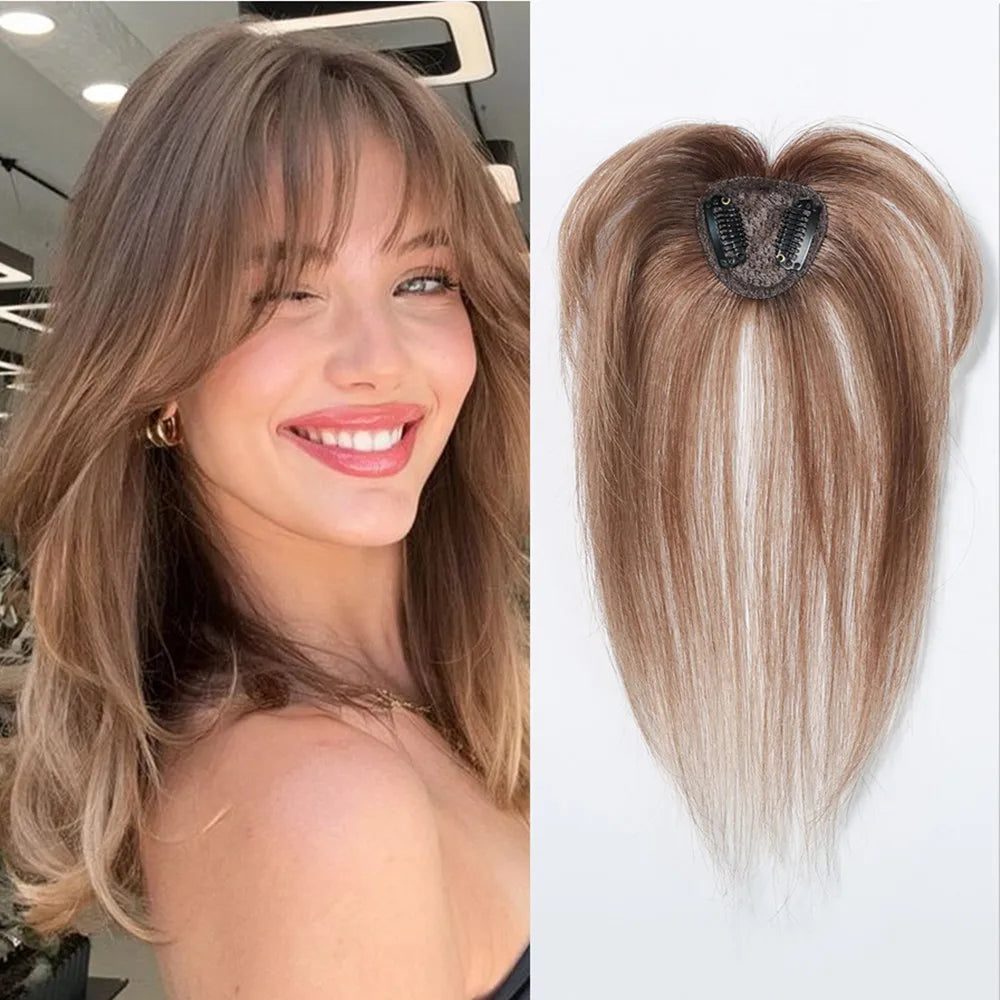

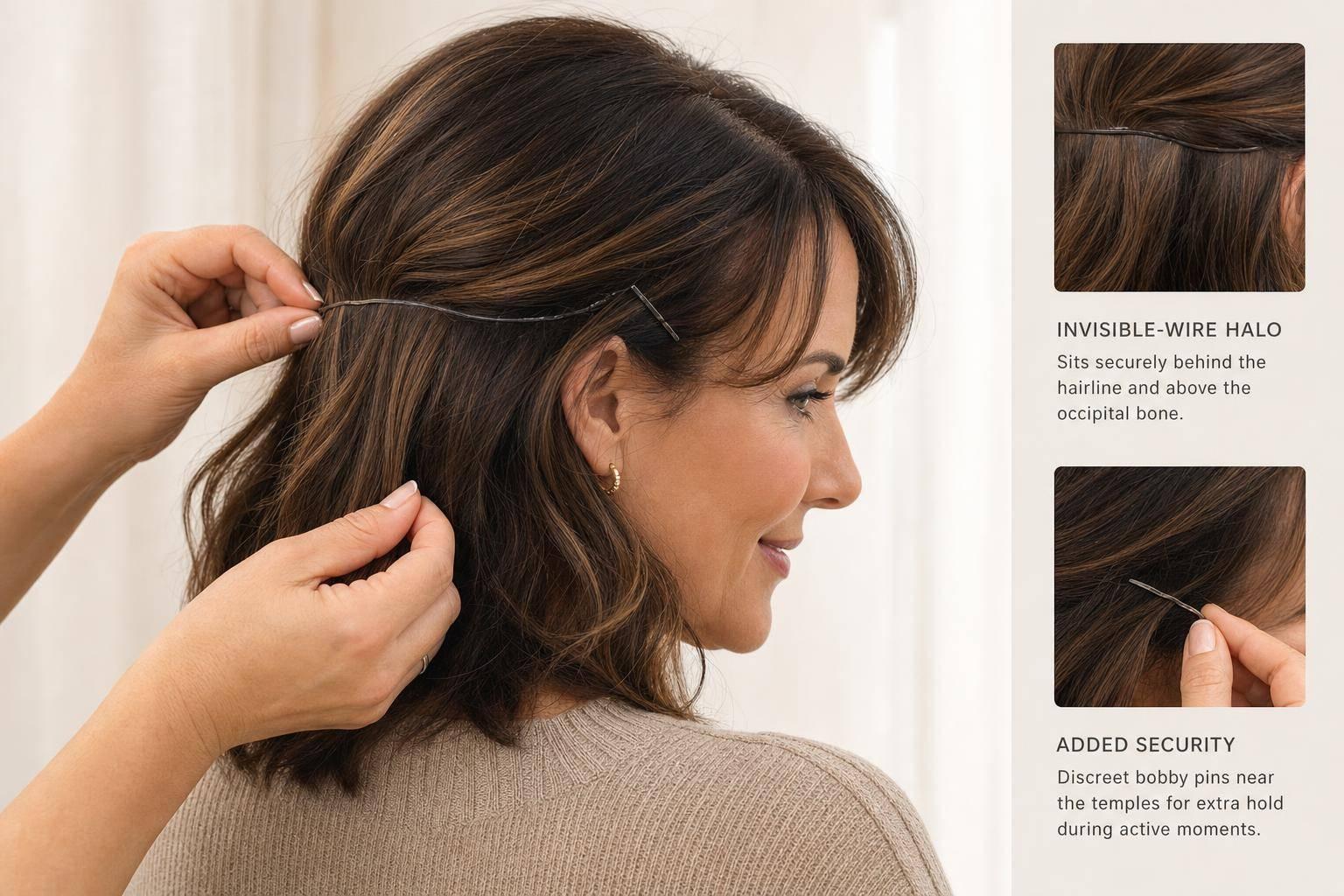
Yes - a halo can stay on well all day, but only if the wire fit is right. If the wire sits flat, rests about 1–2 cm behind your hairline, and the weft sits under the occipital bone, it should feel snug and stay put.
Here’s the short version:
- Most slipping comes from poor wire fit, not the halo itself.
- A loose wire can drift forward during the day.
- A tight wire can press at the temples and feel uncomfortable.
- Fine or silky hair may need backcombing, texturising spray, or a couple of bobby pins.
- For daily wear, a wire-only halo is often enough.
- For dancing, wind, or thin hair, clips or pins can add more hold.
- For sleep, swimming, and hard exercise, take it off.
About 52–58 cm is the standard head size range many halos are made for, with small fit changes made through an adjuster. So if you’re asking, “Will it fall out?”, my answer is simple: not if it fits you properly.
| Fit check | What it means |
|---|---|
| Wire sits flat on the scalp | Fit is likely right |
| Wire lifts away from the head | Too loose |
| Temples feel pressure fast | Too tight |
| Weft stays put when you shake your head lightly | Secure fit |
| Halo moves towards your face | Needs tightening |
If you want a halo that feels steady, I’d focus on fit first, then add pins only if your hair is very soft, fine, or slippery.
How an invisible-wire halo stays in place
A halo extension uses one weft of hair attached to a thin, clear wire. It sits on your head like a clear band, not with clips or bonds. Fit and placement are what make it feel secure.
Where the wire sits across the crown
The wire should sit about 1–2 cm behind your front hairline, resting across the top of the head. If it sits too far forward, the wire can show. Too far back, and it won’t feel as steady. That spot works because the back of the halo rests against a natural ridge on your head.
Why the occipital bone stops the halo from sliding
The weft sits lower than the wire and tucks under the occipital bone - the bony ridge at the back of your head - which helps stop the halo from sliding down. That’s the main reason a well-fitted halo stays put instead of dropping through the day.
How your own hair helps hold the halo in place
Your own hair does part of the work too. Let the top layer fall over the wire to hide it and add a bit of light downward pressure. If your hair is very fine or silky, lightly backcomb the crown area before placing the halo. That gives the wire a bit more grip. A small amount of texturising spray can help in the same way.
Next, wire size matters most when it comes to whether the halo feels secure or slips.
sbb-itb-08feb2f
Why getting the wire size right matters most
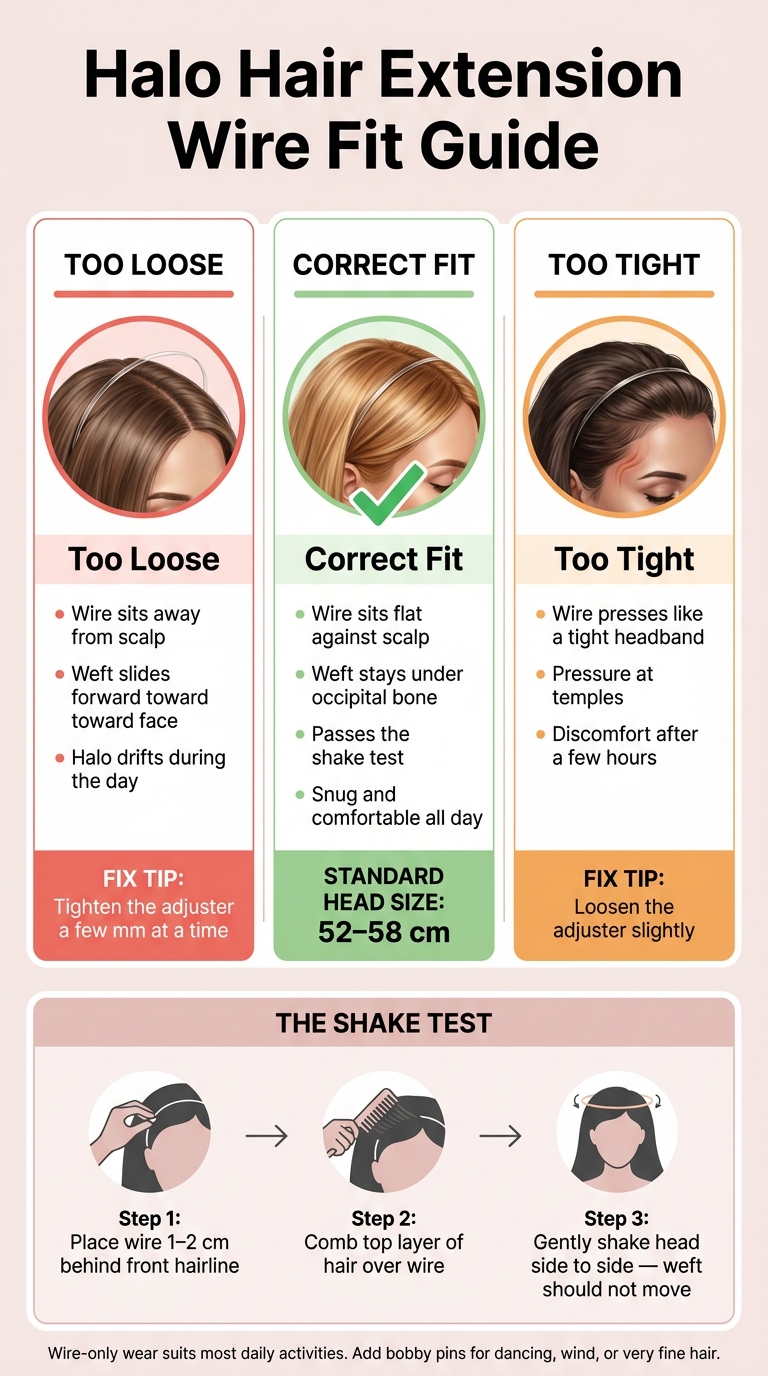
Halo Hair Extension Fit Guide: Too Loose vs. Correct vs. Too Tight
Wire fit is the biggest reason a halo either stays in place or starts drifting during the day. So before you judge how secure it feels, get the wire size right first.
Silkara halos are made for a standard head circumference of about 52–58 cm [1]. Most halos also come with an adjuster, such as a sliding bead, hook, or tied section, so you can make small changes to the fit [2][3].
How to tell if the wire is too loose, correct or too tight
- Too loose: The wire sits away from the scalp. That leaves the weft with less support, so it can slide forward towards your face as the day goes on.
- Correct: The wire sits flat against the scalp, and the weft stays where you placed it - snug, steady, and easy to forget about.
- Too tight: The wire presses in like a tight headband, causing pressure at the temples that can turn uncomfortable after a few hours.
A simple placement and shake test you can do at home
Place the wire about 1–2 cm behind your front hairline. Press it lightly so it sits flat against your scalp. Then let the weft rest under the occipital bone at the back.
Next, comb your top layer of hair over the wire. Turn your head gently from side to side and give it a small shake. If the weft moves or the wire slips towards your face, the circumference is too big. Tighten the adjuster a few millimetres at a time and test again, making sure the weft is still sitting under the occipital bone.
If it starts pinching at the temples right away, loosen it slightly. A good fit passes the shake test without slipping or creating pressure points.
Once the fit is right, optional clips are there for extra support, not to make up for a poor fit.
When clips or pins give a halo extra hold
If the wire fits well but you want a bit more hold, clips or pins can help.
Who may want a clip-assisted halo
Very fine, silky, or freshly washed hair can give the wire less to grip onto, so the halo may move unless you add clips or pins. A light mist of dry shampoo or texturising spray can help the wire sit better. If the adjuster is already at its smallest setting and the halo still feels a little loose, clips or pins can keep it steadier.
They’re also a smart add-on if you’re going somewhere with more movement, like a wedding reception, a dance floor, or a windy outdoor event. In those cases, it’s best to put the clips in before you leave home.
If your halo doesn’t have built-in clips, place two bobby pins over the wire at the temples, about 1–2 cm back from the hairline. That usually helps keep the halo in place.
Wire-only wear versus wire plus clips
For most day-to-day wear, wire-only is enough. If your hair is finer, the fit is a bit looser, or you’ll be moving around a lot, wire plus clips or pins tends to work better.
"This works so much better than regular clip in extensions when you have thin hair. I put a combo of both and it looks really natural." - Dona Carroll, Verified Customer [1]
Clips work best when they’re backing up a wire that already sits where it should. They add security, but they won’t solve a wire that still needs adjusting.
What to expect in everyday wear and where to shop Silkara halos
Everyday activities a well-fitted halo can handle
Once you've done the fit test, the next thing most people want to know is simple: how does a halo hold up during a normal day?
A well-fitted halo is made for everyday wear. That includes school drop-offs, office hours, lunch, and social events. Your own hair helps hide the wire and adds light pressure, which helps keep the halo sitting in place as you move through the day.
Light social dancing is usually fine too. If you want a bit more hold, add a couple of bobby pins as backup.
When to remove it and when to use extra support
There are a few times when it's best to take your halo off. Remove it before sleep, swimming, and vigorous exercise. Sleeping in it can bend the wire overnight, and the hair may tangle in your bedding. Chlorine and salt water can also dry out and damage the hair.
Here’s the quick guide for sleep, swimming, and exercise:
| Activity | What to do |
|---|---|
| Office, dining, social events | Wear as normal |
| Light social dancing | Add bobby pins for extra hold |
| Vigorous exercise | Remove the halo |
| Sleeping | Always remove |
| Swimming | Always remove |
Shop Silkara halo hair extensions
When you know the fit works, the next step is to pick your shade and place your order. Shop Silkara halo hair extensions at silkarahair.com.au.
You can use the free Colour Match service to find your shade, then order with free Australia-wide shipping on orders over $150 and a 14-day colour exchange guarantee. [1]
FAQs
How do I measure my halo wire size?
You don’t need exact head measurements. Silkara halo extensions come with a built-in adjustment feature, so they can fit any head size.
Just tighten or loosen the transparent wire in small steps until it sits snugly 1 to 2 cm back from your front hairline. Check the fit as you go so it feels comfortable and stays in place.
Will a halo work on very thin hair?
Yes, halo extensions can work on thin hair if you have enough natural hair at the crown to hide the invisible wire.
Silkara halo extensions are lightweight, and that helps spread the weight more evenly across your head. That makes them a gentle, damage-free pick for fine or fragile hair.
If you want a bit more hold and a smoother blend, Silkara also offers clip-assisted options. And if your hair is very fine, a little teasing at the crown or a couple of bobby pins at the sides can help keep the wire in place for all-day wear.
Can I wear a halo in windy weather?
Yes, you can wear a halo in windy weather with confidence. The single-wire system sits neatly on your crown, which helps keep it steady when it’s breezy.
If you want extra hold, the discreet built-in clips help secure the weft to your natural hair. You can also lightly tease the hair at the crown or place bobby pins over the wire at the sides for a bit more grip.