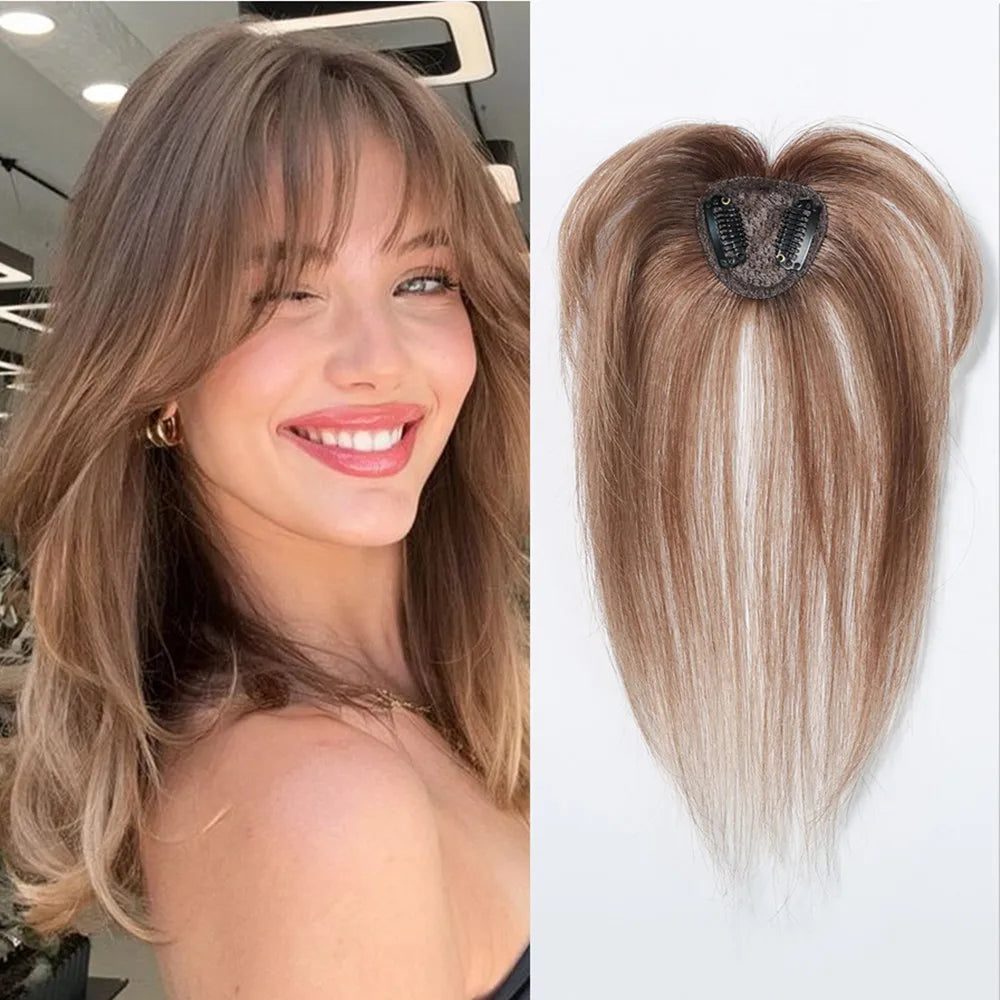

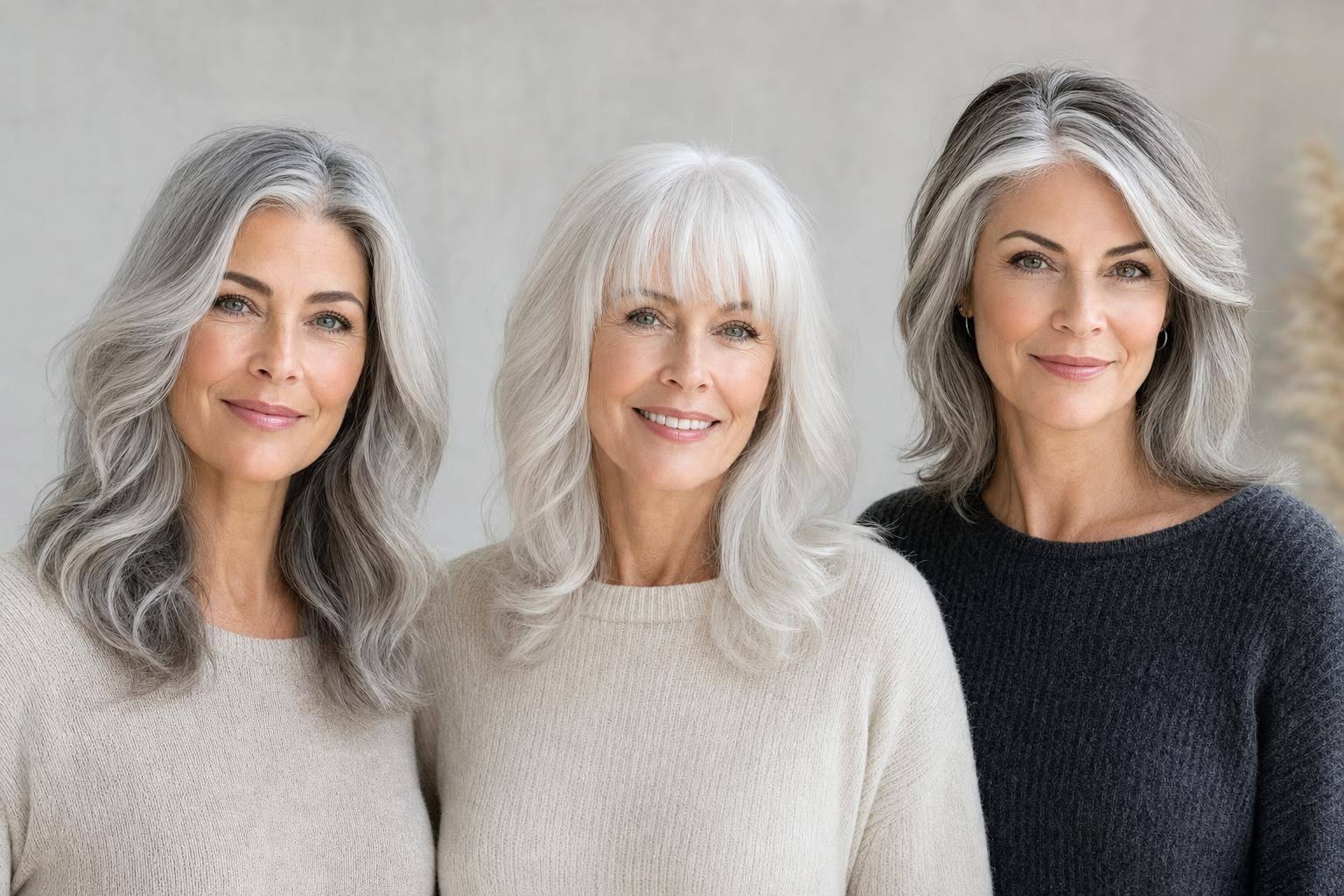
Grey hair matching is less about picking “grey” and more about matching tone, light-to-dark mix, and placement. If I get those three right, the piece is far more likely to blend at the crown, part line, hairline, or ends.
Here’s the short version:
- I match the lengths, not just the roots
- I check colour in natural daylight
- I look at cool, warm, or mixed undertones
- I pay attention to salt-and-pepper ratio, not one flat shade
- I choose the product by area: topper, halo, clip-ins, ponytail, bun, or fringe
- I use two clear photos for colour matching, front and back
- Silkara replies in 12–24 hours for photo shade help
Natural grey hair often mixes white, silver, slate, charcoal, and darker strands. That means a flat extension can look off fast, especially beside hair that reflects light in a softer way. A close shade name is not enough. The blend has to work where the piece sits.
Quick comparison
| Hair goal | Best product type | What I focus on when matching |
|---|---|---|
| Crown thinning | Hair topper | Part-line blend and salt-and-pepper mix |
| Length and volume | Halo or clip-ins | Mid-length and end colour |
| Front softening | Clip-in fringe/bangs | Face-frame tone |
| Fast styling | Ponytail or bun | Overall colour balance |
One simple point runs through the whole piece: blend beats label. If the tone, depth, and strand mix line up with my own hair, silver, white, and salt-and-pepper extensions look far more natural.
Understanding Grey, Silver, White and Salt-and-Pepper Hair Colour
Grey hair usually sits in cool silver, bright white, or mixed salt-and-pepper tones. So when you’re matching extensions, the goal isn’t one flat colour. It’s the blend.
Cool silver tends to look icy or steel-grey. White hair can look crisp and cool, or softer with a creamy, pearl-like cast. Salt-and-pepper hair has a lot more going on. Lighter salt-and-pepper has more dark strands, while heavier salt-and-pepper leans more silver. That’s why the wrong grey can stand out straight away next to natural hair.
When you compare your hair, look at two things:
- how much dark versus light you can see
- whether the overall tone looks cool or warm
Lighting can throw you off. Indoor light often makes grey hair look warmer, while harsh sunlight can wash out the mix. For the best read, check your hair in natural daylight [1][2].
How Undertones Show Up in Grey and White Hair
Even without pigment, grey and white hair still shows undertones. Cool greys can lean blue, violet, or steel. Warm greys can look more champagne, pearl, or soft beige.
A simple way to check is to hold a section of hair against white paper in natural daylight. If it looks blue or violet, you’re cool-toned. If it looks creamy, yellow, or beige, you’re warm-toned [2][3].
With salt-and-pepper hair, there’s one more thing to watch: the darker “pepper” strands. Are they near-black, dark brown, or soft brown? That darker base matters, and it needs to be part of the match [4].
Once you know if your hair reads cool or warm, the colour match usually gets a lot closer.
Why Tonal Variation Matters More Than a Single Flat Grey
Hair that looks natural almost always has strand variation. That mix is what makes the blend work. A solid grey extension next to hair with light and dark movement can look obvious, simply because it has no depth [4][6].
A better way to match is to focus on the ratio of light to dark strands, along with the tone of both. That tends to work better than chasing one exact grey shade [4].
In many cases, a rooted extension with a darker base and lighter lengths blends better than a uniform grey. It mirrors the kind of variation that grey hair often has on its own. That’s why the next step is choosing the extension type and colour pattern that fits your grey tone.
sbb-itb-08feb2f
Why Undertone and Dimension Matter When Choosing Extensions
Once you know your undertone, use it to narrow down your Silkara match.
Buying a grey extension by label alone is where many people come unstuck. A shade called "silver" in one range might look icy and blue-toned, while another with the same name can look warmer and more champagne [3][5]. That’s why undertone matters more than the name on the box. Shade labels shift from one range to the next.
Dimension matters too. A flat piece can stand out against grey hair [6][5]. In many cases, the mix of light and dark strands matters more than choosing something labelled "grey" or "silver" [5][4]. For mature hair, the best test is simple: does the piece disappear at the part line and crown?
Use the light-to-dark ratio in your own hair as your main guide.
Common Colour-Matching Mistakes With Silver, White and Salt-and-Pepper Hair
A few mistakes show up again and again.
- Matching the roots instead of the lengths. Match the lengths, not the roots, because extensions sit through the mid-lengths and ends [2][1].
- Checking colour under indoor lighting. Look at colour in natural daylight, not indoor light [2][3].
- Choosing by label without checking undertone or strand mix. Many grey extensions are toned blonde hair, and when the toner fades, they can leave yellow or violet casts [4].
If you're unsure, send Silkara a daylight photo for a free colour match.
How Going Slightly Lighter or Darker Can Improve the Blend
Instead of chasing one exact label, focus on the overall balance of light and dark already in your hair. Hair that is mostly white or silver often blends best with silver or platinum tones, while hair with more dark strands can suit darker grey or slate shades [2][5].
With salt-and-pepper hair, a blended mix often looks more natural than one flat colour because it mirrors the salt-to-pepper ratio already in your hair [5][4]. Think of it like fabric with texture versus a solid block of colour. One tends to melt in. The other can sit on top.
The aim is a natural match, not a harsh contrast.
Once your undertone is clear, the next step is choosing the Silkara hair extension collection that blends best at the crown, part line or through the lengths.
Choosing the Right Silkara Hair Product for Grey Hair
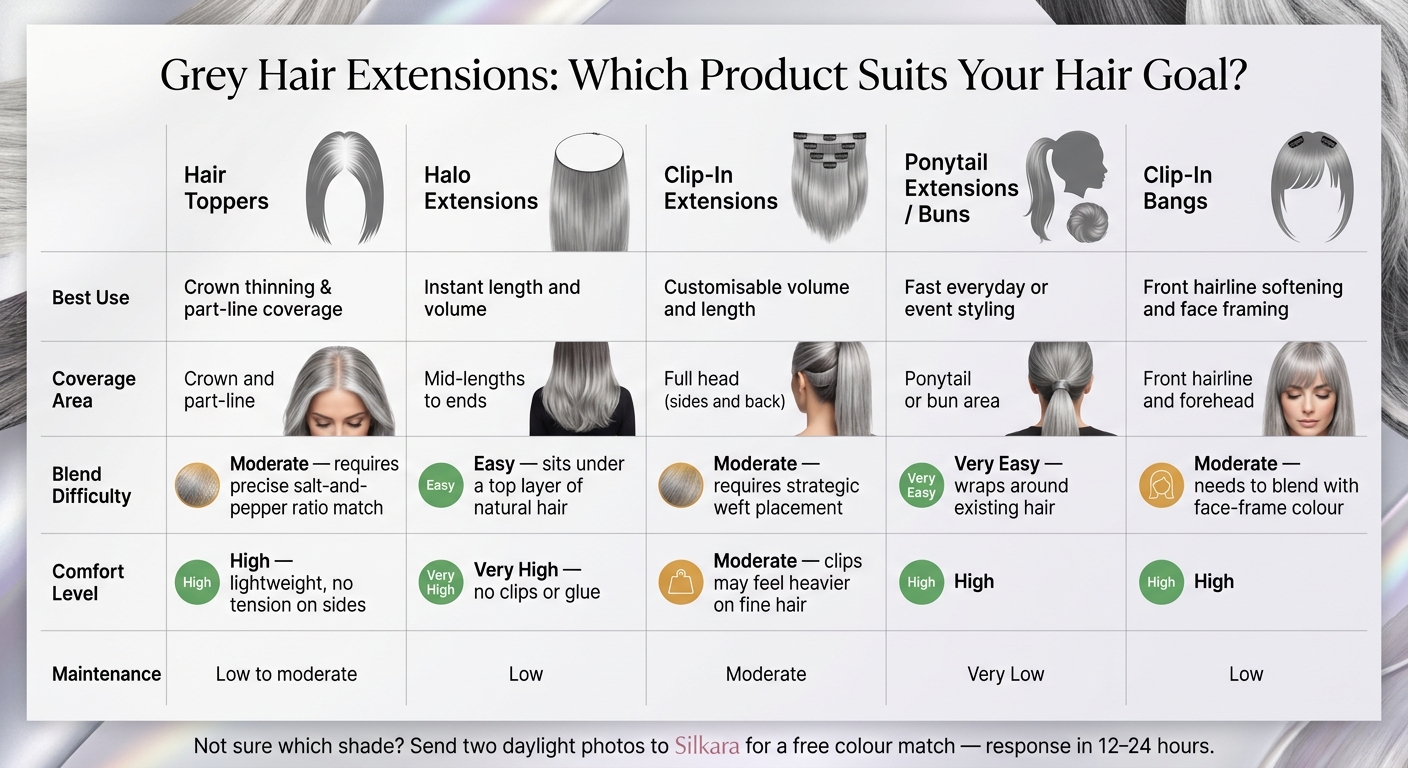
Grey Hair Extensions: Which Product Suits Your Hair Goal?
Choose your Silkara product based on where you need coverage: the crown, the lengths, or the front hairline. That matters more than the shade name alone.
The goal is simple: pick the piece that blends where it sits. A shade can look right in theory, but still look off once it’s in place.
Hair Toppers for Crown Thinning and Part-Line Coverage
A human hair topper is the most precise option for thinning at the crown or a widening part. Because it sits on the top of the head, the colour needs to match the salt-and-pepper mix of your own hair, not just the general shade.
That’s the part many people miss. Grey hair often has more than one tone running through it, so a topper needs to disappear at the part line. If the piece is too silver for darker grey hair, or too dark for mostly white hair, it can stand out instead of blending in.
Halo and Clip-In Extensions for Length and Volume
If your main concern is flat, fine mid-lengths and ends, rather than crown coverage, halo extensions or clip-in extensions make more sense.
Halo extensions work well if you want extra length and volume without clips. For fine grey hair, clip-ins with slim wefts that sit flat are easier to blend [2]. When matching the shade, use the visible lengths and ends as your guide, because that’s where the blend shows most.
Ponytails, Buns and Clip-In Bangs for Fast Styling and Coverage
For quick everyday styling or event prep, ponytail extensions and hair buns are easy, low-effort options that give hair a polished look fast. Clip-in bangs and wispy fringes can also help if you want softer face framing or need to soften thinning at the front hairline.
| Concern | Recommended Silkara Product | Effort Level |
|---|---|---|
| Crown thinning | Human Hair Topper | Low - quick clip-in |
| Flat lengths and ends | Halo Extensions or Clip-In Extensions | Very low to low |
| Front hairline thinning or face framing | Clip-In Bangs / Wispy Fringe | Low - instant style |
| Everyday or event styling | Ponytail Extension or Hair Bun | Very low - fast attachment |
If your grey sits between two shades, send Silkara a daylight photo for the closest match.
How to Get an Accurate Grey Hair Colour Match With Silkara Hair
Once you know if you need crown, length, or front coverage, choosing a colour gets a lot easier. With grey hair, the key thing is tone, not the shade name on the label.
That’s where the photo match helps. It works best when you already have a rough sense of whether your grey looks cool, warm, or mixed. Silkara’s free photo match can narrow down the closest tone, with a response time of 12–24 hours [1].
How to Take Better Colour-Matching Photos in Natural Daylight
For the best match, take two clear photos - one from the front and one from the back - with your hair fully down from root to tip [1].
A few details make a big difference:
- Take the photos in bright, indirect natural daylight
- Make sure your hair is dry and worn down [1]
- Skip ponytails and buns, because the team needs to see the full colour pattern from roots to ends [1]
- If you use purple shampoo often, wash first with a clarifying shampoo to remove residue that can shift how the tone looks [2]
- Don’t use filters, even subtle ones, because they can hide the cool or warm undertones that matter most for a precise match [1][3]
Think of it this way: if the light is off, the match can be off too.
What Silkara Hair Looks at in Your Photo Match Request
The matching team looks at a few things in your photos: the ratio of light to dark strands, the tone family, and whether your hair is mostly even-toned or strongly mixed [2][4][5].
For salt-and-pepper hair, the darker base matters just as much as the silver. If those darker strands lean more ash brown than black, that can change the recommendation [4][2].
Product choice matters too. The same shade can look different on a topper, halo, or clip-in, depending on where it sits on your head. So when you send your request, tell the team which Silkara product you’re looking at. That helps them shape the blending approach around the placement of the piece [1].
Comparison Table: Which Silkara Hair Option Suits Your Grey Hair Goal
Use this table to match your main hair goal with the right Silkara piece.
| Silkara Hair Option | Best Use | Coverage Area | Blend | Comfort | Typical Maintenance |
|---|---|---|---|---|---|
| Hair Toppers | Crown thinning and part-line coverage | Crown and part-line | Moderate - requires precise ratio match at the part | High - lightweight, no tension on sides | Low to moderate |
| Halo Extensions | Instant length and volume | Mid-lengths to ends | Easy - sits under a top layer of natural hair | Very high - no clips or glue | Low |
| Clip-In Extensions | Customisable volume and length | Full head (sides and back) | Moderate - requires strategic weft placement | Moderate - clips may feel heavier on fine hair | Moderate |
| Ponytail Extensions / Buns | Fast everyday or event styling | Ponytail or bun area | Very easy - wraps around existing hair | High | Very low |
| Clip-In Bangs | Front hairline softening and face framing | Front hairline and forehead | Moderate - needs to blend with face-frame colour | High | Low |
If your grey sits between two shades, or you’re not sure which product fits your main concern, the photo match service is a solid next step.
Conclusion: Focus on Blend, Comfort and Colour Support
Once you know your undertone and how much coverage you want, the last step is picking a piece that blends neatly through the part, crown, or lengths. With grey hair, the best match comes from tone and dimension, not a flat grey shade.
Start with undertone. Then look for a shade with enough depth and variation to melt into your own hair. Flat grey pieces often stand out next to natural silver, white, or salt-and-pepper hair.
But shade alone isn't enough. The product shape also needs to work for how you'll wear it day to day. Choose the Silkara piece that fits your main goal:
- Crown coverage
- Added length and volume
- Quick styling
Silkara also offers a free photo colour-matching service. Send two clear daylight photos and note which product you want matched. That gives you a better shot at a clean blend, with less guesswork and more confidence, plus a result that looks natural on you.
FAQs
How do I know if my grey hair is cool or warm-toned?
Check your hair in natural daylight and hold it next to a sheet of pure white paper. If your hair looks blue, violet, or steel, it’s cool-toned. If it looks champagne or warm beige, it’s warm-toned.
There’s another simple way to double-check: look at the veins on your wrist. Green usually points to a warm undertone, blue or purple points to a cool undertone, and a mix of both often means your undertone is neutral.
If you want the closest undertone match, use Silkara’s free photo colour-matching service. Just send two clear photos taken in natural light.
What if my hair is between silver and salt-and-pepper shades?
If your hair sits somewhere between silver and salt-and-pepper, don’t lock yourself into just one shade. Take a look at a small section of your hair in natural daylight. That makes it much easier to spot the mix of white and dark strands, and see which tone stands out more.
For the best blend, use Silkara Hair’s free photo colour-matching service for personalised guidance.
Which Silkara Hair piece is best for crown thinning versus extra length?
Choose based on your main goal: coverage or length.
If you have thinning at the crown or along the part line, a hair topper is usually the best pick. It sits over the sparse area and adds density and lift where you need it most.
If your crown still has enough density but you want more length and fullness, halo or clip-in extensions make more sense.
Need both? Pair a topper with halo or clip-in extensions.