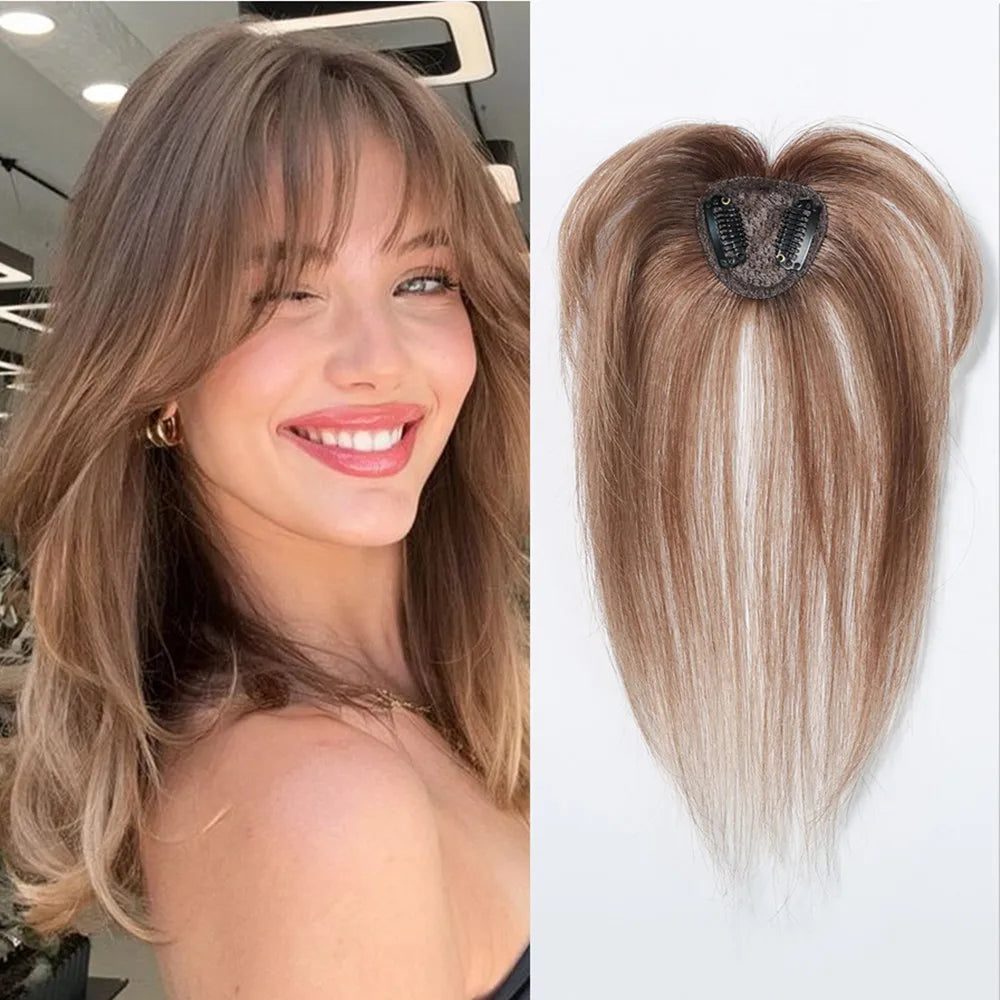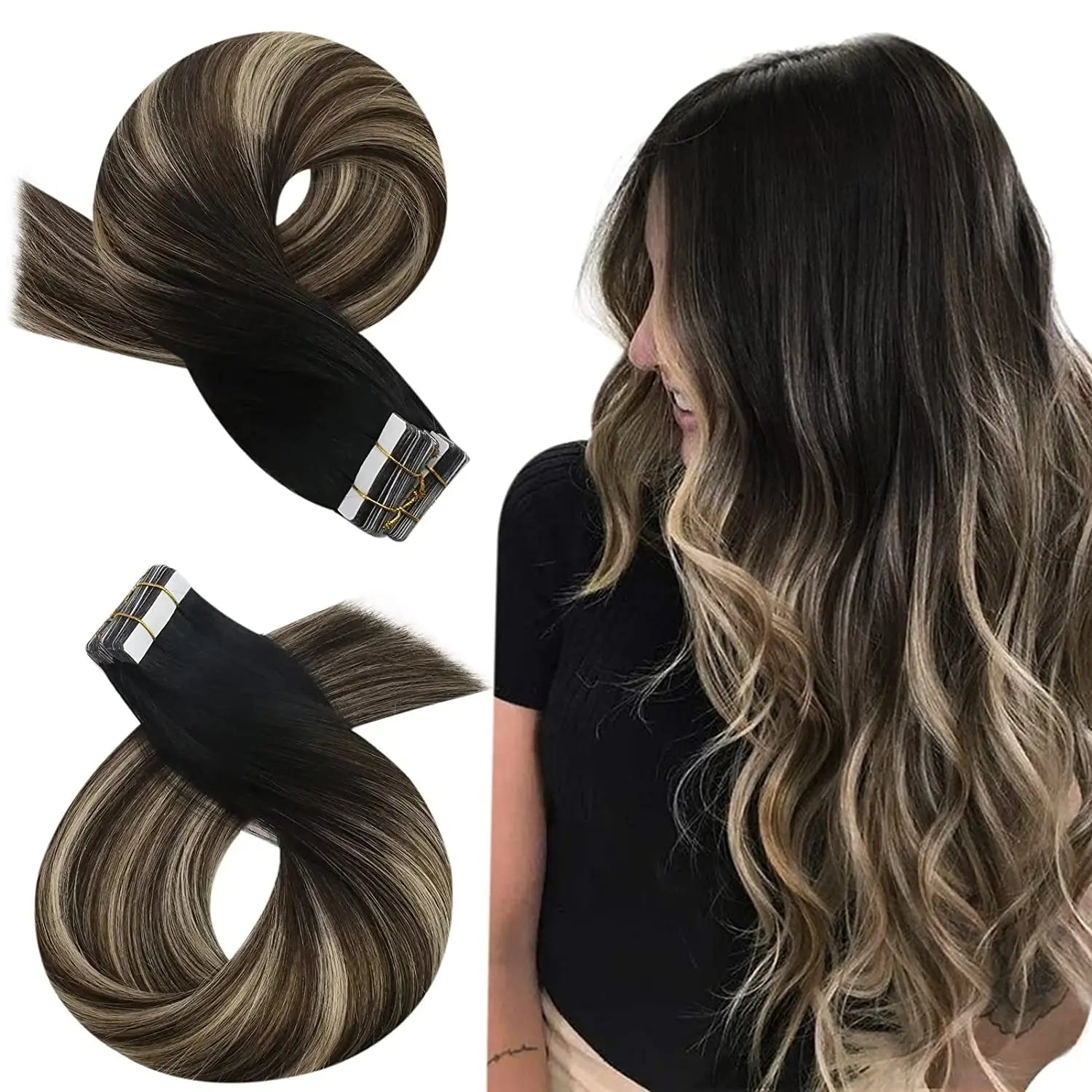

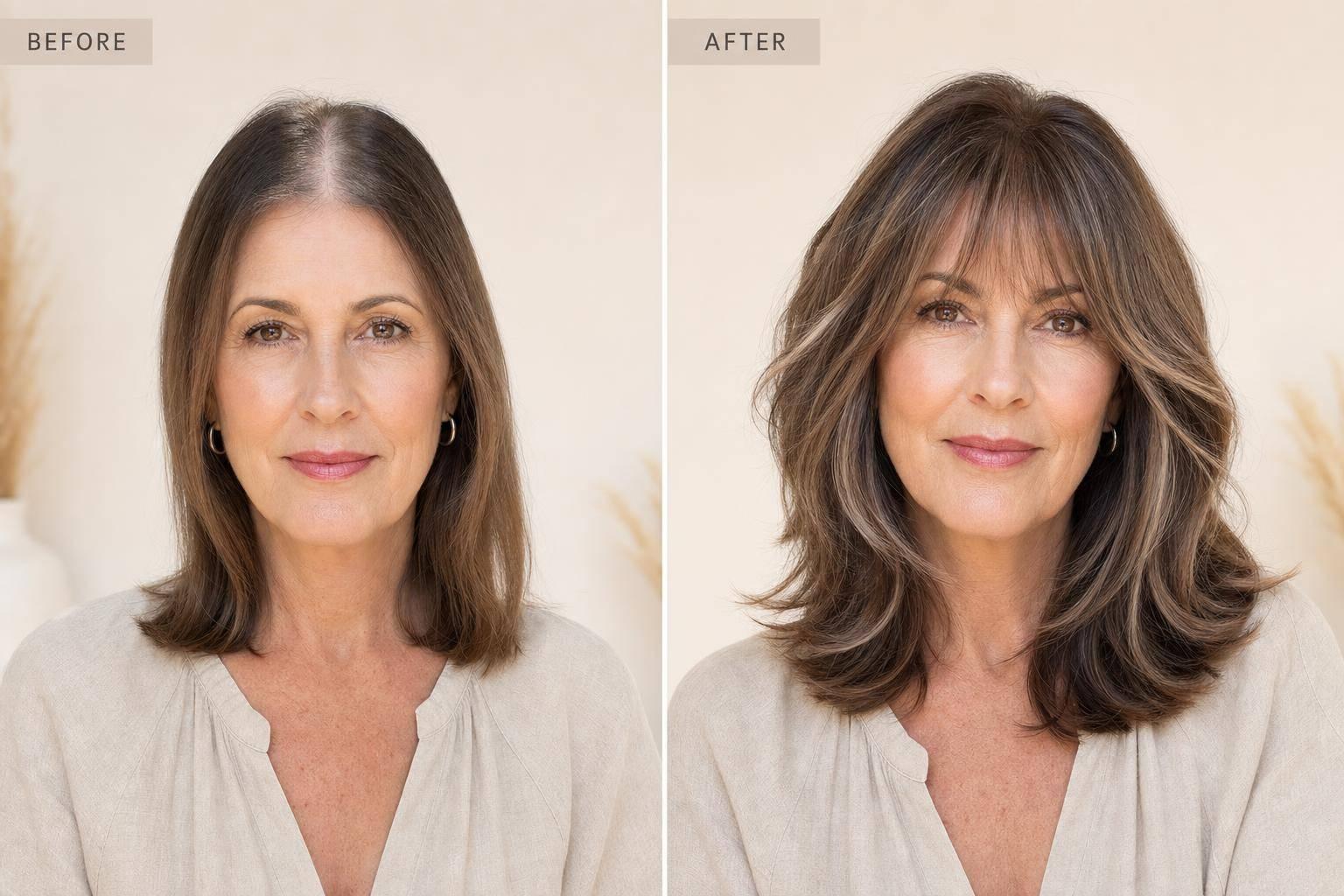
If I want a hair piece to blend well, I usually avoid one flat shade. Most natural hair has at least 2 to 3 visible tone shifts from roots to ends, so a mixed colour piece often sits better against my own hair.
Here’s the short version:
- Solid colours can look blocky at the crown, part line, or where extensions meet my own hair
- Dimensional colours mix tones like root depth, highlights, and lowlights
- That tone mix softens the join and helps hide contrast near greys, regrowth, or thinning spots
-
The best match point changes by product
- toppers = roots and crown
- clip-ins and halos = mid-lengths and ends
- bangs and fringes = front hairline and face-framing pieces
- Daylight photos help more than a mirror, especially when I’m stuck between two shades
A simple way to think about it: if my hair is darker at the root, lighter through the ends, and uneven around the face, one single shade may only match one area well. A dimensional piece has a better shot at matching all three.
| Colour type | What I tend to see |
|---|---|
| Multi-dimensional | Softer blend, less contrast, more natural light and depth |
| Solid | Sharper lines, flatter look, mismatch shows faster in daylight |
Bottom line: if I want a softer, less obvious blend, I’d usually pick a multi-dimensional shade and match it to the part of the hair people will notice first.
The blending problem with solid colours
The problem starts when that colour sits next to your own hair. Natural hair has warmth, depth, and small shifts in tone. A flat shade doesn’t [1].
Where flat colour creates a visible mismatch
At the crown, a solid colour can form a hard block at the scalp that looks separate from the hair around it [2][3]. Instead of blending into the roots, it can look like it’s sitting on top of them.
You see the same thing when adding length or volume. If your natural hair has lighter ends or highlights, a solid extension can leave a hard horizontal line where your hair ends and the piece starts [2]. Good blending takes more than matching depth alone.
Why roots, mid-lengths and ends rarely match the same way
Roots are often deeper, while mid-lengths and ends tend to be lighter [1]. Root depth can also shift from person to person, which means one shade rarely matches every part of the hair in the same way [1].
Undertones matter too. Even if the depth looks right, warm and cool tones can clash in daylight [1].
For greys or regrowth, a solid colour can make the contrast stand out even more [2][3].
That is why multi-dimensional colour softens the join.
sbb-itb-08feb2f
Why multi-dimensional colours blend better
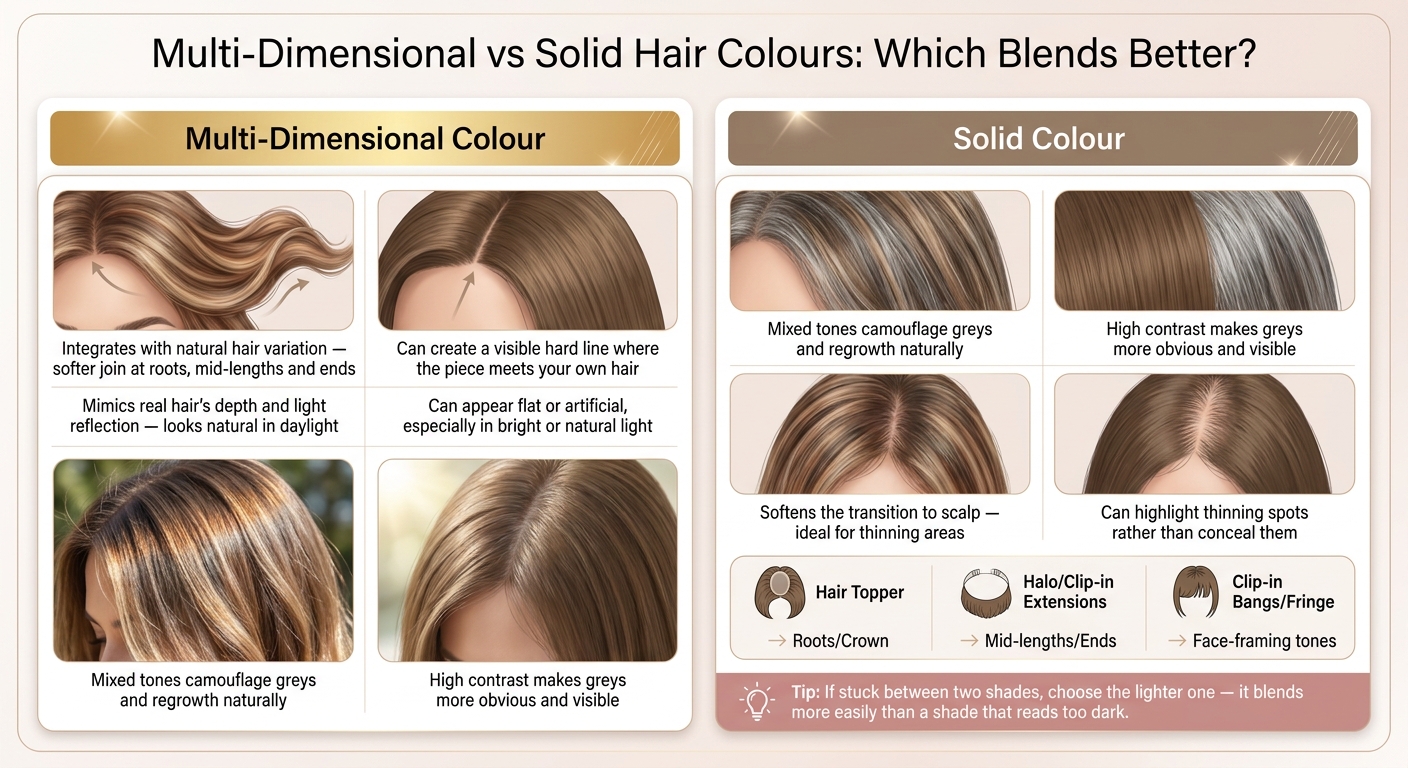
Multi-Dimensional vs Solid Hair Colours: Which Blends Better?
Dimensional colour works well because it mirrors the tonal shifts already in natural hair. Most hair isn't one flat shade. It has lighter pieces, deeper pieces, and small changes in tone throughout. A topper with that same mix tends to sit more naturally, instead of standing out. That’s also why even a slight tonal mismatch is easier to hide in a dimensional piece.
How depth and light reflection soften the join
Mixed tones reflect light in different ways across the strands. That helps soften the join [4].
It also helps disguise greys, regrowth, and thinner spots.
Why dimensional shades help with greys and thinning
If you're dealing with greys or thinning at the crown, a highlighted or softly rooted topper can make a big difference. Mixed tones lower the contrast, so coverage looks more like fuller hair and less like an add-on [3]. In day-to-day wear, that helps the topper read as part of your own hair, not a separate layer.
Dimensional colours vs solid colours in daily wear
You’ll usually notice the difference most in these areas.
| Feature | Multi-Dimensional Colours | Solid Colours |
|---|---|---|
| Blending | Integrates with natural hair variation | Can create a visible hard line at the join |
| Natural appearance | Mimics real hair's depth and light reflection | Can look flat or artificial in bright light |
| Grey blending | Camouflages greys and regrowth naturally | High contrast makes greys more obvious |
| Scalp camouflage | Mixed tones soften the transition to scalp | Solid shades can highlight thinning areas |
The next step is matching those tones to the part of the hair that shows most.
How to choose the right dimensional match
Once you know dimensional colour gives a softer blend, the next step is picking a shade that works with your own hair.
Check your base shade, tone and highlight placement
Start by looking at your hair in indirect daylight, like near a window. Direct sun and indoor lighting can throw the tone off and make your hair look warmer, cooler, lighter, or darker than it is.
Wear your hair down and dry, then look at three things: your base shade, your undertone, and where the lighter pieces sit - around the face, through the mid-lengths, or at the ends [5][6]. The goal is simple: match the highlight placement to the areas where your hair already looks lighter.
That gives you a clear colour map before you choose a product.
Match the most visible area
Not every product needs to match in the same spot. The best match point depends on the type of hair piece.
For a hair topper with bangs, the root and crown area matter most, because that’s where the piece has to blend against your scalp [2]. For halo hair extensions or clip-ins, the mid-lengths and ends usually matter more, since those sections sit next to your own hair and need to move with it [6].
Clip-in bangs and wispy fringes are a bit different. They sit right around your face, so the tones near your hairline matter most. If your natural hair has warm or cool pieces around the front, pay close attention to that before you pick a shade.
| Product | Primary Match Area |
|---|---|
| Hair topper | Roots/crown |
| Halo / clip-in extensions | Mid-lengths/ends |
| Clip-in bangs / wispy fringe | Face-framing tones |
| Ponytail extension | Mid-lengths |
Match the most visible zone first, and the piece will look more natural in day-to-day wear.
Take clear photos for more accurate colour matching
Photos in natural light often show colour shifts better than a mirror. Take front and back photos with your hair dry and down. Use natural light, and skip close-up selfies that crop out the ends.
If you’re stuck between two shades, go with the lighter one. A slightly lighter piece is usually easier to blend than one that looks too dark against your own hair [6].
Silkara Hair options and key takeaways
Silkara Hair pieces that suit multi-tonal hair
Once you know which tones matter most, and where they sit in your hair, the next step is simple: pick a piece that can carry that mix of colour.
Silkara Hair offers human hair toppers, halo extensions, clip-ins, fringes, ponytails and buns in dimensional shades that reflect the natural variation in real hair.
For crown coverage, highlighted toppers show this best. Soft root shading and tonal variation tend to blend more naturally at the part line than a flat, single shade.
Other pieces suit other areas:
- Halo extensions and clip-ins work well when your ends are lighter
- Clip-in bangs and wispy fringes suit softer face-framing tones
- Ponytail extensions and hair buns can help blend uneven regrowth at the nape in upstyles
That makes the choice a lot easier. Silkara Hair also offers a free colour match service: send a photo of your hair in natural light, and the team will suggest a shade based on your roots, mid-lengths and ends. Selected products also include an AI virtual try-on.
Conclusion: the simplest way to get a softer blend
Dimensional shades soften the join because they mirror the variation already found in real hair, from root to mid-length to ends. That variation helps a topper or extension look like part of your own hair, not something sitting on top of it.
The simplest approach is to choose a multi-dimensional piece instead of a flat, single-tone shade, match it to the area that will be seen most, and use clear daylight photos to line up your roots, mid-lengths and ends before you decide. That three-zone approach is what turns a decent colour guess into a believable, everyday blend.
FAQs
How do I know if my hair is multi-tonal?
Check your hair in natural daylight. It’s the best way to spot slight colour shifts that indoor lighting can hide. Pay close attention to any natural highlights, lowlights, or sun-lightened strands, especially through the mid-lengths and ends.
If your hair has a mix of hues instead of one flat shade, it’s multi-tonal. Your base colour and undertones can work together to give your hair more depth and dimension.
Can a dimensional shade still work if I have greys?
Yes, a dimensional shade can still work well if you have greys. Because it blends multiple tones instead of laying down one flat colour, it mirrors the natural shifts and light you see in hair.
That helps soften the contrast between your natural base and regrowth. As a result, grey hair tends to look more seamless and more natural than it often does with solid colours.
Should I match my roots or my ends first?
Match your hair solution to your mid-lengths and ends, not your roots. Roots are often darker because of new growth and less sun exposure, so they’re usually a poor guide for where extensions or toppers will blend.
When you match the visible lengths, the colour blends into your natural hair more easily and looks more natural. Check the match in natural daylight.