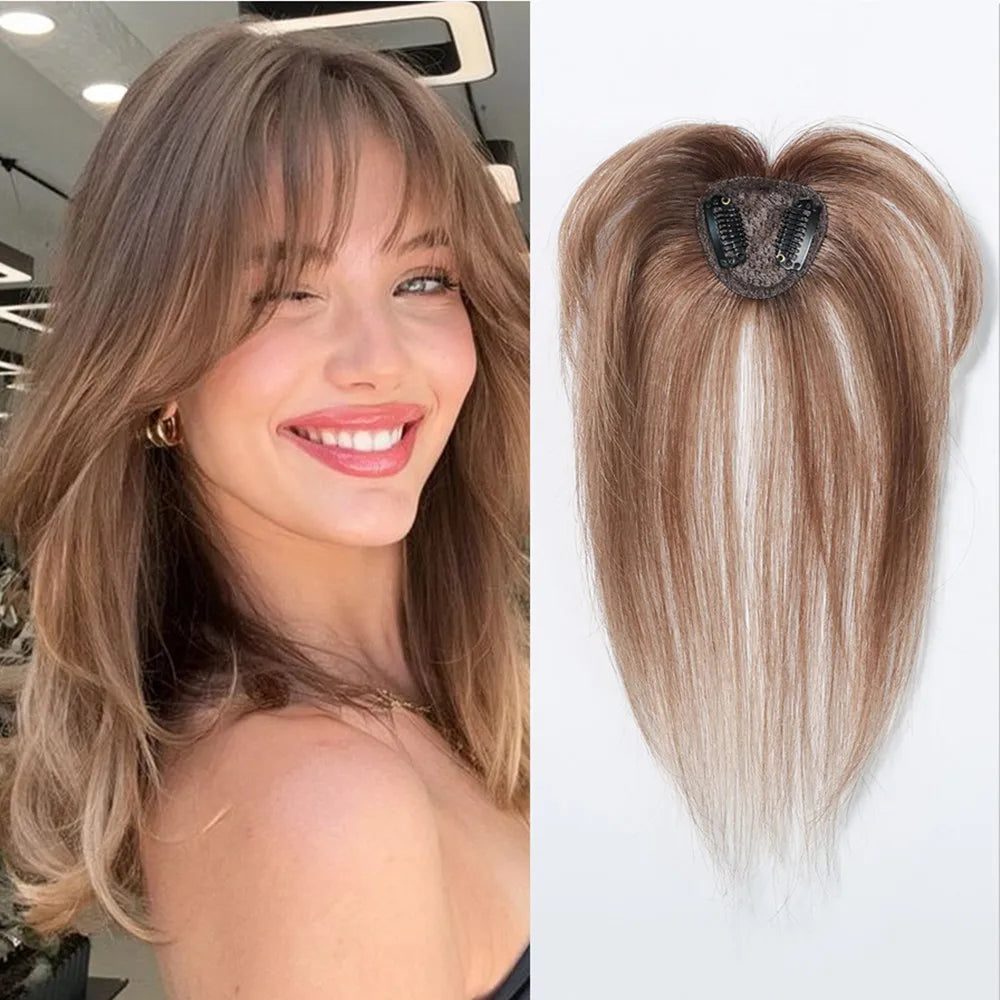

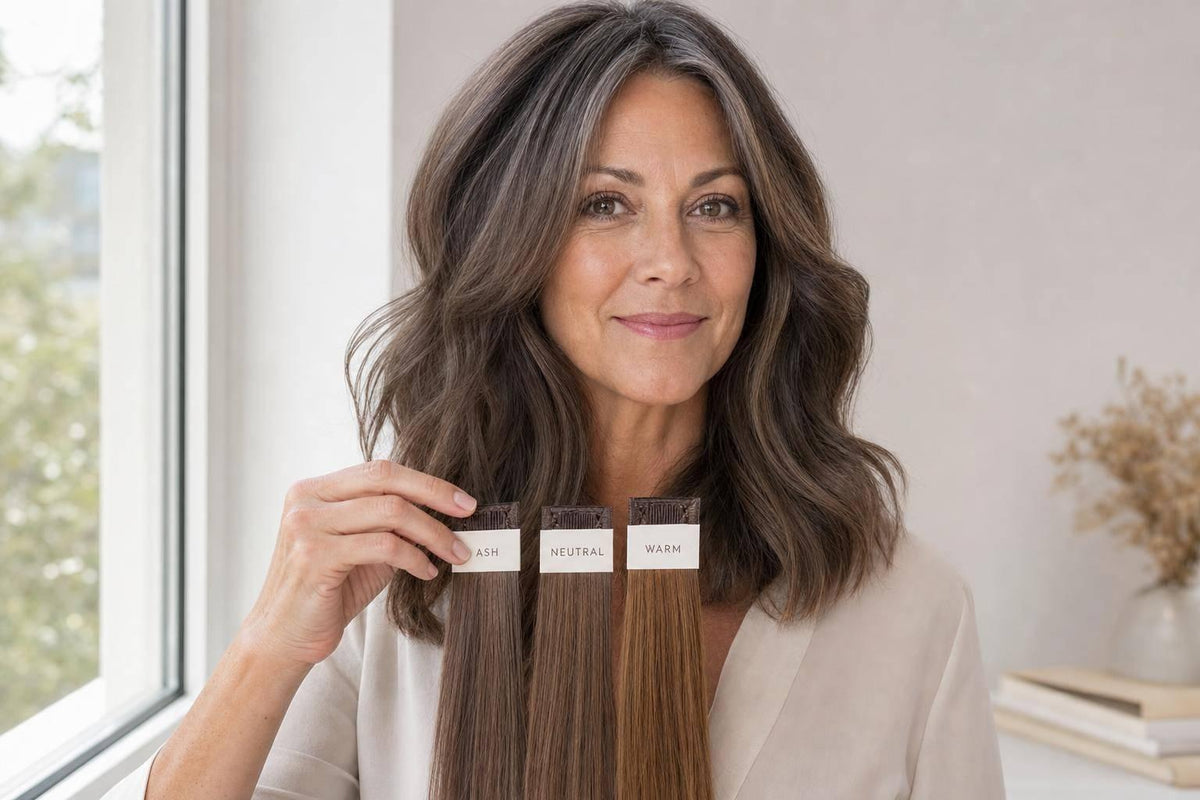
If your hair piece matches the depth but still looks off, the undertone is usually the problem. In most cases, you only need to sort three things: whether your hair reads ash, neutral, or warm, how it looks in indirect daylight, and whether you should match to your mid-lengths and ends instead of your roots.
I’d break it down like this:
- Ash hair looks smoky, icy, or grey-toned and can help offset yellow or orange tones.
- Neutral hair sits in the middle and usually looks beige, creamy, or natural.
- Warm hair shows gold, honey, caramel, or copper and reflects more light.
- Daylight matters. Indoor lighting and full sun can distort tone.
- Roots can mislead you. For toppers and extensions, I’d check the lengths you want to blend with.
- Skin tone can guide the choice. Blue or purple-looking veins often point cooler; green often points warmer; a mix often points neutral.
About 80% to 90% of what people call a “bad shade match” often comes down to tone, not just lightness or darkness. So before choosing a topper, fringe, or extensions, I’d first decide which tone family your own hair sits in.
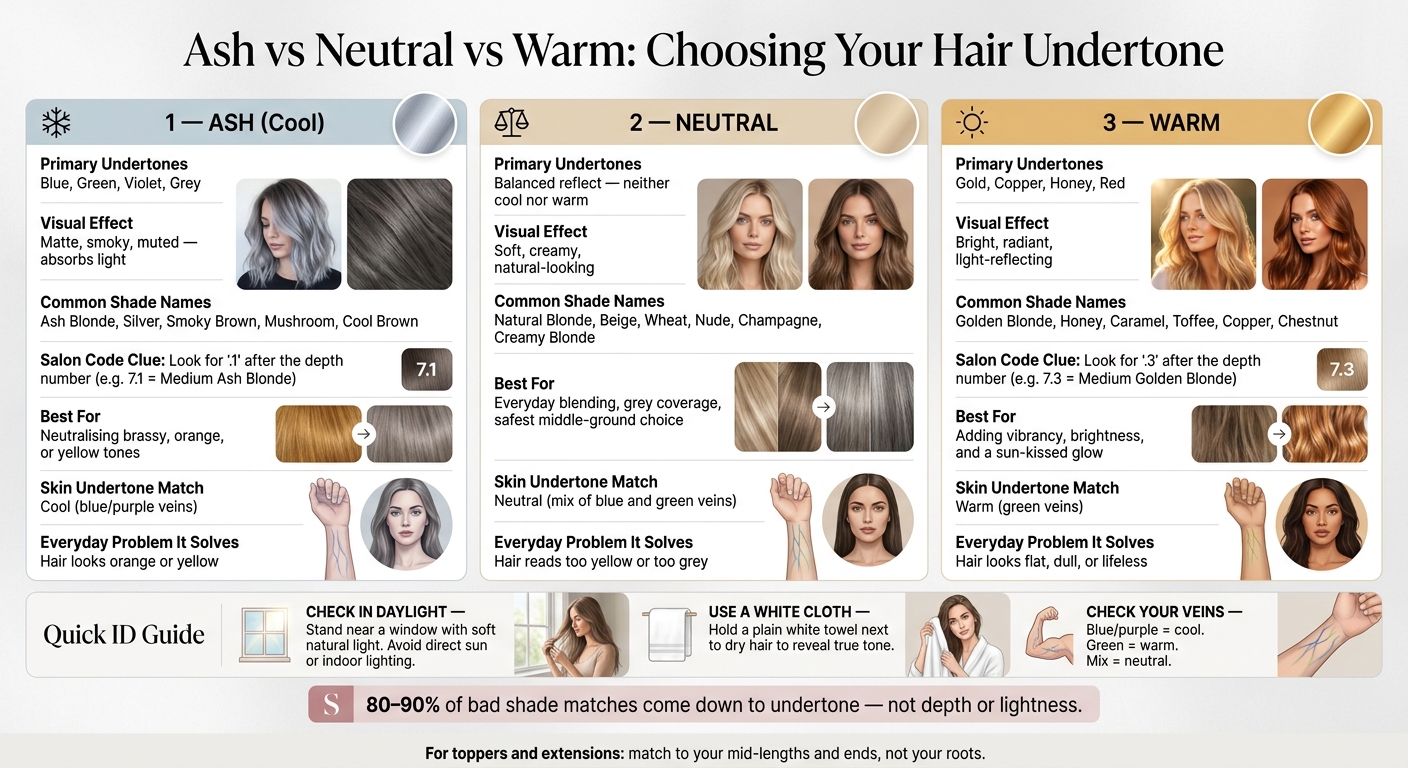
Ash vs Neutral vs Warm Hair Shades: How to Choose the Right Undertone
Quick comparison
| Tone family | What I’d look for in daylight | Common shade names | Best use |
|---|---|---|---|
| Ash | Smoky, silvery, cool, muted | Ash Blonde, Silver, Smoky Brown | To reduce brassy yellow, orange, or red |
| Neutral | Beige, creamy, balanced | Natural Blonde, Beige, Creamy Blonde | When I want the safest middle ground |
| Warm | Gold, honey, caramel, copper | Golden Blonde, Honey, Caramel | When I want brightness and a sun-lit look |
If I’m unsure after that, I’d compare my dry hair in soft daylight and use photos taken outside or near a window before making a pick.
sbb-itb-08feb2f
Ash, neutral and warm shades explained
Shade level tells you how light or dark a colour is. Undertone tells you if that colour reads ash, neutral or warm.
What ash shades look like
Ash shades use cool pigments like blue, green, violet and grey. The result is a soft, smoky finish with very little visible warmth. You’ll often see names like ash blonde, cool brown, smoky brown and cool silver.
"Ash colours are designed to counteract warmth and create a muted icy finish." [4]
That’s why ash shades are often used to tone down gold, orange and red. In salon colour coding, ash is often shown with a .1 after the depth number. So 7.1 means Medium Ash Blonde. [5]
Neutral and warm shades sit closer to a natural or golden reflect, so they can look quite different once you step into daylight.
What neutral and warm shades look like
Neutral shades sit in the middle. They don’t lean strongly cool or warm, so they tend to read as natural blonde, beige, wheat or nude. If you want grey coverage or a more natural-looking result, this group is often a good match. [5]
Warm shades use gold, copper, honey or caramel pigments, so they look brighter and more light-reflective. Common names include golden blonde, honey, caramel, toffee and copper. In salon colour coding, warm golden shades are usually marked with a .3. For example, 7.3 is Medium Golden Blonde. [5]
| Shade Family | Primary Undertones | Visual Effect | Common Labels |
|---|---|---|---|
| Ash | Blue, green, violet, grey | Matte, smoky, muted | Ash blonde, cool brown, smoky brown, cool silver |
| Neutral | Balanced reflect | Natural, creamy, effortless | Natural blonde, beige, wheat, nude |
| Warm | Gold, copper, honey, red | Radiant, bright, light-reflecting | Golden blonde, honey, caramel, toffee, copper |
The right undertone helps a topper, fringe or extension blend into your hair instead of looking separate from it. Start with the undertone family, then check how your own hair looks in daylight.
How to identify your hair undertone at home
You can check your hair undertone at home with indirect daylight and a plain white cloth.
Use daylight and a white cloth
Stand near a window with soft natural light, or head outside into a shaded spot. Skip direct sunlight. The Australian sun can be brutal, and it often masks the softer secondary tones you need to see for a proper match [2]. Soft daylight usually gives you a better read than indoor lighting or full sun.
Hold a plain white towel or T-shirt next to your dry hair, with your hair down from root to tip. Then look at the way your hair reflects light.
- Warm hair tends to show gold, honey, or copper
- Ash hair looks more smoky, icy, or silvery
- Neutral hair sits between the two, with a balanced beige or creamy finish
That simple check can help you work out whether an ash, neutral, or warm shade is more likely to blend well [3][6].
Your ends are often lighter than your roots, so when you're matching toppers or extensions, focus on your mid-lengths and ends instead of the root area [1].
Connect undertone clues to everyday colour problems
A lot of the time, your undertone shows itself through colour issues you already notice in the mirror.
Brassiness - that unwanted yellow or orange cast - usually points to visible warmth in the hair [6]. Hair that looks flat or muddy often has too much ash for your complexion [6]. Neither one means your hair is "wrong". They just give you clues about what’s going on.
This also explains why a topper, fringe, or extension can still look off even when the depth seems right. If the undertone family doesn’t line up, the match can feel a bit awkward. Start with undertone first, and the blend usually looks more natural [2].
| Everyday Problem | What it means | Choose |
|---|---|---|
| Hair looks orange or yellow | Strong warm undertone | An Ash shade to neutralise [6] |
| Hair looks flat or muddy | Too much ash | A Neutral or Warm shade [6] |
| Skin looks washed out | Tone is too cool | Golden or Honey reflections [6] |
| Topper or extension stands out at the roots | Undertone mismatch | Match the piece's undertone to your natural reflections [2] |
Once you know your undertone, you can line it up with your skin tone and the colour result you want.
Choose the right undertone for your skin and your colour goal
Next, check your skin undertone and the result you want.
Match your hair undertone to your skin undertone
Look at the veins on the inside of your wrist in natural light. Blue or purple veins usually point to a cool undertone. Green veins usually mean warm. If you can see a mix of both, you’re likely neutral [3].
Warm skin tends to suit warm hair. Cool skin tends to suit cool hair.
Here’s a simple guide:
| Skin Undertone | Vein Colour | Recommended Tones |
|---|---|---|
| Cool | Blue / Purple | Ash, Icy Blonde, Cool Brown, Silver |
| Warm | Green | Golden, Honey, Caramel, Copper |
| Neutral | Blue-Green Mix | Neutral, Beige, Mushroom Brown |
From there, things get a lot easier. Cool skin often looks best with ash, icy blonde, and cool brown shades. Warm skin usually pairs well with golden, honey, caramel, and copper tones. Neutral skin gives you more room to move. It can work with both ash and warm shades, though neutral shades are often the easiest place to start [3].
If you sit somewhere between two groups, go with the shade family that looks most natural in daylight.
Skin helps narrow things down, but your visible hair still needs to blend when you step outside.
Choose your tone based on the result you want
If brassiness is the problem - that orange or yellow cast that keeps showing up - an ash or ash-neutral shade is usually the best fit. The cool pigments in ash tones are made to offset warmth [4].
If you want a softer, more sun-kissed look, go for a warm blonde, honey, or caramel shade. These tones add brightness and a natural-looking glow. If your goal is easy everyday blending and you want the piece to disappear into your hair, a neutral shade is the safest place to begin.
The same idea applies across every Silkara piece. Match toppers to the crown, extensions to the mid-lengths and ends, ponytails and buns to gathered lengths, and fringes to the hair that frames your face.
That leaves you with three tone families to narrow down: ash, neutral, or warm. Use these clues to narrow the shade family before checking the detailed shade guide below.
How to avoid undertone mismatches when choosing a Silkara Hair shade
Once you know your undertone, use the shade name as your first filter. It gives you a fast clue about which colour family you're looking at.
- Ash, Silver, and Smoky usually point to cool tones
- Gold, Honey, Copper, and Caramel lean warm
- Beige, Natural, and Creamy tend to sit in the middle
Start there, then check the reflect in natural light. That second step matters. A shade name can steer you in the right direction, but daylight tells you how the colour actually reads.
Photos only help when they're taken in natural light. Compare the product images with photos of your own dry hair in soft daylight. Indoor lighting can throw everything off and make a shade look warmer, cooler, or darker than it is.
One mistake catches people all the time: matching to the roots. For toppers and extensions, match to your mid-lengths and ends, not your roots [1].
Comparison table: ash vs neutral vs warm
If you want a quick sense-check, this guide makes it easier to spot the difference between ash, neutral, and warm shades.
| Undertone Family | Common Shade Names | Best for | Visual Effect | Use when |
|---|---|---|---|---|
| Ash (Cool) | Ash Blonde, Silver, Smoky Brown, Mushroom | Cool (pink/blue hues) | Matte, smoky, sleek; absorbs light | Neutralising brassy, orange, or red tones |
| Neutral | Beige, Creamy Blonde, Natural Brown, Champagne | Neutral (mix of tones) | Soft, balanced, natural-looking | Shades read too yellow or too grey |
| Warm | Golden, Honey, Caramel, Copper, Chestnut | Warm (yellow/peach hues) | Bright, rich, light-reflecting | Adding vibrancy to dull or flat-looking hair |
Problem-solution table for toppers, fringes and extensions
If your shade still looks a bit off after you've made a pick, don't panic. Usually, it's an undertone issue, and the next move is pretty clear once you know what you're seeing.
Silkara Hair also offers a free photo-based colour match service. Email your photos to info@silkarahair.com, and you can expect a response within 12–24 hours [2].
| Mismatch Issue | Likely Undertone Cause | Move to | Silkara Support Tool |
|---|---|---|---|
| Extensions look orange or brassy against natural hair | Extension is too warm | Warm to Neutral or Neutral to Ash | Free photo-based colour match (12–24hr response) |
| Topper looks grey, muddy, or greenish | Extension is too ashy for your natural hair | Ash to Neutral or Neutral to Warm | AI virtual try-on on selected products |
| Extensions look too yellow or artificial | Extension shade is too golden | Warm to Neutral | Detailed product imagery in natural light settings |
| Piece matches at the scalp but stands out lower down | Matched to roots instead of mid-lengths and ends | Match to ends for a seamless blend | Expert email consultation with full-length photos |
Conclusion: How to choose the right undertone with confidence
If you're still deciding between ash, neutral and warm, use this final check.
- Check your hair in indirect natural daylight near a window. Pay attention to the undertone you can see. Smoky, grey or icy reflects usually point to ash. Gold, copper or bronze usually points to warm. If the sheen looks balanced without leaning too cool or too golden, it will often read as neutral.
- Cross-check against your skin. If your veins look blue or purple, a cool shade will often blend best. If they lean green, a warm shade is often the better match. If you can see both, neutral is usually the easiest place to start.
- If you're still unsure, don't guess. Send two clear photos in natural light to info@silkarahair.com for shade guidance within 12–24 hours [2].
The right undertone is what helps the blend look effortless. That's the detail that makes a topper, fringe or extension disappear into your own hair.
FAQs
What if my hair looks ash in one light and warm in another?
If your hair looks ashy in some lighting and warm in others, you likely have neutral undertones. In plain terms, your hair sits somewhere in the middle, with a mix of warm and cool pigment. That’s why it can seem to change from one light source to the next.
For the clearest read on your natural colour, check it outside in natural daylight. Indoor lighting can throw things off and make your tone look different from what it is.
Should I match my topper to my roots or my ends?
Match your topper to your hair’s mid-lengths and ends, not the roots. Your roots are often darker because of natural regrowth, while the mid-lengths and ends show the colour people actually see.
Check the shade in natural daylight so you can spot the true undertones. Indoor lighting can throw the colour off and make it look different from what it is.
Can I wear a neutral shade if my skin undertone is warm?
Yes. Neutral shades can work well with warm skin undertones because they sit between warm and cool tones. That makes them a flexible pick.
Warm undertones often look great with golden or honey shades. But a neutral shade can still give you a soft, natural-looking finish without turning too brassy or too ashy.