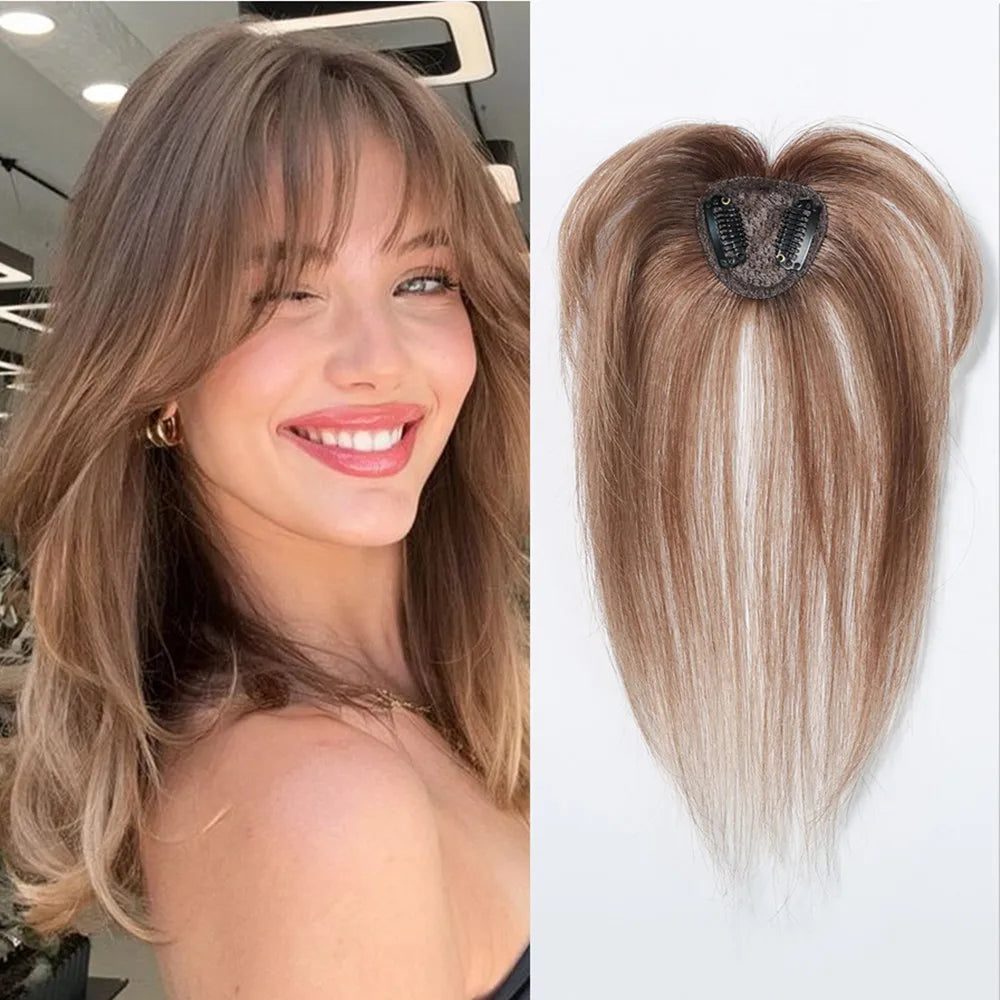

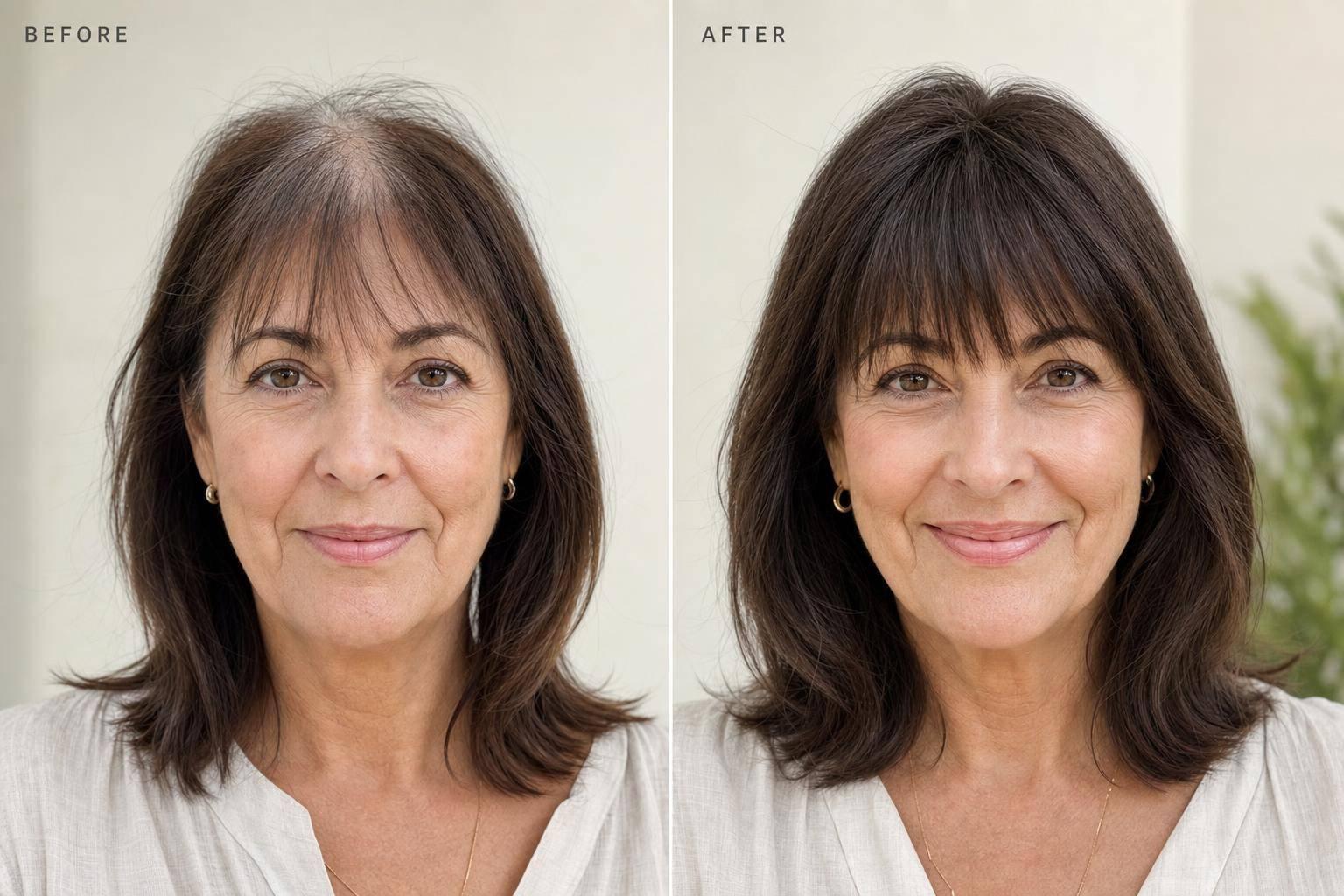
If your hair is fine or thinning, a bang topper will often look less obvious than a clip-in fringe. I’d put it down to one main thing: it covers the top of the head as well as the front, so the bangs have more hair to blend into.
Here’s the short version:
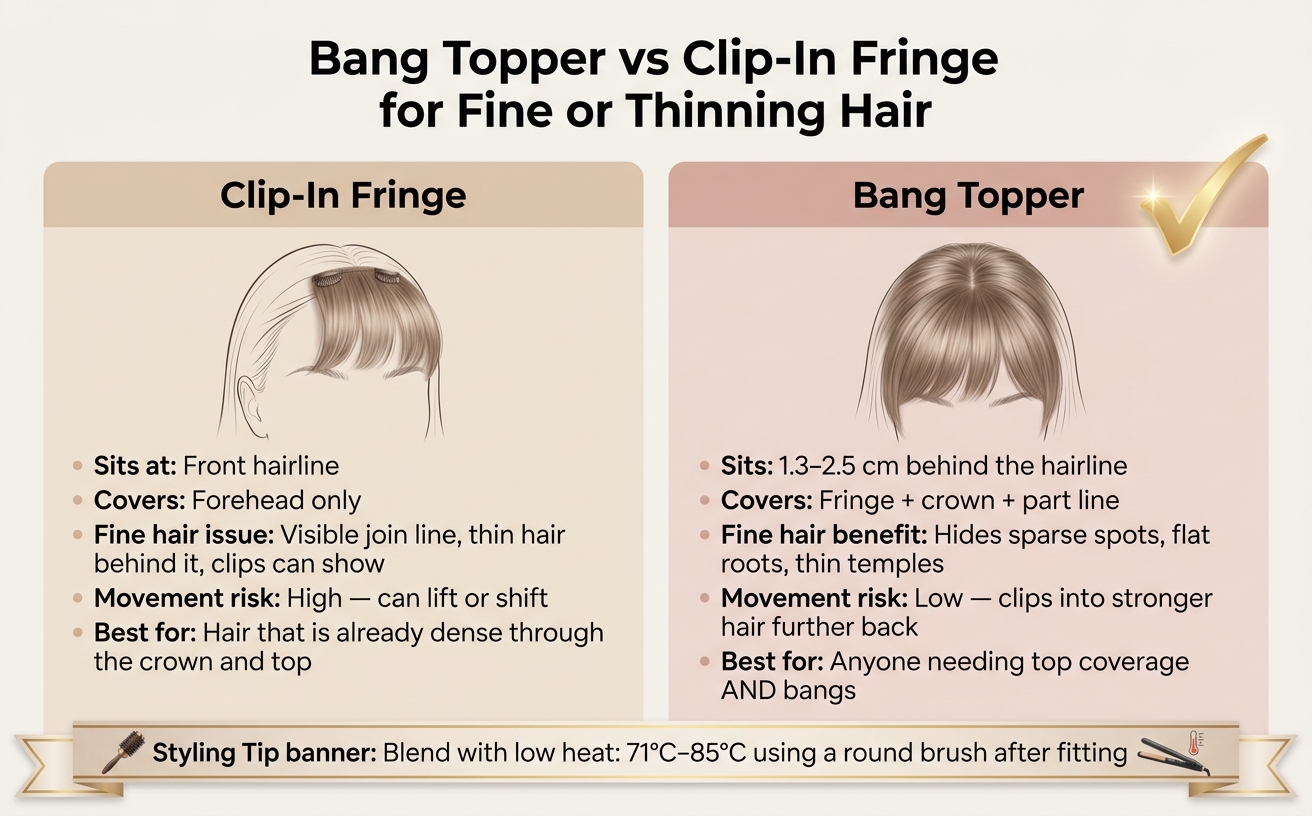
- A clip-in fringe starts at the hairline
- A bang topper sits about 1.3–2.5 cm behind the hairline
- A topper covers the crown and part line
- That extra coverage helps hide sparse spots, flat roots, and thin temples
- Low heat styling, around 71–85°C, helps blend the fringe after fitting
If I compare the two, the issue isn’t just the bang shape. It’s the difference in density between the front piece and the hair behind it. On thin hair, that contrast can make a fringe piece stand out fast. A topper helps by giving the bangs a better base and a softer start point.
Quick comparison
| Option | Where it sits | What it covers | Main issue on fine hair | Best use |
|---|---|---|---|---|
| Clip-in fringe | At the front hairline | Forehead only | Join line, thin hair behind it, movement can show clips | If the rest of the top hair is dense enough |
| Bang topper | 1.3–2.5 cm behind the hairline | Fringe + crown + part line | Can look off if too dense or placed too far forward | If you need top coverage as well as bangs |
I see the topper as the better pick when you want bangs to look like they belong with the rest of your hair, not like a separate piece.
Bang Topper vs Clip-In Fringe: Which Is Better for Fine Hair?
Why a clip-in fringe can look obvious on fine or thinning hair
On fine or thinning hair, a clip-in fringe can do the opposite of what you want. Instead of hiding sparse areas, it can draw more attention to them. The big issue is coverage, not just the fringe shape.
Front-only coverage leaves the crown and part line exposed
A clip-in fringe covers the forehead only. The crown, part line, and temples stay visible. If the hair behind the fringe is fine or thinning, that contrast can make the fringe look like a separate piece rather than part of the hair. When there’s less density behind it, the jump in volume stands out straight away[3].
Movement and attachment issues can reveal the piece
Because the piece clips in at the hairline, there often isn’t much natural hair there to hide the join. On fine hair, the clip line can show, especially in bright daylight[3][1]. And once wind or day-to-day movement comes into play, the fringe can shift or lift away from the forehead and show the attachment point[1].
Cowlicks and thinner temples make things even trickier. A front-only fringe usually doesn’t have enough width to blend with the way the hair naturally grows. So instead of melting in, it can leave a visible edge that gives the whole thing away[3][2].
That is where a topper with bangs changes the result.
How a bang topper creates a more realistic blend
A bang topper combines crown coverage with an integrated fringe, then clips in around the perimeter. That extra coverage changes how the fringe sits, moves, and blends with your own hair.
The base supports natural direction, volume and scalp coverage
Because the base covers the crown and part line, the hair looks like it’s growing from the scalp instead of sitting on top of it. For fine or thinning hair, that difference can make all the difference. The hair can fall back and out to the sides, which helps it blend with your natural hair from more than one direction instead of dropping forward from a single clip point [1][4].
The larger base also clips into stronger hair outside the thinning area. That helps with security and comfort, especially if you want the piece to feel steady through the day [1][4].
The other big shift is where the fringe starts.
The fringe falls from behind the hairline instead of sitting on it
With a clip-in fringe, the hair begins right at the hairline. A bang topper sits behind the natural hairline, so the fringe falls forward from behind your own hair instead of lying flat over it [2][3]. That small placement change can stop the piece from looking stuck on, which is a common issue with front-only pieces. It can also soften the look of a high or broad forehead [1].
Once the placement is right, the base size and fringe shape do most of the work.
sbb-itb-08feb2f
When a topper with bangs is the better fringe option
A topper comes into play when the fringe needs to blend with more than just the front hairline. If the front fringe needs backup from the top of the head, a topper with bangs is usually the better match.
Hair concerns that benefit from extra top coverage
Some hair concerns need coverage across the top, not only at the forehead. That includes thinning at the temples, a widening part, low crown volume, and front breakage. In those cases, the extra top coverage gives the fringe a fuller, more natural-looking base.
Flat roots are another big one. If the hair sits close to the scalp, the fringe can end up looking limp or a bit disconnected. A topper adds lift at the crown first, then the fringe can be styled to sit better.
Styling goals that need more than a front fringe
Wispy bangs and curtain bangs tend to look softer when they fall from a fuller top section rather than from a thinner front edge alone.
The final finish also comes down to a few details: base size, density, and fringe shape. Those three things have a big impact on how natural the result looks.
How to choose, fit and finish a Silkara Hair bang topper
Once the shape is right, the fit is what makes the fringe blend in instead of looking separate.
Choose the right base size, density and fringe shape
Start with a base size that fits the area you want to cover.
Then look at density. If your own hair is fine and the topper is too dense, it can look heavy and a bit obvious. Keeping the density close to your natural hair helps the topper look like part of your hair instead of something sitting on top of it [2].
Fringe shape is the detail that pulls the look together. In general:
- Curtain bangs soften the face
- Side-swept bangs suit round or square faces
- Straight-across bangs suit longer faces [3][1]
There’s one small detail people often miss: even if the density is right, the topper can still look off if it sits too far forward.
Place the topper behind the hairline for a softer finish
For a softer result, clip the topper 1.3–2.5 cm behind your hairline. Secure it into the stronger hair a bit further back, then brush a small amount of your own hair over the edge to help it blend [3].
Once it’s clipped in, use a round brush and low heat - around 71°C to 85°C - to blend the fringe into your own hair [3][1]. If you need to trim it, do that after the topper is secured so the length works with your face shape and where the piece actually sits [3][1].
Conclusion: Better coverage is what makes bangs look natural
A front-only fringe can stand out when there isn’t much volume through the top, simply because there’s less hair to blend into. A bang topper gives you crown coverage first. That gives the fringe a fuller base to fall from and helps it sit in a way that looks more like natural hair growth.
Get the colour match, base size and placement right, and the fringe looks like your own hair.
FAQs
Will a bang topper work for very thin temples?
Yes. A bang topper can help hide thinning at the temples because the built-in fringe sits over sparse or fragile sections at the front.
For the most natural look, a lace-front base helps create the look of hair growing from your scalp. A close match in hair density, along with proper placement, helps it blend in naturally.
How do I match topper density to fine hair?
Choose a topper with light density and a low weight so it blends smoothly with fine hair. In most cases, wispy or airy styles look more natural than blunt, heavy cuts.
To help hide the base and keep it in place, gently backcomb the roots where the topper attaches. Then use a light texturising spray for extra grip. Silkara Hair’s free colour matching service can also help you get a more natural-looking finish.
Can I trim a bang topper after fitting it?
Yes, you can trim a bang topper to suit your face shape and the look you want. In fact, many come slightly longer on purpose, so they can be shaped after fitting and styling.
Just make sure you only trim it once it’s clipped in place and blended with your natural hair. Because it’s human hair, it can be cut like your own hair, but it won’t grow back. So go slowly, trim small amounts at a time, or see a professional stylist if you’re not sure.