
Articles

The Secret To Choosing Between Ash, Neutral and Warm Shades
If your hair piece matches the depth but still looks off, the undertone is usually the problem. In most cases, you only need to sort three things: whether your hair reads ash, neutral, or warm, how it looks in indirect daylight, and whether you should match to your mid-lengths and ends instead of your roots. I’d break it down like this: Ash hair looks smoky, icy, or grey-toned and can help offset yellow or orange tones. Neutral hair sits in the middle and usually looks beige, creamy, or natural. Warm hair shows gold, honey, caramel, or copper and reflects more light. Daylight matters. Indoor lighting and full sun can distort tone. Roots can mislead you. For toppers and extensions, I’d check the lengths you want to blend with. Skin tone can guide the choice. Blue or purple-looking veins often point cooler; green often points warmer; a mix often points neutral. About 80% to 90% of what people call a “bad shade match” often comes down to tone, not just lightness or darkness. So before choosing a topper, fringe, or extensions, I’d first decide which tone family your own hair sits in. Ash vs Neutral vs Warm Hair Shades: How to Choose the Right Undertone Quick comparison Tone family What I’d look for in daylight Common shade names Best use Ash Smoky, silvery, cool, muted Ash Blonde, Silver, Smoky Brown To reduce brassy yellow, orange, or red Neutral Beige, creamy, balanced Natural Blonde, Beige, Creamy Blonde When I want the safest middle ground Warm Gold, honey, caramel, copper Golden Blonde, Honey, Caramel When I want brightness and a sun-lit look If I’m unsure after that, I’d compare my dry hair in soft daylight and use photos taken outside or near a window before making a pick. sbb-itb-08feb2fAsh, neutral and warm shades explained Shade level tells you how light or dark a colour is. Undertone tells you if that colour reads ash, neutral or warm. What ash shades look like Ash shades use cool pigments like blue, green, violet and grey. The result is a soft, smoky finish with very little visible warmth. You’ll often see names like ash blonde, cool brown, smoky brown and cool silver. "Ash colours are designed to counteract warmth and create a muted icy finish." [4] That’s why ash shades are often used to tone down gold, orange and red. In salon colour coding, ash is often shown with a .1 after the depth number. So 7.1 means Medium Ash Blonde. [5] Neutral and warm shades sit closer to a natural or golden reflect, so they can look quite different once you step into daylight. What neutral and warm shades look like Neutral shades sit in the middle. They don’t lean strongly cool or warm, so they tend to read as natural blonde, beige, wheat or nude. If you want grey coverage or a more natural-looking result, this group is often a good match. [5] Warm shades use gold, copper, honey or caramel pigments, so they look brighter and more light-reflective. Common names include golden blonde, honey, caramel, toffee and copper. In salon colour coding, warm golden shades are usually marked with a .3. For example, 7.3 is Medium Golden Blonde. [5] Shade Family Primary Undertones Visual Effect Common Labels Ash Blue, green, violet, grey Matte, smoky, muted Ash blonde, cool brown, smoky brown, cool silver Neutral Balanced reflect Natural, creamy, effortless Natural blonde, beige, wheat, nude Warm Gold, copper, honey, red Radiant, bright, light-reflecting Golden blonde, honey, caramel, toffee, copper The right undertone helps a topper, fringe or extension blend into your hair instead of looking separate from it. Start with the undertone family, then check how your own hair looks in daylight. How to identify your hair undertone at home You can check your hair undertone at home with indirect daylight and a plain white cloth. Use daylight and a white cloth Stand near a window with soft natural light, or head outside into a shaded spot. Skip direct sunlight. The Australian sun can be brutal, and it often masks the softer secondary tones you need to see for a proper match [2]. Soft daylight usually gives you a better read than indoor lighting or full sun. Hold a plain white towel or T-shirt next to your dry hair, with your hair down from root to tip. Then look at the way your hair reflects light. Warm hair tends to show gold, honey, or copper Ash hair looks more smoky, icy, or silvery Neutral hair sits between the two, with a balanced beige or creamy finish That simple check can help you work out whether an ash, neutral, or warm shade is more likely to blend well [3][6]. Your ends are often lighter than your roots, so when you're matching toppers or extensions, focus on your mid-lengths and ends instead of the root area [1]. Connect undertone clues to everyday colour problems A lot of the time, your undertone shows itself through colour issues you already notice in the mirror. Brassiness - that unwanted yellow or orange cast - usually points to visible warmth in the hair [6]. Hair that looks flat or muddy often has too much ash for your complexion [6]. Neither one means your hair is "wrong". They just give you clues about what’s going on. This also explains why a topper, fringe, or extension can still look off even when the depth seems right. If the undertone family doesn’t line up, the match can feel a bit awkward. Start with undertone first, and the blend usually looks more natural [2]. Everyday Problem What it means Choose Hair looks orange or yellow Strong warm undertone An Ash shade to neutralise [6] Hair looks flat or muddy Too much ash A Neutral or Warm shade [6] Skin looks washed out Tone is too cool Golden or Honey reflections [6] Topper or extension stands out at the roots Undertone mismatch Match the piece's undertone to your natural reflections [2] Once you know your undertone, you can line it up with your skin tone and the colour result you want. Choose the right undertone for your skin and your colour goal Next, check your skin undertone and the result you want. Match your hair undertone to your skin undertone Look at the veins on the inside of your wrist in natural light. Blue or purple veins usually point to a cool undertone. Green veins usually mean warm. If you can see a mix of both, you’re likely neutral [3]. Warm skin tends to suit warm hair. Cool skin tends to suit cool hair. Here’s a simple guide: Skin Undertone Vein Colour Recommended Tones Cool Blue / Purple Ash, Icy Blonde, Cool Brown, Silver Warm Green Golden, Honey, Caramel, Copper Neutral Blue-Green Mix Neutral, Beige, Mushroom Brown From there, things get a lot easier. Cool skin often looks best with ash, icy blonde, and cool brown shades. Warm skin usually pairs well with golden, honey, caramel, and copper tones. Neutral skin gives you more room to move. It can work with both ash and warm shades, though neutral shades are often the easiest place to start [3]. If you sit somewhere between two groups, go with the shade family that looks most natural in daylight. Skin helps narrow things down, but your visible hair still needs to blend when you step outside. Choose your tone based on the result you want If brassiness is the problem - that orange or yellow cast that keeps showing up - an ash or ash-neutral shade is usually the best fit. The cool pigments in ash tones are made to offset warmth [4]. If you want a softer, more sun-kissed look, go for a warm blonde, honey, or caramel shade. These tones add brightness and a natural-looking glow. If your goal is easy everyday blending and you want the piece to disappear into your hair, a neutral shade is the safest place to begin. The same idea applies across every Silkara piece. Match toppers to the crown, extensions to the mid-lengths and ends, ponytails and buns to gathered lengths, and fringes to the hair that frames your face. That leaves you with three tone families to narrow down: ash, neutral, or warm. Use these clues to narrow the shade family before checking the detailed shade guide below. How to avoid undertone mismatches when choosing a Silkara Hair shade Once you know your undertone, use the shade name as your first filter. It gives you a fast clue about which colour family you're looking at. Ash, Silver, and Smoky usually point to cool tones Gold, Honey, Copper, and Caramel lean warm Beige, Natural, and Creamy tend to sit in the middle Start there, then check the reflect in natural light. That second step matters. A shade name can steer you in the right direction, but daylight tells you how the colour actually reads. Photos only help when they're taken in natural light. Compare the product images with photos of your own dry hair in soft daylight. Indoor lighting can throw everything off and make a shade look warmer, cooler, or darker than it is. One mistake catches people all the time: matching to the roots. For toppers and extensions, match to your mid-lengths and ends, not your roots [1]. Comparison table: ash vs neutral vs warm If you want a quick sense-check, this guide makes it easier to spot the difference between ash, neutral, and warm shades. Undertone Family Common Shade Names Best for Visual Effect Use when Ash (Cool) Ash Blonde, Silver, Smoky Brown, Mushroom Cool (pink/blue hues) Matte, smoky, sleek; absorbs light Neutralising brassy, orange, or red tones Neutral Beige, Creamy Blonde, Natural Brown, Champagne Neutral (mix of tones) Soft, balanced, natural-looking Shades read too yellow or too grey Warm Golden, Honey, Caramel, Copper, Chestnut Warm (yellow/peach hues) Bright, rich, light-reflecting Adding vibrancy to dull or flat-looking hair Problem-solution table for toppers, fringes and extensions If your shade still looks a bit off after you've made a pick, don't panic. Usually, it's an undertone issue, and the next move is pretty clear once you know what you're seeing. Silkara Hair also offers a free photo-based colour match service. Email your photos to info@silkarahair.com, and you can expect a response within 12–24 hours [2]. Mismatch Issue Likely Undertone Cause Move to Silkara Support Tool Extensions look orange or brassy against natural hair Extension is too warm Warm to Neutral or Neutral to Ash Free photo-based colour match (12–24hr response) Topper looks grey, muddy, or greenish Extension is too ashy for your natural hair Ash to Neutral or Neutral to Warm AI virtual try-on on selected products Extensions look too yellow or artificial Extension shade is too golden Warm to Neutral Detailed product imagery in natural light settings Piece matches at the scalp but stands out lower down Matched to roots instead of mid-lengths and ends Match to ends for a seamless blend Expert email consultation with full-length photos Conclusion: How to choose the right undertone with confidence If you're still deciding between ash, neutral and warm, use this final check. Check your hair in indirect natural daylight near a window. Pay attention to the undertone you can see. Smoky, grey or icy reflects usually point to ash. Gold, copper or bronze usually points to warm. If the sheen looks balanced without leaning too cool or too golden, it will often read as neutral. Cross-check against your skin. If your veins look blue or purple, a cool shade will often blend best. If they lean green, a warm shade is often the better match. If you can see both, neutral is usually the easiest place to start. If you're still unsure, don't guess. Send two clear photos in natural light to info@silkarahair.com for shade guidance within 12–24 hours [2]. The right undertone is what helps the blend look effortless. That's the detail that makes a topper, fringe or extension disappear into your own hair. FAQs What if my hair looks ash in one light and warm in another? If your hair looks ashy in some lighting and warm in others, you likely have neutral undertones. In plain terms, your hair sits somewhere in the middle, with a mix of warm and cool pigment. That’s why it can seem to change from one light source to the next. For the clearest read on your natural colour, check it outside in natural daylight. Indoor lighting can throw things off and make your tone look different from what it is. Should I match my topper to my roots or my ends? Match your topper to your hair’s mid-lengths and ends, not the roots. Your roots are often darker because of natural regrowth, while the mid-lengths and ends show the colour people actually see. Check the shade in natural daylight so you can spot the true undertones. Indoor lighting can throw the colour off and make it look different from what it is. Can I wear a neutral shade if my skin undertone is warm? Yes. Neutral shades can work well with warm skin undertones because they sit between warm and cool tones. That makes them a flexible pick. Warm undertones often look great with golden or honey shades. But a neutral shade can still give you a soft, natural-looking finish without turning too brassy or too ashy. Related Blog Posts How to Choose the Perfect Hair Extension Colour for Seamless Blending Why Doesn’t My Colour Match Exactly? How To Take Photos For The Best Colour Match Why Multi-Dimensional Colours Blend Better Than Solid Colours
Learn more
How To Take Photos For The Best Colour Match
Most colour match problems start with the photo, not the hair. If I want the closest match for hair extensions, I need to send clear, unedited photos in soft daylight, with my hair dry, down, and shown from more than one angle. Here’s the short version: Use soft daylight near a window or in open shade Avoid direct sun, flash, backlighting, and warm indoor lights Keep hair dry and product-free Wear neutral clothing and stand in front of a plain background Use normal camera mode only with no filters or edits Send front, both sides, back, and close-up shots Show the mid-lengths and ends, because that’s where the blend usually matters most —especially when fitting halo hair extensions or clip-ins. A phone is enough. In fact, with today’s cameras, most people already have what they need. The main thing is setup. Even a small lighting shift can change how blonde, brunette, grey, or balayage tones look on screen. That matters because hair can show more than one tone at once from root to end. If I’ve had highlights, old colour, or balayage, I should say so when I send the photos. That gives the team a better view of what needs to match first. So if I want a closer colour match, I should keep it simple: good light, no edits, dry hair, plain background, and all the key angles. How to Take the Perfect Hair Colour Match Photo How to choose lighting that shows your real hair colour For the most accurate colour-matching photos, use soft, indirect daylight. Once your lighting is right, you’ve got a much better shot at showing your hair’s true tone. Use soft daylight near a window or in open shade The most reliable setup is indirect natural daylight. If you’re indoors, stand facing a window so the light falls across the front of your hair. If you’re outside, look for open shade, like under a covered area or next to a building, where the light is bright but diffused. Both setups help your hair appear in soft, even light. That makes it easier to see its true depth and undertone without colour distortion. Face the light source so your hair is lit evenly from root to tip. This helps show the mid-lengths and ends clearly for colour matching. Avoid direct sun, backlighting and yellow indoor lights Direct midday sun is harsh. It can blow out highlights, create heavy shadows, and make hair look lighter or warmer than it is. Standing with a window behind you causes the opposite issue. Your hair drops into shadow and can look darker or harder to judge. Warm indoor lights can also add an orange or golden cast that isn’t there in person, which makes colour matching less reliable. With lighting sorted, move on to hair, clothing and background. sbb-itb-08feb2fHow to prepare your hair, background and phone before taking photos Before you take any photos, set things up properly. That gives the Silkara Hair team a much clearer view of your colour, tone and how the blend should look. Wear your hair down and show its natural texture Make sure your hair is fully dry before you take photos. Wet hair tends to look darker and shinier than it is, which can throw off the colour check straight away [5]. Wear your hair down and brush it through so the full length and natural texture can be seen [1]. The main area to show is the mid-lengths and ends, because that’s where the blend matters most [2][3]. It also helps to skip heavy oils, gels and sprays before taking photos. Those products can make hair look darker or flatter than it looks in person [5]. Use a plain background and neutral clothing Stand in front of a plain white, beige or light grey wall or door. Wear a neutral-coloured top too, so your clothes or background don’t cast extra colour onto your hair [5]. Turn off filters and use standard photo mode Use standard camera mode only. Portrait mode, beauty modes and auto colour correction can blur edges, smooth texture and shift undertones [3][5]. Leave brightness, saturation, contrast and exposure alone as well. Even small edits can make it harder to judge your real shade. A light crop or straightening the image is fine. Once everything is set up, move on to the front, side and back shots next. The key angles to photograph for colour matching Once your lighting and prep are done, take photos from the front, both sides, the back, and a few close-ups. Those angles give the clearest view of your colour and make matching much easier. Angle What to show Useful for Front Roots, hairline and face-framing layers Clip-in bangs, fringes, halos and clip-ins Side (left & right) Light reflection, highlights, lowlights and mid-length blend points Halos, clip-in sets and tape-ins Back Full length, overall colour consistency and natural density Ponytail extensions, halos and full-head clip-in sets Close-up (crown/part line) Root colour, part width and thinning areas Human hair toppers and thinning hair solutions Close-up (ends) Exact tip shade and colour fade Clip-in extensions, halos and ponytail extensions Front, left and right photos for shade and face-framing blend For the front photo, face the camera with your hair down. This shot shows your roots, hairline, and how the colour sits around your face [4]. Then take a photo of each side. Left and right matter because hair doesn’t always reflect light the same way on both sides. One side might show highlights, lowlights, or blend lines that barely show in the front shot [4][3]. Back photo for full length, density and blending area Take one back photo that shows your hair from root to tip. This makes it easier to see density through the length, along with any fade or shift in colour toward the ends [1][4]. Close-up photos of the crown, part line, hairline or ends Close-ups help fill in the small details that wider shots can miss. For a human hair topper, a top-down photo of your natural part helps show part width and root depth [4][5]. If you have regrowth, grey strands, or balayage, take a close-up of the transition zone too. That gives a clearer view of how the tones change through the hair [4]. For clip-in bangs or fringes, move the hair back a little so your natural hairline is visible, along with any grey regrowth that needs to blend in [4]. Before sending the photos, check the common photo mistakes below. Common photo mistakes and how to fix them before you send Before you send your photos, give them a quick check. A few small issues can make it harder to assess your hair colour properly. Common mistake Quick fix Harsh sunlight or shadows Move to soft, indirect daylight near a window or in open shade. Yellow or warm indoor lights Turn off indoor lights and use natural daylight instead. Hair tied up in a bun or ponytail Wear your hair down from root to tip. Filters, flash or HDR settings Use standard photo mode with no filters or flash. Only sending one angle Send front, back and side photos, plus close-ups. Dark or busy clothing Wear neutral-coloured clothing against a plain background. If you’ve had any colour work done before, mention it when you send your photos. That includes old colour, highlights, or balayage. This matters because the mid-lengths and ends should be matched first. Roots are usually darker, so they’re not the best place to start. Send clear, unedited photos in natural light, with your hair down and from a few angles. FAQs What if I can only take photos indoors? If you can only take photos indoors, stand about 30 to 60 centimetres from a window with soft, indirect natural daylight. Switch off artificial lights, including overhead lights and lamps, because they can add blue or yellow tones and throw off how your hair colour looks. Skip direct sunlight too. It can wash out the photo or create harsh shadows. This helps the Silkara Hair team see your hair’s true tones more clearly. Should I mention highlights or old colour? Yes. Please mention if your hair has highlights, lowlights, or if you’re transitioning from an old colour. That gives the Silkara Hair team a better sense of your current shade, because hair is rarely just one flat colour. For the best match, make sure your photos are clear, taken in natural light, and show your hair worn down from root to tip so those differences are easy to see. Which part of my hair matters most to match? For the most natural blend, match the mid-lengths and ends of your hair instead of your roots. Roots are often darker because of new growth and less sun exposure. The ends, on the other hand, are usually the most visible spot where extensions or toppers need to blend in. If you usually wear your hair up, like in a ponytail, matching closer to your roots can work better. Otherwise, matching the mid-lengths usually gives the smoothest transition. Related Blog Posts Common Hair Extension Problems and Solutions 6 Ways to Match Hair Extensions to Natural Hair Color How to Choose the Perfect Hair Extension Colour for Seamless Blending Why Doesn’t My Colour Match Exactly?
Learn more
Why Doesn’t My Colour Match Exactly?
If your topper or extensions look right in one light and off in another, that’s normal. Hair colour shifts under different lighting, phone cameras can skew tone, and your roots, mid-lengths, and ends often aren’t the same shade anyway. Here’s the short answer: Check colour in soft daylight near a window Match your mid-lengths and ends, not just roots Focus on undertone as much as depth Expect a close blend, not a perfect swatch copy Multi-tonal shades often hide small differences better than flat shades A 1-shade difference can look minor once the piece is worn and styled, but the wrong undertone can stand out straight away. That’s why I’d judge colour on your visible lengths in natural light, with clean, dry hair and no flash photos. Check Higher risk of mismatch Lower risk of mismatch Lighting Warm indoor bulbs, bathroom lights, direct sun Soft, indirect daylight Match point Roots or regrowth only Mid-lengths and ends Shade type Flat single tone Multi-tonal shade Photo method Flash, filters, auto-edited images Clear daylight photos If I keep those four checks in mind, choosing a shade gets much less frustrating. What causes a visible colour mismatch Hair Colour Matching: High vs Low Mismatch Risk Factors A visible colour mismatch usually comes down to three things: lighting, natural variation, and the difference between flat colour and dimensional colour. How indoor light, outdoor light and phone cameras affect colour The light you use to check a shade changes what you see. Warm yellow bulbs, which are common in living rooms and bedrooms, can make hair look more golden or red. Cool bathroom lighting or fluorescent light can make it look ashier or flatter. Natural indirect daylight is the best way to see the colour as it is. A simple way to do that is to stand near a window, with no direct sun hitting your hair. Phone photos make things even trickier. Auto white balance, HDR settings, and exposure changes can all shift how colour looks in an image. The colour itself hasn't changed - the camera has. That's why shade checks should be done in neutral daylight, not based only on indoor lighting or a phone photo. Why roots, mid-lengths and ends rarely match each other Hair usually isn't one even shade from top to bottom. Roots are often darker, while mid-lengths and ends tend to be lighter from sun, colour, or regrowth. That matters because a topper sits beside your mid-lengths and ends, not just your roots. If you match it to the regrowth at the roots, it can end up looking too dark or a bit separate from the rest of your hair. For a better blend, match the visible length of your hair rather than focusing only on the roots. Flat colour versus multi-tonal hair Most natural hair isn't one flat shade. It has tonal shifts throughout, which is why it tends to look softer and more natural. A flat hairpiece can sit next to that variation and look like one solid block of colour, even when the depth level is close. In a lot of cases, the issue isn't the wrong depth level. It's the lack of tonal variation. Dimensional colour tends to hide small shade gaps better because it reflects the movement and depth you usually see in natural hair. Once you know if your hair looks flat or dimensional, it's much easier to judge the shade properly. sbb-itb-08feb2fHow to check your true colour before choosing a shade Once you know how light shifts colour, use this simple at-home check to narrow down the right shade for toppers and extensions. Assess your hair in natural, indirect daylight Check your hair near a window in soft, indirect daylight. Wear it down, clean, and fully dry. If you take a photo, skip filters and flash. Take a clear photo in natural light from the front and back so you can record your true colour. Match the mid-lengths and ends first After checking your hair in daylight, match the area where the piece will sit: the mid-lengths and ends. This matters even more if your colour has faded, if you have balayage, or if you’re blending grey. In those cases, a piece that matches the mid-lengths will usually blend in more smoothly. If you’re stuck between two shades, go with the slightly lighter one. A lighter piece is often easier to blend than a darker one. Quick colour-check comparison table Use this guide to compare your options. What you're comparing Higher mismatch risk Better for blending Lighting Warm indoor light or direct sun Soft daylight near a window Area to match Darkest roots or regrowth Mid-lengths and ends where the piece sits Colour type Single-tone shade Multi-tonal shade Why dimensional shades usually blend better How highlights, lowlights and tonal variation soften a mismatch That variation is a big reason a dimensional shade often blends better than a single flat colour. Natural hair already has depth built in. A dimensional shade mirrors those shifts in tone, so it tends to sit more quietly next to highlighted, balayaged or sun-faded hair. Because dimensional shades use more than one tone, they usually work better with hair that already has variation. By contrast, a flat colour can look more flat in bright light, even when the depth level is close. When a slight mismatch still looks natural once worn A small shade gap often looks softer once the piece is worn. After it’s on, movement helps blur small differences, which makes them less obvious. Undertone matters a lot here. Getting the undertone right - warm, cool or neutral - is often more important than matching the depth exactly. If the piece shares your hair’s undertone, it’s more likely to blend quietly into the full look. If the undertone is off, you can end up with a visible seam. The goal is blend, not an exact swatch match. How to improve blending and choose with confidence Style the piece with your own hair for a softer blend Once you've found the closest shade, the styling does a lot of the heavy lifting. Wear the piece with your usual parting, then blend your own hair through it. Curl or wave both together so the textures sit as one, not two separate layers. That small step can make a big difference. If the finish still looks a little off, compare your photos with a shade match. Sometimes the issue isn't the colour itself, but how the hair is sitting. If the length is slightly out, a stylist can do a dry cut or add light layers after the piece is fitted. This helps soften any visible step where your hair meets the piece, so it falls in a more natural way. Use Silkara Hair colour support before you buy If you're stuck between shades, use Silkara Hair's colour support before ordering. Send two clear photos - one from the front and one from the back - to info@silkarahair.com. Take the photos in natural, indirect daylight near a window, with your hair down and dry so the full length can be seen. It also helps to include the product type you're looking at, such as a ponytail, halo or clip-in. Silkara Hair usually replies with a shade recommendation within 12–24 hours [1]. Conclusion: Aim for blend, not exact sameness Hair colour changes under different lighting, and your roots, mid-lengths and ends often don't match perfectly anyway. So chasing an exact copy of your hair colour usually isn't realistic - and you don't need it to be. In most cases, a dimensional shade with the same undertone as your hair, and one that sits close to your mid-lengths and ends, will blend better than a flat shade picked just to match a swatch. Aim for a close undertone match, choose the shade that works with your mid-lengths and ends, and let styling handle the rest. FAQs How do I know my hair undertone? Check your hair in natural sunlight and look for the secondary tones under the main colour. Warm undertones tend to show golden, copper, amber, or red notes. Cool undertones usually look more ash, grey, silver, or violet. If your hair doesn’t lean clearly either way, it’s likely neutral. You can also check your wrist veins. Green often points to warm undertones, while blue or purple usually suggests cool. If both gold and silver jewellery look good on you, your undertone is likely neutral. Should I match faded ends or fresh colour? Match your extensions or topper to your mid-lengths and ends, not your roots. Your roots are often darker because of new growth, but the mid-lengths and ends are the parts that need to blend. Hair colour tends to shift and fade over time, so matching the ends usually gives you a smoother, more natural look. Multi-tonal shades often work best because they blend in with the variation already in your hair. Can a stylist adjust the piece colour? Yes, a professional stylist can adjust the colour of human hair pieces, including 100% Remy human hair extensions or toppers. That said, human hair pieces don’t always react to colour the same way as hair growing from your scalp. So it’s best to book with a stylist who has experience working with alternative hair. If you’re having trouble finding the right match, go a little lighter if you can. That’s usually the safer option. It’s much easier to darken a piece or add lowlights than it is to lighten one that’s already too dark. Related Blog Posts Common Hair Extension Problems and Solutions 6 Ways to Match Hair Extensions to Natural Hair Color How to Choose the Perfect Hair Extension Colour for Seamless Blending Ultimate Guide to Dyeing Hair Extensions
Learn more
Understanding Hair Topper Density: Light vs Medium vs Full Volume
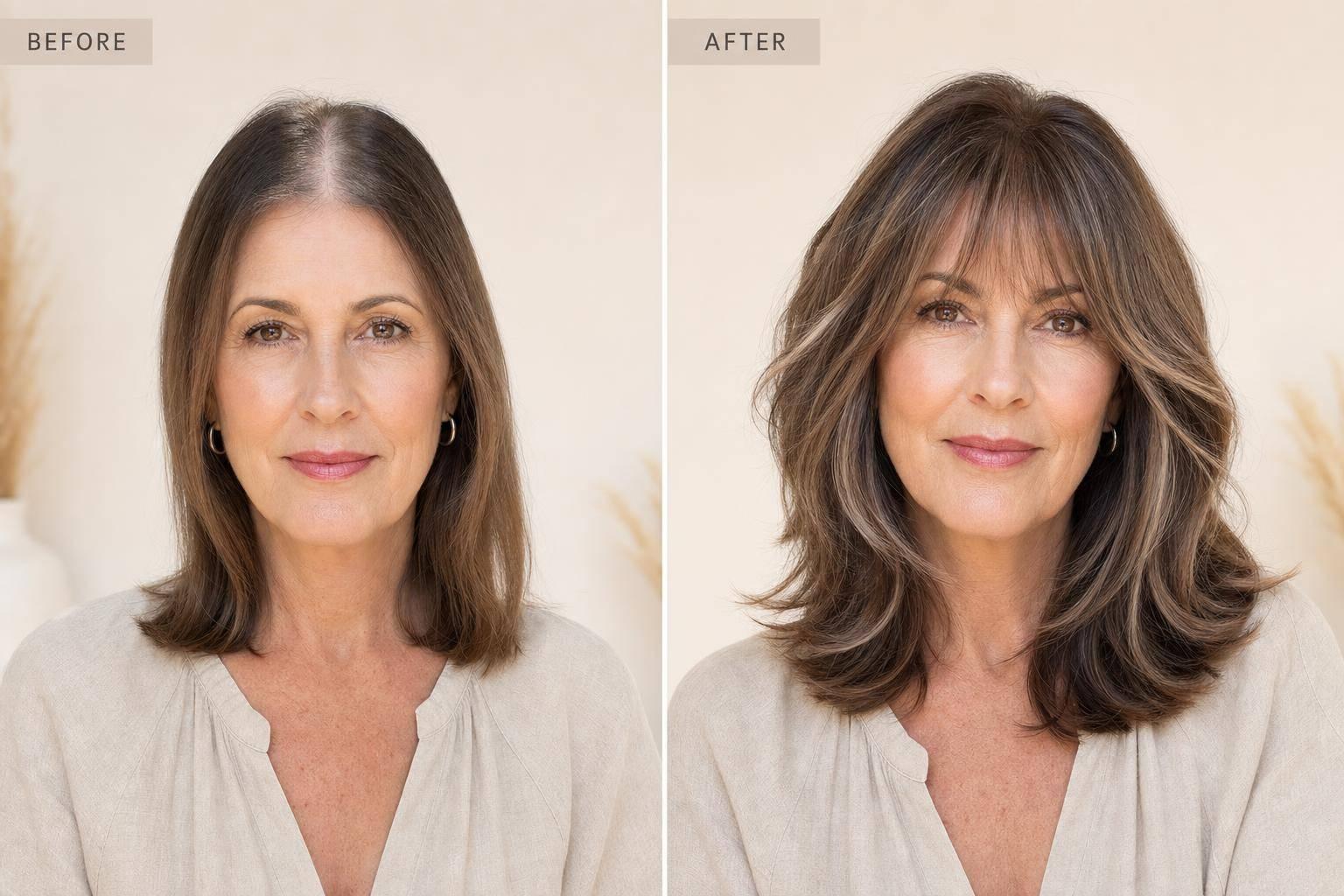
If I choose the wrong density, even a good colour match can still look off. The short answer is simple: light density suits early thinning, medium suits most day-to-day wear, and full volume suits more advanced hair loss or bigger styles. Here’s what matters most: Light density is often about 80% and works best if I have fine hair, a slightly broader part, or early crown thinning. Medium density is often about 130% and is the safest starting point for many women because it gives more cover without too much bulk. Full volume is often about 150% to 180% and suits larger areas of visible scalp, but it can feel heavier and take more work to blend. If I need more cover, a larger base can be a better fix than adding more hair density. For the best match, I should compare the topper to the hair at the sides and back, not the thin area on top. Colour, layers, and placement matter just as much as density. Hair Topper Density Details For those seeking a natural look with a 120% density hair topper, synthetic options provide a lightweight way to add volume. sbb-itb-08feb2fQuick comparison Density Typical % Best for Main watch-out Light 80% Mild thinning, fine hair Scalp may still show in bright light Medium 130% Moderate thinning, daily wear May still need some styling to blend well Full volume 150%–180% Advanced thinning, clip in hair topper with bangs More weight, less airflow, harder edge blend I’d keep one rule in mind: match the topper to my own hair thickness, not to the look I wish I had. That usually gives the most natural finish and the best comfort through the day. Light Density vs Medium vs Full Volume: Key Differences Hair Topper Density Comparison: Light vs Medium vs Full Volume Density changes more than fullness. It also affects coverage, weight, and how well the topper blends with your own hair. That’s why the right pick should line up with your stage of thinning. Here’s how each density level tends to work in day-to-day wear. Light density toppers: mild thinning and soft volume A light density topper - usually around 80% density[4][3] - is made to match naturally fine hair. It feels light on the scalp, moves with ease, and tends to blend well around the hairline. If you’re dealing with early-stage thinning, like a slightly wider part or a small patch of loss at the crown, this density often gives the most discreet look. The downside is coverage. Because the hair is finer and less packed, a bit of scalp can still show in bright light. If your thinning has moved past the early stage, light density may not hide enough. Medium density: balanced coverage for daily wear Medium density - around 130%[4][3] - is the most common choice. It gives more scalp coverage than a light density topper, but still looks natural and avoids the bulky look that can come with heavier options. For moderate thinning, it offers a good middle ground: enough coverage, with movement that still feels like real hair. It’s also the easiest density for everyday styling. Medium density toppers keep their body and shape well, so they work for casual wear and neater, more polished looks. Full volume: advanced coverage and maximum thickness Full volume toppers - usually 150% to 180% density[4][3] - are meant for more advanced thinning or larger areas of visible scalp. They offer the most concealment and suit women who want a thicker, more dramatic finish, including styles like a blow-dry or big waves. The trade-off is extra weight and less airflow. Blending can take more effort too. If the topper is much fuller than the hair at your sides and back, the edge can look stepped rather than smooth. Feature Light Density Medium Density Full Volume Best for Early/mild thinning, fine hair Moderate thinning, daily wear Advanced thinning, fuller styles Weight Very light Balanced Heavier Scalp coverage Scalp may peek through Full coverage of scalp Maximum concealment Blending Easiest to integrate Needs styling Needs layering Styling Best for sleek, natural looks Works across many styles; holds body and movement Ideal for high-volume styles From here, the next thing to figure out is how much visible scalp you want to hide. How to Choose the Right Density for Your Hair Loss Stage Once you know the difference between light, medium and full volume, the next step is to match density to your stage of thinning. The key idea is simple: choose the density that matches your own hair, not the fullest option on the shelf. Matching density to mild, moderate and advanced thinning Mild thinning usually looks best with light density. Moderate thinning tends to suit medium density. If thinning is more advanced, full volume often gives the cover people want. That said, more cover doesn't always mean you need denser hair. In many cases, a larger base does the job better than moving straight to a heavier density[1]. If thinning has spread across a bigger area, a wider base may fix the coverage issue first. Then there are the finer details. Once you've matched density to your stage, things like texture, length and scalp sensitivity help shape the final fit. Other factors that affect your result Texture, length and scalp sensitivity can change how natural the topper looks and how comfortable it feels through the day[2][4]. For example, if your scalp is sensitive, lighter densities are often easier to wear for long hours. Density comparison table Density Level Best Stage Main Benefit Light Mild/early thinning Lightweight, natural blend Medium Moderate thinning Balanced coverage for daily wear Full Volume Advanced/extensive thinning Maximum concealment and fullness After density is set, colour matching and styling do the final work. Blending, Styling and Colour Matching for a Natural Finish Getting the density right is only half the job. Once that part is sorted, blend, colour and styling decide whether the topper melts into your hair or stands out for the wrong reason. How to avoid a topper that looks too thin or too thick The main issue is simple: a topper can look too full or too sparse next to your own hair. If the topper is too dense for your natural hair, it can create a visible step at the edge, where the topper ends and your own hair begins. That contrast is what gives the piece away. The fix is to keep the finish matched to your own hair thickness. Soft layers can help a lot here. They let the topper flow into your cut instead of sitting on top of it like a separate piece. If it still looks bulky, lightly thinning the edges and the top layer can help soften the join. Placement matters too. Set the base in your natural parting and thinning area, not on the hairline. When the base is sitting where it should, the next thing to check is the shade match. Why colour matching and styling matter as much as density Colour should match your mid-lengths and ends, not your roots. Roots are often darker and keep growing out, so they’re a poor guide if you want the match to last. Blended or multi-dimensional tones are usually easier to work with than flat, solid colours because they mirror the natural variation in human hair. Silkara Hair offers a free colour match service using customer photos. After colour, styling pulls everything together. Set the part while the hair is damp, then blow-dry with gentle tension to help hold a natural-looking part line. You can also lightly tease your natural hair at the roots where it meets the topper base so the piece lies flatter against your hair. Front-edge blending matters even more if you wear a fringe or soft bangs. Conclusion: Choosing the Density That Looks Right and Feels Comfortable The right density comes down to your stage of hair loss and how much hair you still have around the topper. After you pick a density level, check how the topper sits against your own hair. The best match is the hair on the sides and back of your head, not the thinning area on top [1]. If you're wearing a topper for the first time and you're not sure where to begin, medium density is usually the safest place to start. A stylist can thin it out if needed [1]. In many cases, a slightly larger base blends better than simply adding more density. Density and colour need to work together. When both match your own hair, the topper blends in instead of standing out. FAQs How do I know if my topper looks too dense? A topper can look too dense when it has a lot more volume than your natural hair. When that happens, you may notice a visible step around the perimeter. It can also feel bulky and look less natural. For a smoother blend, your stylist can lightly thin the topper, mainly at the surface and around the perimeter. The aim is simple: match the topper’s density to your natural hair. Should I choose a larger base or higher density? For more coverage, a larger base is often better than going with higher density. A bigger base covers more area. Higher density, on the other hand, adds more hair, weight, and bulk, which can look unnatural if it doesn’t match your own hair. For the most seamless, comfortable blend, get the base size right first. Then choose a density that matches your natural hair. If you’re new to toppers, natural or medium density is usually the safest place to start. Can a stylist thin out a medium density topper? Yes. A stylist can lightly thin a medium-density topper if it feels a bit too thick. Done well, this can help it blend in more naturally with your own hair. The main goal is to take out some bulk from the perimeter and the top surface. That’s usually where a topper can look a little heavy or sit too obviously against your natural hair. What you want to avoid is aggressive thinning near the knots or the base. That area needs to stay intact so the topper keeps its shape and holds up over time. Related Blog Posts Human Hair Toppers Hair Toppers: The Secret to Natural-Looking Coverage & Volume Why Does My Topper Look Bulkier Than Expected? How To Choose The Correct Hair Topper Base Size
Learn more
How To Choose The Correct Hair Topper Base Size
The right topper base should cover your thinning area plus an extra 1.5 cm to 2.5 cm on each measurement. That extra room helps the clips sit on stronger hair, which can make the topper feel more secure and look less obvious. If I had to boil it down, I’d do this: Find where the thinning starts and ends Measure front to back and side to side in centimetres Add 1.5 cm to 2.5 cm to both numbers Choose the nearest base size, and go up if you’re between sizes This matters because a base that’s too small can leave thin spots showing. A base that’s too big can feel bulky and harder to blend. For many people, thinning starts around 2.5 cm to 5 cm behind the hairline, and toppers tend to suit hair loss on the top third of the scalp. A quick guide: Small bases suit part-line thinning or small crown spots Medium bases suit more visible crown or part thinning Large bases suit thinning across more of the top Extra large bases suit broad top coverage Base size Best match Small Part line or small crown area Medium Crown thinning or a widening part Large Thinning across much of the top Extra large Broad thinning over the top of the head In short: measure the thin area, add clip room, then size up if you’re unsure. How to Choose the Right Hair Topper Base Size: Step-by-Step Guide How To Choose a Base Size for your Hair Topper Choosing the right size ensures your clip in hair topper with bangs sits naturally and securely. sbb-itb-08feb2fIdentify Your Thinning Pattern Before You Measure Before you grab a tape measure, check where your hair is thinning. That part matters more than people think. The spot and spread of the thinning area tell you how much coverage you need, which then tells you exactly what to measure. Part Line, Crown or Full Top Thinning Use a hand mirror and a wall mirror in good lighting to check the top and back of your head [4][5]. You’re looking for one of three common patterns: Thinning Pattern What to Look For Part line A widening gap or "V" shape where you part your hair Crown Visible scalp at the back-top of your head in bright light Full top Reduced density across the entire upper surface of your head Mark where the thinning starts and ends. In many cases, that begins about 2.5 to 5 cm behind the hairline [4]. When a Topper Is the Right Choice A topper tends to work best when thinning is focused on the top third of the scalp, including the part line and crown, and you still have enough healthy hair on the sides and back to blend the piece and hide the edges [6][7]. You also need enough healthy hair around the thinning area to hold the clips in place [1][2]. Once you’ve worked out the thinning pattern, measure the area in centimetres. How to Measure Your Thinning Area in Centimetres Tools and Setup for Accurate Measuring Once you've marked the thinning area, measure the full zone in centimetres. You'll need a soft measuring tape, a mirror, and a notes app to write everything down. These numbers tell you how much coverage you need, which makes it easier to match the area to the right topper base size. Measure your hair when it's dry and styled the way you normally wear it. That way, the base follows your usual part instead of some awkward version of it. Clip the hair around the area away so you can see the full thinning section. If you're measuring the crown, use mirrors to keep the tape level. If someone can help, even better - they can hold the tape flat and give you a cleaner reading. Measure Front to Back and Side to Side Start at the front edge of the thinning area and measure straight back to where the thinning stops. That's your front to back measurement. Then measure across the widest part from side to side. That's your side to side measurement. Write both numbers down in centimetres, for example 7.5 cm x 10 cm. Measurement Step Action Purpose Front to back Front edge to back edge of the thinning area Determines base length Side to side Widest point side to side Determines base width Allowance Add 1.5 cm – 2.5 cm to both Ensures clips land on healthy hair Add 1.5 cm to 2.5 cm for Clip Clearance Your base should be a little larger than the thinning area itself. Add 1.5 cm to 2.5 cm to both measurements so the clips sit on stronger hair and the edges blend better [1][3]. This also helps reduce traction on thinning sections. Record both figures for the next step. Match Your Measurements to the Right Base Size Now compare your front-to-back and side-to-side measurements with the closest base size. Small, Medium, Large and Extra Large Base Categories Explained If your numbers land between two categories, choose the larger size [1][3]. Base Category Approx. Size (cm, front to back x side to side) Best For Small 6 x 12 cm to 10 x 10 cm Part-line widening, small crown patches Medium 12 x 15 cm to 15 x 15 cm Noticeable crown thinning, widening part Large 15 x 18 cm to 20 x 20 cm Broad thinning across the top Extra Large 20 x 23 cm and up Maximum coverage across the top of the head A bigger base is often the safer pick when you're in between. It gives you enough coverage, and it's usually easier to work with than a base that ends up too small. Choose a Base That Works With Your Hair and Style Once you've sorted the size, look at how the base fits your hair density and the way you wear your hair most days. Base size is only one piece of the puzzle. Your topper also needs to blend with your natural hair density and your usual parting. If the density is too high, it can look bulky on fine hair. If you're thinning near the front hairline as well as the crown, a topper with bangs can help soften the front edge while covering the part and crown. Use Silkara Hair Support Before You Buy Getting the size right before you order can save a lot of frustration later. Silkara Hair offers a free colour matching service. You send in a photo of your natural hair, and the team suggests the closest shade match. Before you place an order, check each product's base size against your measurements. Conclusion: Choose Coverage First, Then Size With Confidence Once you’ve measured the thinning area, picking the right base size gets pretty straightforward. First, map the thinning zone. Then match your adjusted measurements to the base size that fits best. From there, you’re ready to order a natural-look hair topper. When the size is right, a topper sits flat, feels secure, and blends in naturally [3]. Key Takeaways Before You Order Use this final check before you order: Map the thinning zone with a mirror and comb so you can spot the exact points where hair density starts to drop Match your adjusted measurements to the closest base size that fully covers the thinning area Size up if you’re between categories - a slightly larger base tends to blend better, sit more securely, and gives you extra room if the thinning area changes over time [1][3] Choose the base category that fits your final measurements and coverage needs FAQs What if I’m between topper base sizes? If you’re between two base sizes, it’s usually best to go a little larger. That extra size gives you more coverage, often helps the topper sit more naturally, and can make blending much easier. A larger base also gives you more room to place clips on healthy, strong hair around the thinning area. That can help the piece feel more secure. If needed, a professional can adjust it for a comfortable, natural fit. Can I wear a topper if my thinning is near the hairline? Yes. Measure the length and width of the thinning area, then add 1 to 2 centimetres so the clips can grip onto healthy hair. For a natural look, line the topper up with your front edge instead of placing it too far forward. A base that reaches far enough forward helps create a smooth, secure fit. How do I know if I have enough hair for topper clips? You need enough healthy, dense hair around the thinning area so the clips can hold firmly. Use a soft measuring tape to check the length and width of the thinning area, then add 1–2 cm. That extra space helps you place the clips onto your own strong, healthy hair instead of weaker spots. If the thinning reaches beyond the sides or back, or your scalp is fully exposed, a topper may not be the right fit. Related Blog Posts Hair Toppers: The Secret to Natural-Looking Coverage & Volume The Ultimate Guide to Choosing a Hair Topper for a Seamless Hairline Fringe vs Bang Topper: Which One Is Right For You? Why Does My Topper Look Bulkier Than Expected?
Learn more
Why Does My Topper Look Bulkier Than Expected?
If my topper looks too bulky, the cause is usually simple: the density is too high for my own hair, the base is sitting in the wrong spot, or the hair still has factory shape and lift. In most cases, I don’t need to panic or start cutting straight away. A few checks can fix it fast: measure the thinning area, place the base just behind the hairline, smooth my own hair flat, and style the topper before trimming. If it still looks too thick after that, I can remove small amounts of weight from the mid-lengths and ends, or choose a lower-density piece next time. Here’s the short version: Most bulky toppers come down to density mismatch A base that is too large can bunch and sit high Root lift often drops after the first wash and restyle Frizz or curl underneath can make the crown puff up Trimming should start at the ends, not near the base Very fine hair often suits around 100% density Around 120%–130% density can suit people who want more coverage without too much extra hair A few small changes often make the biggest difference. I’d check fit first, then styling, then trimming. Check What I’m looking for What to do Base size Too much base for the thinning area Measure the area and add about 2.5 cm for clip hold Placement Front edge too far forward Set it slightly behind the natural hairline Hair underneath Frizz, curl, or lumps under the base Blow-dry or pin hair flat Density Topper looks much thicker than my own hair Thin the mid-lengths and ends, or choose a lighter density Factory shape New topper looks puffy out of the box Wash and restyle before judging the fit If I work through those points in order, I can usually tell whether the issue is the cut, the placement, or the topper itself. Why a new topper can look bulkier than expected Hair toppers are made to add coverage and volume Hair toppers are designed to cover thinning at the crown and parting, so they often feature a 120% density to provide more hair than the natural strands around them. That extra fullness is there on purpose. The catch is that it can look a bit too dense next to fine hair, especially when you compare it with the hair at the sides and nape. So even if the topper fits well, the contrast can make it seem bigger than expected. Density mismatch is the most common reason The most common reason a topper looks bulky is a density mismatch. That simply means the topper has a lot more hair than your own hair. When that happens, the change from your natural hair to the topper can look sudden. Instead of blending in, the piece can look heavy and obvious. How texture, humidity and frizz can add to the problem A new human hair topper can also arrive with packaged root lift from manufacturing. This usually settles after the first wash and style. Texture underneath the topper matters more than many people expect. If your own hair is frizzy, curly, or not smoothed down before you clip the topper in, the piece can end up sitting on top of that bulk. That extra lift underneath can make the topper look puffier than it should. A smooth, flat base helps the topper sit closer to the scalp. Before you trim anything, check the fit and placement first. sbb-itb-08feb2fHair Topper Density Explained: Choose the Right Thickness for You! | UniWigs Check fit, base size and placement before cutting anything How to Fix a Bulky Hair Topper: Step-by-Step Checklist Before you cut a single strand, check the fit and placement. Start with size, then look at where the topper sits. Measure the thinning area in centimetres Use a soft tape measure to check the length (front to back) and width (side to side) of your thinning area. Then add about 2.5 cm so the clips can grip stronger hair around the edge [1][2]. If the base is too big for the area it’s meant to cover, it can bunch, move through the day, or make the crown sit higher than it should [1]. That extra bulk can be the whole problem. Place the topper along the natural part and behind the hairline Line up the topper’s part with your natural part. Then place the front edge slightly behind your natural hairline, not right on it [4][1]. Clip the front first, then the back and sides, while keeping the base taut. If the base sits loose, it can buckle and give the crown a rounded shape. Do a quick mirror check in natural daylight Check the crown and parting in natural daylight. Then run your fingers over the base and look for any lifts or gaps. If you spot one, unclip that section, pull the base taut, and clip it back down [1][4]. A small reposition can often cut down bulk before you trim anything. If it still looks too full after that, move on to thinning and trimming. Use this quick check to figure out the cause before cutting. Issue Likely Cause Fix Before Trimming Crown sits too high Underlying hair is frizzy, curly, or not flattened Blow-dry your own hair flat or pin sections close to the scalp Visible lumps where clips sit Clips placed on thick or uneven sections Reposition clips to flatter, more evenly distributed sections Base bunches or shifts Base is too large for the thinning zone Remeasure and check base size against the thinning zone Front edge shows Topper placed at or ahead of the natural hairline Move the base slightly back, behind the natural hairline How to trim and thin a topper to reduce bulk Once the fit and placement are sorted, trim only the extra bulk the topper adds. Most toppers have more density than natural hair, so a bit of trimming often helps you customise the blend. Shorten the length and soften blunt ends Style the topper the way you’d normally wear it first. Then trim the ends in small passes so you can spot where the bulk is sitting. Point-cutting helps soften blunt ends by breaking up that hard line. If the shape still looks heavy, add light layers only in those spots, working in sections with a fine-toothed comb to keep things even [6]. Remove weight with thinning shears carefully Use thinning shears with a light hand through the mid-lengths and ends only. Keep them away from the base and the parting, where cutting can make the topper harder to blend. Work in small passes and check the shape after each one. Comparison table: uncut topper vs customised topper Feature Uncut Topper Customised Topper Appearance Can look overly full at the crown Balanced density that sits like natural hair Movement Sits rigidly with heavy, blunt ends Fluid movement with soft, textured layers Blending Visible contrast where topper meets natural hair Blends in with your existing layers Maintenance Ends prone to tangling if too blunt Easier to style; needs gentle brushing to protect thinned sections Once the extra weight is gone, styling plays a big part in how flat and blended the topper sits. How to style a topper so it blends with your own hair Prepare your own hair so the base sits flat After you’ve trimmed down some of the bulk, styling is what helps the topper sit closer to your scalp. Start by smoothing your own hair so the base has a flatter surface to sit on. Then tease only the areas where the clips will attach, so they have something to hold onto. When you put the topper on, clip the front in first while keeping the base taut. Then secure the sides and back [8]. If you have longer hair, pin it flat underneath the base [1][4]. Use low-to-moderate heat and lightweight products If the topper still looks a bit puffy, use low heat to smooth it down. For human hair toppers, keep your flat iron or curling iron at no more than 177°C and apply a heat protectant first [1]. You can also use a round brush on low heat to smooth the first few centimetres at the root and tone down that lifted look around the crown [4]. For products, less is more. Use a small amount of lightweight serum or smoothing cream on the mid-lengths and ends to add shine without dragging down the roots [6]. Skip heavy gels, waxes, and thick oils near the roots. They can make the hair split apart in odd ways and cause the topper to sit higher. Comparison table: sleek styling vs soft waves for bulk control Feature Sleek & Straight Soft Waves Visible density Hair sits closer to the scalp and helps cut down crown bulk Adds movement and visual volume, which can help hide a base that feels too dense Blending Needs a close colour match and can show the step if it’s not layered Texture softens the transition and hides where your own hair ends Movement Polished and even; can look stiff if over-styled Natural and bouncy; texture helps mask where your own hair ends Use when Fine or straight natural hair The base or edges are hard to hide If it still looks bulky after styling, the problem is usually the density or the base size. Choose the right Silkara Hair topper for a natural long-term result If trimming and styling still leave the topper looking bulky, the issue is usually the starting point: density or base size. Match density, base size and cut to your natural hair When fit, placement and styling still don't fix the bulk, the topper's original density or base size is likely off. Very fine hair usually needs around 100% density. 120%–130% tends to suit women who want more coverage without making the topper look too full. Base size matters just as much. In many cases, a larger base with moderate density blends better than a small base packed with hair [3]. The cut also makes a big difference. Layered shapes help the topper blend into your natural hair. Blunt shapes, on the other hand, can sit on top like a shelf [3][7]. Use Silkara Hair colour matching and density guidance Once the density is right, colour matching is often the next fastest fix for softening the line between the topper and your natural hair. Match the topper to your mid-lengths and ends, not just your roots, so the colour looks like part of your own hair [5]. Silkara Hair's photo-based colour matching guidance can help you get a piece with subtle variation instead of a flat, artificial-looking colour [2]. Silkara Hair's density and base size guidance can also help you choose a topper that suits your thinning area and blends more naturally from the start. FAQs How do I know if my topper density is too high for my hair? A topper’s density may be too high if it creates a clear contrast or a sudden step where it meets your natural hair, especially around the perimeter. It can also feel heavy or warm, look bulky or lifted at the hairline, or have trouble sitting flat against the scalp. For the most natural blend, the density should match your existing hair at the sides and back. Will a new topper flatten after washing and styling? Yes, a new topper will often flatten after washing and styling. If it still feels bulky or puffy, the cap may have lost its shape in transit. Lightly wet the cap, place it on a mannequin head or wig stand, and let it air dry or blow-dry it. It also helps to smooth your natural hair as flat as possible underneath. Then blend the topper with a bit of styling so it sits close to the head and looks natural. Can a bulky topper be fixed without cutting it? Yes, often. The main thing is to make sure your natural hair underneath is smooth and lies flat. Pin or braid it down so the topper can sit evenly on your head. If the cap lost its shape during shipping, lightly wet it and let it air dry on a mannequin head. That usually helps it bounce back. You can also adjust the clip placement so the base sits taut and flush against your scalp. Related Blog Posts Hair Toppers: The Secret to Natural-Looking Coverage & Volume The Ultimate Guide to Choosing a Hair Topper for a Seamless Hairline Fringe vs Bang Topper: Which One Is Right For You? Why Can I See The Clips In My Bangs?
Learn more
Why Can I See The Clips In My Bangs?
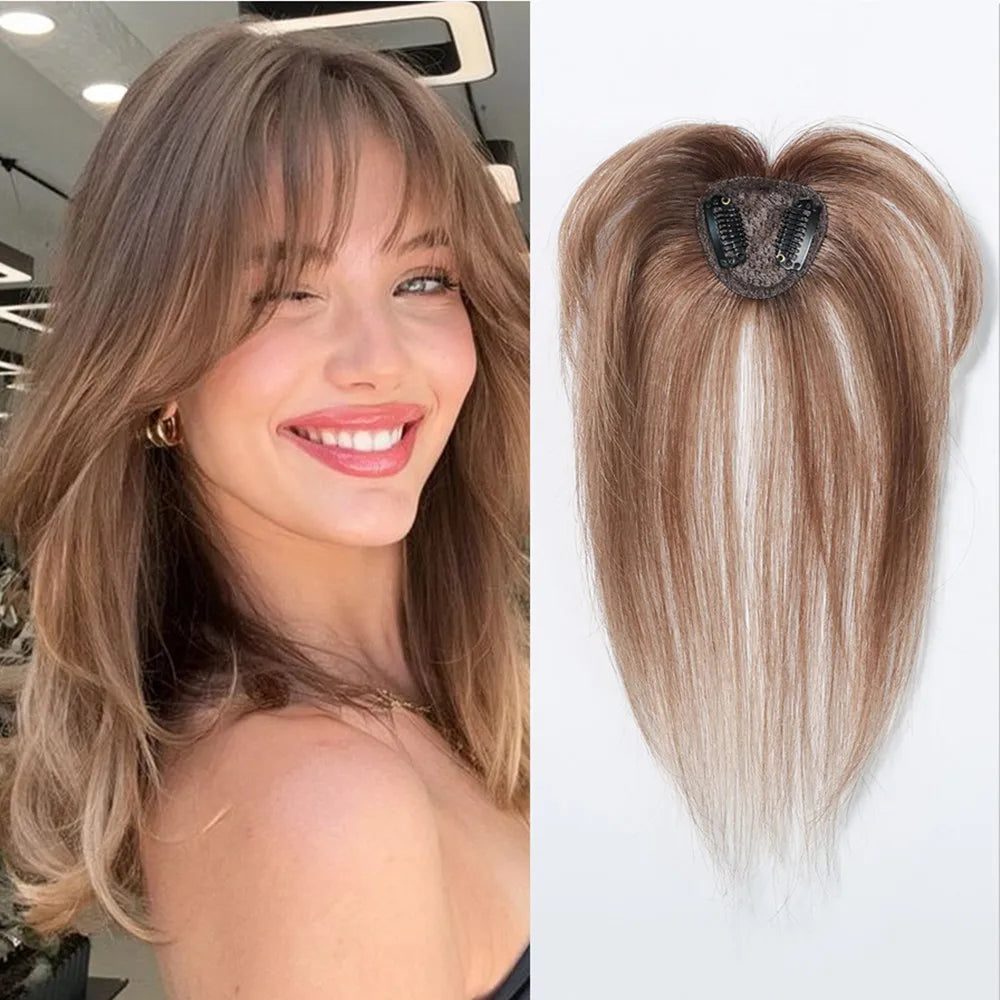
If you can see the clips, your bangs are usually sitting too close to the hairline or your roots are too smooth. In most cases, I’d fix it by moving the section back a few centimetres, adding grip with dry shampoo or light teasing, and checking that the top layer has enough hair to cover the base. Here’s the short version: Placement comes first: if the parting is too close to the front, the clips can show. Smooth roots slip: clips hold better on hair with a bit of texture. Fine hair has less cover: that makes clips easier to spot. Blend matters: density, colour, and styling can make the join stand out. If clips still show: a topper with bangs may work better than a clip-in fringe. A few details matter more than most people think. Even moving the parting back by 2–3 cm can help give the clips more cover. And if your hair is freshly washed, there’s a higher chance of slip because the roots are often too soft and clean for clips to grip well. If I wanted the fastest fix, I’d do this first: Make the parting a few centimetres back from the hairline. Tease only where the clips will sit. Add a small mist of dry shampoo or texture spray. Clip the centre first, then flatten the side clips. Check it from the front, side, and in daylight. If your hair is thin at the front or crown, the issue may not be the fringe piece at all. It may just be that there isn’t enough hair to hide the clips, and that’s when a topper can make more sense. Below, I’ll go through the main causes and the fixes in a simple order: placement, grip, blend, then backup options for fine hair. How to Hide Clip-In Bang Clips: Step-by-Step Fix How to Hide a Clip in Your Bangs : Hair We Go! sbb-itb-08feb2fFix placement first: sectioning and clip position Once the roots have some grip, the next thing to sort out is placement. This is where a lot of people get tripped up. If your parting sits too close to the hairline, the clips can peek through. Shift it back a few centimetres and the top layer has more hair to cover the base. Part the hair a few centimetres back from the hairline Use a rat-tail comb to make a clean horizontal parting a few centimetres behind your natural hairline. This gives the top layer enough coverage to hide the base. Lift that top section and have a look. If you can still see scalp clearly, move the parting a bit lower. Clip the centre first, then press the side clips flat Once the parting is set, clip the centre first so the fringe sits where it should. Secure the centre clip first to lock the fringe in place. Then press the side clips flat so the base stays close to the scalp. Flat is the goal. Check the fringe from the front, side and in natural daylight Check the fringe from the front, from the side and in natural daylight. If the clips show, tweak the placement. If the clips still shift, add root texture next. Add root texture so clips stay in place Placement on its own won't do much if the roots are too smooth. You need a bit of grip at the root so the clips sit flat and stay put. Once that base has some texture, the clips are easier to hide and less likely to shift. Light teasing gives clips something to grip Use a rat-tail comb or teasing brush to lightly tease only the spots where the clips will sit. A few short strokes towards the scalp is enough. You're not trying to build big volume here - just a slightly rough base so the clips don't slide down the hair. Apply dry texture before clipping in bangs If your hair is very fine or silky, teasing on its own might not hold. In that case, use a light mist of dry shampoo or a light texture spray at the roots before teasing. That takes away some of the slip and helps the clips fasten better. Keep it targeted to the sections where the clips will attach. Freshly washed hair usually needs dry shampoo and light teasing. Very fine hair often needs extra texture powder. Silky hair tends to do better with focused teasing. Second-day hair usually holds clips better because natural oils give the roots more grip. With the base secure, the next step is blending the fringe so the attachment area disappears. Blend the fringe so the attachment area disappears Once the placement and root grip are sorted, blending does the last bit of work. Even if the fringe sits in the right spot, the join can still show if the density or colour is off. Choose a softer fringe when your hair is fine If the piece is still visible, look at density next. A thick, heavy fringe can stand out on fine hair because your own hair may not be enough to hide the attachment point. A wispy or lower-density fringe sits flatter and makes less of a ridge where the join sits. A thinner base is also easier to hide, and Silkara Hair's Wispy Full Fringe in human hair is a lower-density option[2]. Style the top layer and sides together Once density looks right, styling helps pull everything into one shape. Style your natural hair and the fringe together with a round brush or curling iron so both layers move as one, not as two separate sections. For synthetic fringe pieces, keep your heat tool between 71°C and 85°C to avoid damaging the fibres[1][2]. Human hair pieces can be styled with heat tools and blended with your own hair for a more natural finish. Use Silkara Hair colour matching for a closer result If the shape works but the seam still shows, check the colour. Even a small mismatch can create a visible edge where the fringe ends and your natural hair begins. Silkara Hair offers a free colour match service where you send through a photo and their team recommends the right shade based on your mid-lengths and ends[1][2]. Multi-tonal or gradient shades often blend better than flat, single-tone colours, especially if your hair has highlights or dimension. A well-matched fringe helps hide the clips. Solutions for fine or low-density hair and key takeaways When to use clip-in bangs and when to switch to a topper with bangs If the clips still show even after proper placement and root prep, the problem is usually simple: there isn’t enough hair at the hairline or crown to hide them. Clip-in bangs tend to work best when you have enough natural hair at the crown to sit over the attachment points. That top layer doesn’t need to be thick, but it does need to be enough to mask the clips. If your cover layer is very fine or sparse, the clips can still peek through. When thinning is more noticeable at the hairline or crown, a hair topper with bangs is often the better pick. It sits over the top of the head and brings its own coverage, so the attachment points are much easier to hide. How added volume can help hide front attachments If you’d like to keep using clip-in bangs, add more coverage behind them. Halo hair extensions or extra clip-in extensions placed behind the fringe piece can create a thicker layer over the back edge. That extra volume helps soften the line between your natural hair and the fringe piece, so the blend looks less obvious from the front and sides. What to remember before your next application When coverage, grip, and colour match are on point, the clips should stay hidden from normal viewing angles. Use the same placement, grip, and blending steps each time you put them on. With fine hair, the rule is pretty straightforward: you need more cover, more grip, and better blending. FAQs How far back should I place clip-in bangs? For a natural finish, place clip-in bangs about 2.5 to 5 centimetres back from your front hairline. Put them too close to the front and you can end up with extra lift, or worse, visible clips. Setting them a little further back gives your own hair room to fall over the base, which helps everything blend in more smoothly. Check the placement in the mirror, then gently backcomb a small section of hair over the seam to keep the clips out of sight. Why do clips show more on fine hair? Clips tend to show more on fine hair because there’s less natural density to cover the attachment points. Fine hair is also often smoother, so the clips can slip or sit less flat against the scalp. That makes any bumps or bulges easier to spot. Standard wefts can create a thicker ridge under thinner strands too. A better option is to use lightweight, flat-based pieces. It also helps to build some grip first by teasing the roots or dusting on a little texturising powder before you clip them in. When should I use a topper with bangs instead? A topper with bangs is a smart pick if you want to hide thinning at the crown, a receding hairline, or a part that doesn’t sit evenly. Because bangs frame the face and add coverage at the front, they help mask the front edge of the hairpiece and any gaps in your natural hair. The result is a smooth, polished look that blends in nicely. Related Blog Posts Human Hair Topper with Bang Why Does My Fringe Look Different From The Model? How To Make Clip-In Bangs Look Natural In 5 Minutes Fringe vs Bang Topper: Which One Is Right For You?
Learn more
Fringe vs Bang Topper: Which One Is Right For You?
If your thinning is only at the front, I’d go with a clip-in fringe. If you can see scalp at the part or crown, I’d pick a bangs topper. That’s the short answer. Here’s the simple split: Clip-in fringe: covers the front hairline only Bangs topper: covers the front, part, and crown Fringe: lighter, faster to put on, but needs enough hair at the front to hide clips Topper: gives more coverage and top volume, but can feel a bit heavier Human hair often lasts about 12 to 18 months Synthetic often lasts about 3 to 6 months Synthetic pieces may handle only low heat, around 85°C If I were choosing, I’d base it on where the thinning shows now, not what might happen later. That one check usually makes the choice much easier. Clip-In Fringe vs Bangs Topper: Which One Do You Need? Fringe Bang Hair Topper Tutorial! #hairtransformation #thinninghair #hairpiece #hairtopper #tutorial sbb-itb-08feb2fQuick Comparison Point Clip-in Fringe Bangs Topper Coverage Front only Front, part, and crown Best for Mild hairline or temple thinning, or trying bangs Thinning across the top of the head Placement Behind the front hairline Over the crown/top Clip hiding Needs front density to cover the seam Built-in fringe helps hide the front edge Feel Lighter Slightly heavier Base sizing Not the main issue Often starts at 5 x 5 in for light thinning I see this as a coverage-first choice. Style matters, but placement matters more. If you match the piece to the thinning pattern, it tends to look better and feel easier to wear day to day. Clip-in fringe vs bangs topper: key differences The main gap between these two comes down to where the piece sits and how much it covers. If coverage matters most to you, placement is the next thing to check. Coverage area and where each piece sits on the head A clip-in fringe clips in just behind your hairline and covers only the front. It frames the face and tends to work best if you still have enough density at the front to clip it in and blend your own hair over the clips. A bangs topper sits farther back on the crown. It covers the front, the part, and the crown area. Topper bases often start at around 5 x 5 inches for light thinning, and they can go larger if you need more coverage [4]. Feature Clip-in Fringe Bangs Topper Primary coverage Front hairline only Top, crown, and front hairline Best for Mild hairline thinning or a style change Thinning at the part, crown, or front Clip-in point Just behind the natural hairline Crown/top of the head Blending needs Needs enough front density to hide the clips The fringe helps hide the clips Styling flexibility Face-framing only Adds volume and density across the top Daily wear, feel and comfort A clip-in fringe usually feels lighter and takes less time to put on. A bangs topper can feel a bit heavier, but it gives you more coverage in return. In warm Australian weather, mono or lace bases can feel cooler and more breathable [3][4]. Both are non-permanent clip-in pieces. If you choose a human hair version, you can usually heat-style it with straighteners or curling irons. Once you know how each one sits and feels, the next step is to match the piece to your thinning pattern. When a clip-in fringe is the right choice A clip-in fringe works best for front-only thinning and for anyone who wants a simple bangs change. If the issue is just at the front, this is usually the easiest fix. Good for mild hairline thinning and trying out bangs When thinning is limited to the front hairline - like a higher forehead, mild temple recession, or slight thinning at the front - a clip-in fringe can cover it fast and in a way that looks natural. It’s also the lowest-commitment way to try bangs. There’s no haircut, and no awkward grow-out stage to deal with. Once thinning starts reaching the part or crown, a topper tends to make more sense. Benefits and limits for fine hair Clip-in fringes are lightweight and fast to put on - often in seconds. That makes them handy before work, dinner, or an event, especially when you don’t want extra bulk. The catch for fine hair is simple: the clips need enough hair to hold onto. If your hair is very fine at the front, lightly backcomb the roots where the clips will attach before clipping it in [3]. You’ll also need enough of your own hair to brush over the seam so the join stays hidden. If that front density isn’t there, the clips can be harder to disguise. If your thinning goes past the hairline, the next section looks at when a bangs topper is the better fit. When a bangs topper is the right choice A bangs topper does more than change your front hairline. Unlike a clip-in fringe, it gives you built-in coverage across the front hairline, part line, and crown in one piece [3][4]. That matters if scalp show-through is starting to stand out under overhead lighting, or if your part has shifted from a fine line to a visible gap. In those cases, a topper is often the better match [3]. Good for thinning at the part, crown and front A bangs topper makes more sense when thinning goes past the front hairline. It's a strong option for female pattern hair loss (androgenetic alopecia), postpartum shedding, hormonal thinning, and stress-induced thinning [3][4]. Another plus: the built-in fringe helps hide the front attachment point or seam. That's often harder to do with a standard topper [4]. Here’s a quick side-by-side look: Concern Bangs Topper Clip-In Fringe Thinning at the crown or part ✓ Best fit Not enough coverage Visible scalp under overhead light ✓ Best fit Won't reach the area Postpartum, hormonal or stress-related thinning ✓ Best fit May be insufficient Healthy crown, style change only Often more coverage than needed ✓ Best fit Front hairline only, mild thinning Works, but may be excess ✓ Best fit Choosing base size, density and human hair options Base size is the main thing to get right. Measure the thinning area by length and width, then add 1 to 2 inches to each side so the clips can grip strong, healthy hair [3]. As a rough guide: A 5x5 to 6x6 inch base suits early or light thinning A 7x7 inch base suits moderate thinning An 8x9 inch base or larger is better for advanced or more spread-out thinning [4] For the most natural look, human hair is usually the better pick than synthetic. You can heat-style it, match it to your regrowth more closely, and it tends to last longer with proper care - about 12 to 18 months, compared with 3 to 6 months for synthetic pieces [3][4]. Base construction also changes how the topper looks and feels. A silk base gives the most realistic scalp look at the part, while a mono top gives you more breathability and longer wear for day-to-day use [3][4]. For the best finish, have a professional stylist trim the built-in bangs only after the topper has been placed and secured on your head [4]. When you're colour matching, look at your mid-lengths instead of your roots. Most toppers come in one continuous shade, and your mid-lengths tend to be the steadiest point of reference [3]. "This hair topper is magic! I'm in love! It matches perfectly to my own hair colour. You can't even tell I'm wearing it." - Teresa Green, Verified Customer, Silkara Hair [2] How to decide and wear your choice with confidence Once you’ve matched the coverage you need and the base that suits your hair, the last step is simple: think about how it’ll work in day-to-day wear. A simple decision guide based on your hair concern Start with where the thinning shows. If it’s mostly at the front hairline or temples, or you just want a style change, a clip-in fringe is usually the better pick. If you can see more scalp at the part or crown, a bangs topper makes more sense. The key is to choose for the hair loss you have now, not what you might need later. If you’re unsure about shade, use photo-based colour matching to help narrow it down. Application, blending and key takeaways Once you’ve picked the right level of coverage, placement matters. A good match can still look off if it’s not sitting in the right spot. For a clip-in fringe, clip it in behind your natural hairline so the seam stays hidden. Lightly backcomb the roots, then brush a thin layer of your own hair over the seam to keep the join out of sight [1]. For a bangs topper, place it over the crown and clip it flat from front to back so the part looks natural [4]. If the hair underneath is fine, use a light volumising spray at the roots before placing it. That helps the clips grip better [4]. Synthetic pieces can be styled with low heat, up to about 85°C [1][5]. So the rule of thumb is pretty clear: Front-only thinning usually points to a clip-in fringe Part or crown thinning usually points to a bangs topper FAQs How do I know if my thinning is front-only? Style your natural hair first so the sparse spots are easy to see. That gives you a clear view of where the thinning sits. If it’s mostly around the hairline and temples, you’re probably dealing with front-only thinning. You might see a receding hairline or thinner hair just behind it, while the crown and back still look fairly dense. In that case, a topper with bangs or a clip-in fringe can help cover those front areas and blend in with your natural hair. Will a bangs topper look bulky on fine hair? No. A well-fitted bangs topper shouldn't look bulky on fine hair. Silkara Hair makes these pieces to feel light, breathable, and easy to blend with your own hair. For the most natural look, pick a base that lies flat against your scalp. A softer fringe style, like wispy bangs, also helps keep the finish light and airy. How do I choose the right topper base size? Measure the exact area of your crown or thinning hair first. Topper bases usually range from 10 cm x 13 cm for focused crown or part-line coverage up to 20 cm x 25 cm for more broad coverage. Pick a base that's slightly larger than the thinning area. That extra room gives the clips enough space to grip healthy, dense hair and stay secure. As a general guide: Circular bases tend to work best for crown coverage Rectangular or teardrop shapes often suit a widening part line Related Blog Posts Human Hair Topper with Bang Why Does My Fringe Look Different From The Model? How To Make Clip-In Bangs Look Natural In 5 Minutes My Fringe Looks Too Thick – What Should I Do?
Learn more
My Fringe Looks Too Thick – What Should I Do?
If my fringe looks too thick, I usually need to fix one of three things: the cut, the styling, or the hairpiece density. Most heavy fringes come from a blunt line, too much hair taken from the front, oil or product making strands stick together, or a clip-in piece that looks denser than the rest of the hair. Here’s the short version: If it looks blocky: the cut is likely too blunt or too wide. If it looks stringy by the end of the day: oil or product is likely the issue. If it looks heavy next to fine hair: the fringe piece may be too dense. If I want to fix it at home: I make small changes first, like light point-cutting on dry hair, side-to-side blow-drying, and using less product. If it goes patchy or too short: I stop and book a hairdresser. If I want a non-permanent fix: I choose a low-density wispy fringe or a hair topper with bangs. A few facts stand out. The article suggests trimming a fringe every 3–4 weeks to keep it light, and keeping scissors 2.5–5 cm away from the scalp when softening the ends at home. It also notes that fine hair shows oil and density mismatch faster, which is why a heavy fringe often stands out more on finer strands. How to Fix a Thick Fringe: Diagnose, Fix & Maintain Removing weight from a heavy fringe sbb-itb-08feb2fQuick comparison Cause What I notice What usually helps Cut Thick, boxy line across the forehead Soften the ends, reduce bluntness Styling Clumping, flat roots, separated pieces Re-wet, blow-dry side to side, use light products Fine hair Heavy front against light lengths Keep the fringe wispy and feathered Hairpiece Visible join or too much hair at the front Pick a lower-density piece The main point: I start with the cause, use the lightest fix first, and avoid taking off too much hair too fast. Find out why your fringe looks heavy Start by working out where the weight is coming from: the cut, the styling, or the hairpiece. A blunt or wide cut can create a blocky look A blunt cut, or a fringe section taken too far back, can make the fringe sit like one solid block [1][7]. If the fringe starts too far back, it can also flatten the crown and make the whole style look heavier [7]. Fine hair makes a dense fringe stand out more With fine hair, weight, clumping, and density mismatch tend to show up faster than they do on thicker hair. If your fringe looks good right after styling but starts to clump later, oils or product are usually behind it [2][3]. A simple test helps here: mist the fringe with water, then blow-dry it from side to side. If it looks lighter after that, the issue is styling rather than the cut [3]. Hairpieces can look too dense if not matched to your hair type A hairpiece that's denser than your own hair can create a visible line instead of blending in [5][10]. On fine hair, a wispy or tapered fringe usually sits better, especially with lighter ends and feathered temples [6][3]. Problem Source Visual Sign at Home Why It Happens Cut Boxy or heavy block look Too much hair taken in a blunt, horizontal line [1][7] Styling Stringy or separated ends Forehead oils or product buildup causing separation [2][3] Fine hair texture See-through gaps Fine strands don't stack densely; lack of internal layering [3][10] Hairpiece match Visible seam or clumped look Density mismatch or incorrect placement [5][4] Once you know the cause, the fix is often pretty simple: a softer cut, lighter styling, or a lower-density piece. Then you can move on to softening, resetting, or rebalancing the fringe. Safe ways to soften and blend a thick fringe If your fringe still feels too heavy, make small changes. With fine hair, the aim is to soften the front without taking too much from the crown or sides. Use point-cutting to soften the ends Point-cutting is a simple way to break up a blunt fringe at home. The idea is to take weight out of the ends without leaving gaps or making the fringe shorter. Instead of cutting straight across, hold your scissors vertically or on a slight angle and make tiny snips into the ends. This takes bulk from the tips and leaves a softer, textured finish instead of one solid line [1]. Two rules matter most: Always cut on dry hair. Wet hair stretches, so dry-cutting shows the true length [12]. Keep your scissors about 2.5–5 cm away from the scalp. If you cut too close, you can end up with short, spiky hairs that push the fringe up [1][9]. Take off a little, comb through, then check it before you keep going. That slow approach is much safer than taking too much and dealing with thin patches later [1]. If the fringe still feels heavy after that, change the styling before you take off more length. Try changing your styling before changing the cut Before you pick up the scissors again, reset the fringe with your blow-dryer. Blow-dry it from side to side to stop it splitting and help it sit more evenly [1]. If you want a softer look, dry the fringe against its natural fall. That can lift the root a bit and give it a gentle bounce [1]. Products matter a lot with fine hair. Heavy creams and oils can drag everything down, so switch to a lightweight texturising spray or matte styling powder [11][9]. After styling, dust a small amount of translucent dry shampoo under the fringe to slow oil build-up on the forehead [8]. Know when to stop and see a professional There’s a clear point where DIY stops being a good idea. If you spot uneven gaps, holes, or the fringe has gone too short, stop and book a trim with a hairdresser [1][2]. The same goes for reducing the width of the fringe by taking hair from the sides. That needs clean sectioning, and if it goes wrong, you can lose density from the rest of the haircut [7][8]. When you do book in, ask for a wispy fringe with feathered ends. A stylist can soften the front while keeping the sides full [1][8]. If softness still doesn’t get you where you want to go, the next step is a lighter front section made for fine hair. Choose the right Silkara Hair product for fine hair If trimming and styling haven't fixed it, a lighter hairpiece can soften the front without any permanent change. The best pick comes down to where the weight sits: just at the front, or across the crown and fringe as well. Clip-in bangs and wispy fringes for a lighter front section If the crown still has enough density and the main issue is a heavy fringe, a low-density clip-in fringe is often the easiest fix. Silkara Hair's clip-in bangs are made from 100% Remy human hair, so you can heat-style them and trim them to suit your brow length and face shape[6]. For fine hair, a wispy fringe is usually the better place to start than a fuller style. It sits lighter, and the feathered ends help avoid that blunt, blocky look you can get when a dense piece meets a delicate hairline. If you already have a denser bang, styling it slightly off-centre can soften the finish. If the heaviness runs back into the crown or parting, it makes sense to move up to full-top coverage. Hair toppers with bangs for crown coverage and softer framing If the crown or parting shows scalp, choose a hair topper with bangs. It covers the crown, parting, and front in one go, which helps the whole shape look more balanced. For fine hair, a light-to-medium density topper is usually the safer option. Anything too full can look out of proportion next to a delicate hairline[14]. A stylist can lightly point-cut the fringe after clipping it in to refine the shape. Fringe and volume options for fine hair: comparison table Use this table to match the product to the area that's causing the problem. Product Density Best hair type Coverage area Styling flexibility Clip-in bangs Light to medium Fine to normal Forehead/front only Heat-style, trim, sweep to the side Wispy fringe Extra light, feathered ends Fine hair, small foreheads Narrow front section Soft, airy styling Hair topper with bangs Light to medium Fine or thinning at the crown Crown, parting, and front Restyle the parting, add root lift, trim the fringe Keep your fringe light with better styling and upkeep Once the cut and density are sorted, day-to-day upkeep is what stops a fringe from feeling heavy all over again. Wash and style the fringe separately between full hair washes Wash the fringe on its own between full washes. Fine hair tends to show oil and lose shape faster, so the little habits make a bigger difference. A simple reset works well: rinse the fringe in the sink, then blow-dry it straight away. Fine hair sets fast, so start blow-drying within three minutes of getting it wet [8]. Dry it side to side first, then work in small diagonal sections to help stop gaps and harsh partings [13]. Keep richer products away from the hairline. If oil is the main issue, use dry shampoo under the fringe to slow build-up [8]. Keep movement with small trims and gentle heat styling A wispy fringe stays softer with regular trims. Trim the fringe every 3–4 weeks to keep the edge light [7][9]. If you're doing a trim at home, always cut it dry so you can see how the hair is actually falling [1]. For Silkara Hair clip-in fringes, gentle heat styling can help add a natural bend and a bit of movement. Use heat protectant and keep the temperature moderate to help prevent brittleness [7]. If the fringe still feels too thick after fixing the daily upkeep, the lightest Silkara Hair option is the next step. Conclusion: Start with the cause, then choose the lightest fix Start with the cause, then choose the lightest fix for a fringe that feels too thick on fine hair. In many cases, small changes do the job: soften the ends with point-cutting, wash the fringe separately, and trim it every few weeks. If upkeep doesn't solve the heaviness, move to a lighter Silkara Hair fringe or topper with bangs. The same habits apply whether you're looking after a natural fringe, clip-in bangs, or a hair topper with bangs. What weighs it down What keeps it light Applying oils or heavy creams near the hairline Using lightweight products Air-drying or waiting too long to blow-dry Blow-drying straight away while damp, side to side Conditioning the fringe every wash Conditioning the lengths, not the fringe Waiting too long between trims Micro-trims every 3–4 weeks [7][9] Brushing straight down Over-directing airflow upward for lift and movement FAQs How do I tell if my fringe is too thick or just styled badly? It usually comes down to weight, sectioning, and maintenance. When a fringe feels too thick, the cut is often the issue. In many cases, the section taken is too wide or pulled too deep from the crown, which can make the fringe look heavy, blunt, or stiff. If it splits, turns stringy, or drops flat by midday, that’s more likely a styling problem. Fine hair often does best with damp blow-drying, a small flat brush, and light styling products that give some lift and movement. Can I thin my fringe at home without making it patchy? Yes, but you need a careful hand or the finish can look patchy. Dry cutting works best because you can see how the hair sits as you go. Use a fine-tooth comb to keep the hair flat and even. Rather than cutting straight across, use point-cutting and snip lightly into the ends. Go slowly and take off only a small amount each time. Which fringe piece suits fine hair best? For fine hair, a wispy fringe is often the best pick because it gives you a lighter, more natural look without too much weight or bulk. At Silkara Hair, our 3D wispy bangs and hair toppers with integrated bangs are made to blend in smoothly, add volume and coverage, and feel comfortable right through the day. Related Blog Posts Why Does My Fringe Look Different From The Model? How To Make Clip-In Bangs Look Natural In 5 Minutes Why Can I See The Clips In My Bangs?
Learn more