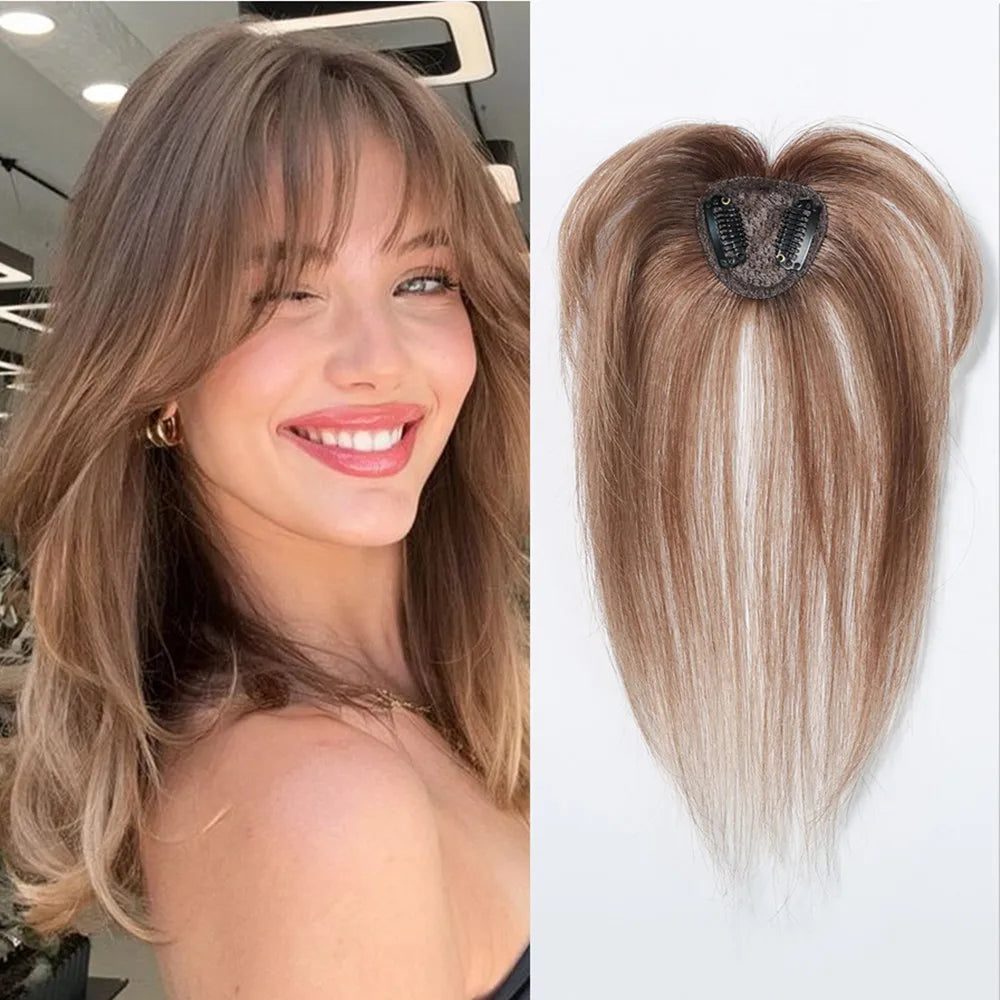

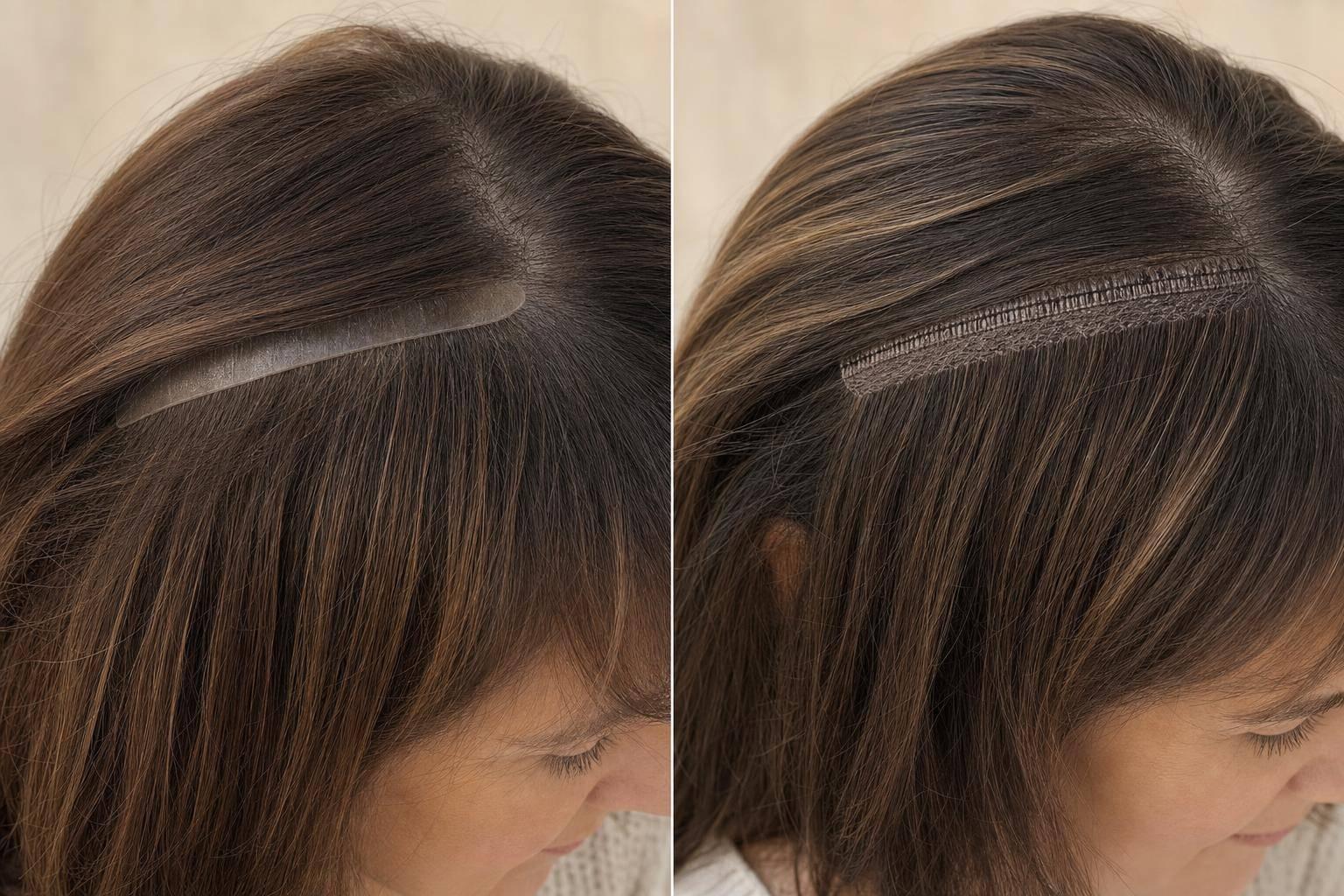
If I want the short answer: PU clip-ins sit flatter, show less at the roots, and suit fine hair better. Fabric-seam clip-ins are tougher and often suit thicker hair better.
Here’s the article in plain English:
- PU clip-ins use a thin polyurethane base
- Fabric-seam clip-ins use a stitched ribbon or lace base
- PU wefts are about 50% thinner than stitched wefts
- That lower profile can make PU wefts easier to hide near the part, crown, and hairline
- Fabric-seam wefts tend to feel bulkier at the root, but they usually handle repeat wear better
- A 7-piece PU set weighs about 105 g
- For fine or thinning hair, placement matters: keep wefts about 5 cm back from the hairline and part line
- PU sets often last around 3–6 months with gentle care
If my hair is fine, low-density, or thinning, I’d usually lean towards PU clip-ins. If my hair is medium to thick and I want a set that can take more day-to-day handling, I’d usually look at fabric-seam clip-ins instead.
The main choice comes down to three things: how flat the weft sits, how easy it is to hide, and how much wear it can take.
The Difference Between Classic and Seamless Clip-in Extensions | Go Sleek Hair
sbb-itb-08feb2f
Quick Comparison
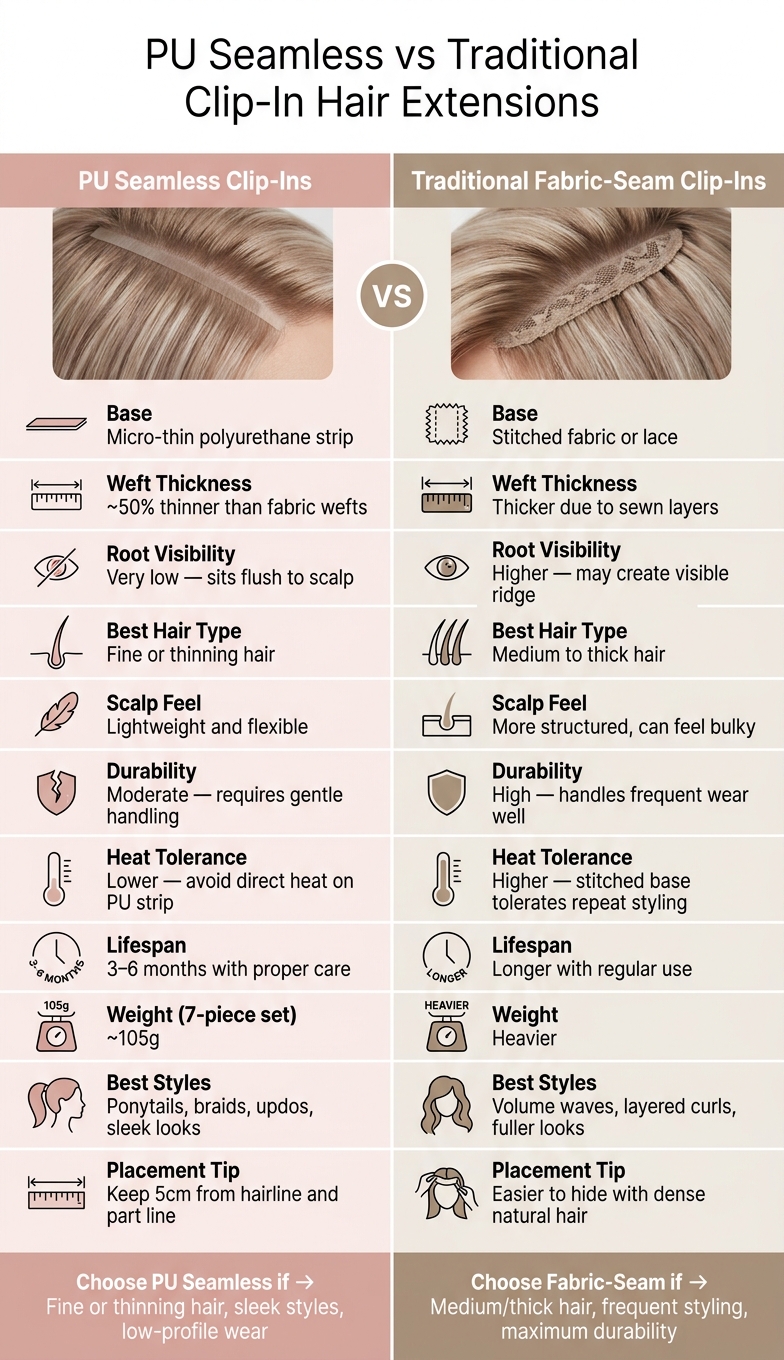
PU Seamless vs Traditional Fabric-Seam Clip-In Hair Extensions Compared
| Feature | PU Clip-Ins | Fabric-Seam Clip-Ins |
|---|---|---|
| Base | Thin PU strip | Stitched fabric or lace |
| Weft thickness | About 50% thinner | Thicker |
| Root visibility | Lower | Higher |
| Best for hair type | Fine or thinning hair | Medium to thick hair |
| Feel at scalp | Lighter and flatter | More structured |
| Daily durability | Lower | Higher |
| Heat around base | Needs more care | Handles repeat styling better |
| Best styling look | Sleek styles, ponytails, braids, updos | Volume-focused styles |
So before I buy, I’d match the weft type to my hair density, styling habits, and comfort needs.
Side-by-side comparison: PU seamless vs fabric-seam clip-ins
Here’s a quick look at how the two constructions compare before we get into the details. The biggest gaps come down to how flat the weft sits, how easy it is to spot, and how it feels in finer hair.
| Feature | PU Seamless Clip-Ins | Traditional Fabric-Seam Clip-Ins |
|---|---|---|
| Base material | Micro-thin PU skin weft | Stitched fabric or lace base |
| Thickness | About 50% thinner than traditional lace wefts [1] | Thicker because of sewn layers |
| Scalp fit | Lays flat and flush against the scalp | Slightly raised and may sit away from the head |
| Visibility | Very discreet, even in finer hair | Can create a visible bump or ridge if coverage is limited |
| Comfort | Lightweight and flexible | More structured, but can feel bulkier at the root |
| Fine hair suitability | Excellent for fine or thinning hair | Better suited to medium to thicker hair |
| Durability | Requires gentler handling | More durable for frequent wear |
| Styling finish | Flat, smooth and natural-looking | More voluminous, but bulkier at the roots |
Base material, thickness and how each weft sits against the scalp
The base is where the main difference starts.
With a PU weft, the hair is bonded or injected straight into the polyurethane layer. That creates a strip that sits close to the scalp, so it’s much harder to spot under natural hair. Think of it like the difference between something pressed flat and something stitched in layers - the flatter option tends to disappear more easily.
A fabric-seam weft works a bit differently. The hair is stitched onto fabric or lace, which places the weft slightly farther from the scalp. If there’s enough hair to cover it, it can blend well. But with fine hair, that seam has a higher chance of showing.
Which hair types and styling goals each construction suits
PU seamless wefts are usually the better match for fine or low-density hair. Their lower profile helps cut down the chance of the weft line showing through, and the lighter build puts less pressure on the roots. They also suit sleeker styles, like ponytails or braids, where more of the root area is on show.
Traditional fabric-seam wefts tend to work better for medium to thick hair, where there’s enough coverage to hide the seam with ease. They also suit people who want a weft that can handle more frequent styling and regular wear.
Put simply:
- Fine hair and low-profile styling usually pair better with PU seamless wefts
- Medium-to-thick hair and more regular wear often suit fabric-seam clip-ins better
Construction also shapes how the extensions wear, how well they hold their form, and how they respond to styling over time.
Visibility, comfort and suitability for fine or thinning hair
How visible the weft line is under different hair densities
Once you understand the base difference, the next step is simple: how does each weft look at the part and crown in day-to-day wear?
For fine or thinning hair, that's where the test happens. The part and crown don't give you much room to hide bulk. And if the seam is too thick, it can show fast. Seamless PU wefts are approximately 50% thinner than lace or fabric wefts [1]. That thinner base helps them sit flatter against the scalp, so they're less likely to leave a ridge you can see.
| Feature | PU Seamless Clip-Ins | Traditional Fabric-Seam Clip-Ins |
|---|---|---|
| Visibility | Much harder to detect; sits flush to scalp | Can create a visible ridge or bump |
| Root concealment | High; mimics natural hair growth direction | Moderate; stitched edge may show |
| Feel at the roots | Soft, flexible and lightweight | Can feel bulky on fine hair |
| Fine hair suitability | Best for low-density hair | Better suited to medium-to-thick hair |
For women with fine or thinning hair, the crown and part line are often the hardest spots to cover. There just isn't much density there to mask a thicker seam. A micro-thin PU base can be placed closer to the part line without the edge becoming visible [1][3].
Less visibility also tends to mean less bulk at the root. And less bulk usually means less pressure.
Comfort, weight and clip pressure during all-day wear
Comfort mostly comes down to how much weight your roots are carrying by the end of the day.
A standard 7-piece seamless PU set weighs around 105 g [4]. Because the PU base is soft and flexible, it moves with your head instead of sitting stiffly against it [2]. That can make a clear difference during all-day wear, especially if your hair is already under strain.
The clips matter too. Silicone-coated or rubberised clips can grip fine hair well without heavy teasing at the root. That's a big plus, because it helps cut tension on delicate strands [1][6].
Why fine or thinning hair often needs a lower-profile weft
Fine hair simply has less coverage to work with. So the extension base has less room to hide.
That's why a lower-profile weft often works better. It needs less natural hair over the top, and the flat PU build is usually easier to conceal for anyone dealing with reduced density.
Placement matters just as much as the weft itself. For fine hair, place seamless wefts at least 5 cm away from the hairline and part line. That gives enough natural hair to fall over the flat base [3]. It's also worth choosing a weight your hair can handle comfortably. If the set is too heavy, it can feel awkward and may not blend as well.
Durability, styling and day-to-day wear
How construction affects long-term wear
Once fit and concealment are sorted, durability and styling shape how each weft holds up day to day.
A PU weft sits flatter, but a stitched seam is usually tougher. Traditional fabric-seam clip-ins are made for repeat wear, and their stitched build tends to cope better with frequent brushing and general handling. Seamless PU wefts need a lighter touch to help avoid tearing or stretching over time [2][5].
With proper handling, a quality seamless PU set made from 100% Remy human hair will usually last around 3–6 months [4]. Heat matters here. High heat can cut that lifespan down, so it's best to stick to lower settings and keep direct heat away from the PU strip. Traditional wefts deal with heat better because the stitched base stands up to repeated heat styling more easily [1][5].
For PU wefts, product placement also matters. Avoid putting heavy conditioners or heat protectant straight onto the PU strip, as that can cause slippage or weaken the bond [3][5].
| Feature | Seamless PU Clip-Ins | Traditional Fabric-Seam Clip-Ins |
|---|---|---|
| Durability | Moderate; delicate base needs gentle handling | High; stitched construction tolerates frequent use |
| Heat tolerance | Lower; avoid direct heat on the PU strip | Higher; stitched base handles repeat heat styling |
| Styling finish | Flat, smooth and natural-looking | More voluminous, but bulkier at the roots |
Which styles each construction handles more easily
This is where the difference becomes easy to see in the mirror.
Seamless PU wefts suit sleek, polished styles best - straight blow-dries, high ponytails, half-up looks, and any style where the top section is on show. Because the base sits so flat, there's less of a ridge to hide [1][2].
Traditional wefts tend to work better for people chasing more volume. Think thick waves, layered curls, or a fuller finish where the firmer base can handle repeat styling with less fuss [1].
Updos are a good example of the trade-off. A flat PU base stays hidden in a way a stitched seam often can't, which makes it a stronger pick for low-profile wear, especially on fine hair [1][6].
How to decide if Silkara seamless Remy clip-ins are right for you
Matching your choice to your hair density, styling routine and comfort needs
If comfort and concealment matter most, it helps to look at your hair density and how you style your hair day to day.
Silkara seamless Remy clip-ins tend to suit fine to medium-density hair best when you want the flattest finish. The PU base sits flatter at the roots, so it’s easier to hide under finer strands. It also cuts down root bulk, which can feel better on sensitive scalps.
If your hair is denser, one set may not give you enough fullness through the ends. In that case, you may need two sets.
Once the fit looks right, the next step is shade matching. Use Silkara's Colour Match and Virtual Try-On before you order. And if the shade isn’t quite right, the 14-day colour exchange gives you a fallback.
After that, placement makes a big difference in how hidden the base looks. Keep the wefts away from the top of the crown and the hairline, and handle the PU base with care. That flatter, lighter finish works well for ponytails, braids and updos.
FAQs
Which clip-ins look most natural on fine hair?
Seamless PU clip-ins are the best pick for fine hair. Standard fabric-seam extensions can look bulky and leave visible ridges. By contrast, Silkara seamless PU clip-ins use an ultra-thin, flexible silicone base that sits flat against the scalp.
That lighter, lower-profile design blends in more naturally, feels more comfortable to wear, and puts less strain on delicate roots.
How many sets do I need for thicker hair?
For thicker hair, you can tailor the volume by adding as many wefts as you need to get the density you want. The Silkara full head set comes with 7 pieces, which helps create balanced, natural-looking results.
If your hair is on the thicker side, you may like the added fullness of classic-style construction. Clip-ins make it easy to place pieces through the crown, back, and sides, then change how many you wear from day to day for a smooth, natural blend.
How do I make PU clip-ins last longer?
Handle the delicate PU base with care. Wash it with a gentle, sulphate-free shampoo and conditioner, and try not to soak the PU layer itself. If you can, let it air-dry. When you’re not wearing it, store it in a cool, dry spot.
Styling takes a light touch too. Use a heat protectant, and keep hot tools away from the PU strip. Always take your extensions out before bed, then detangle them gently, starting at the ends and working upward.