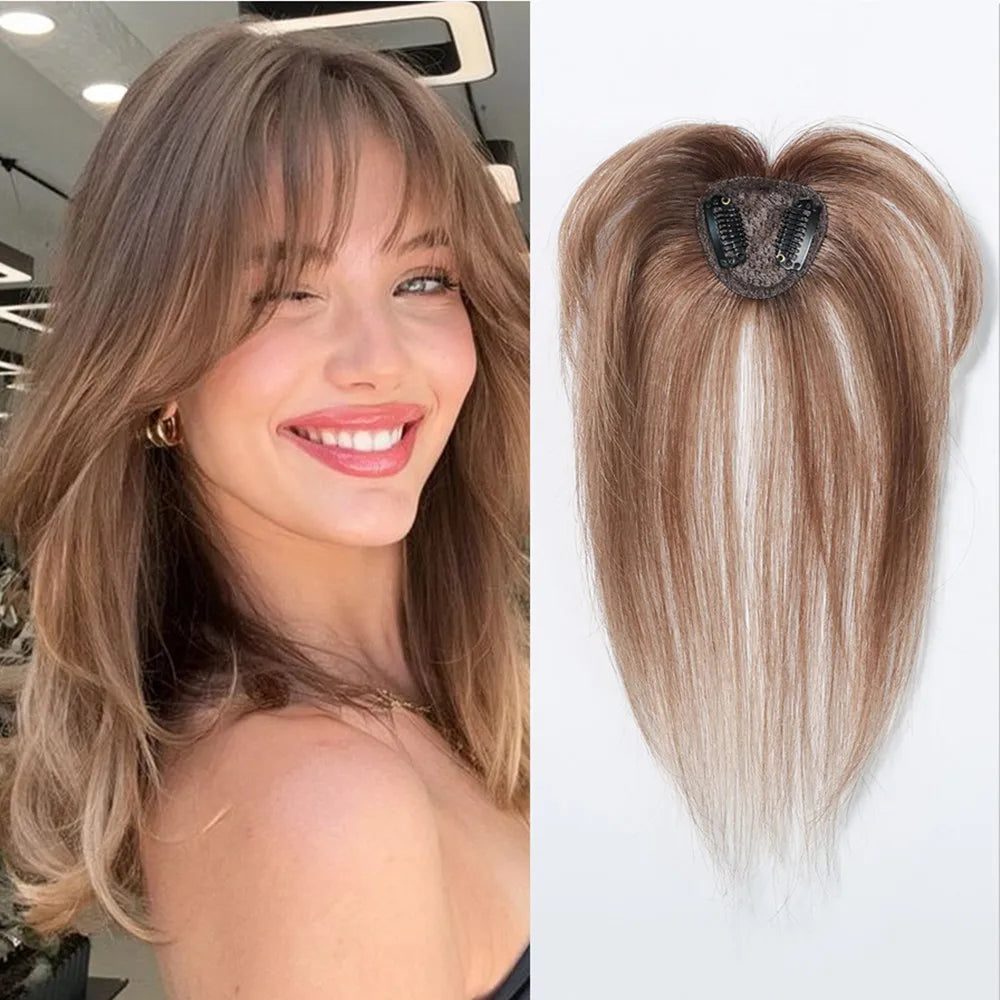

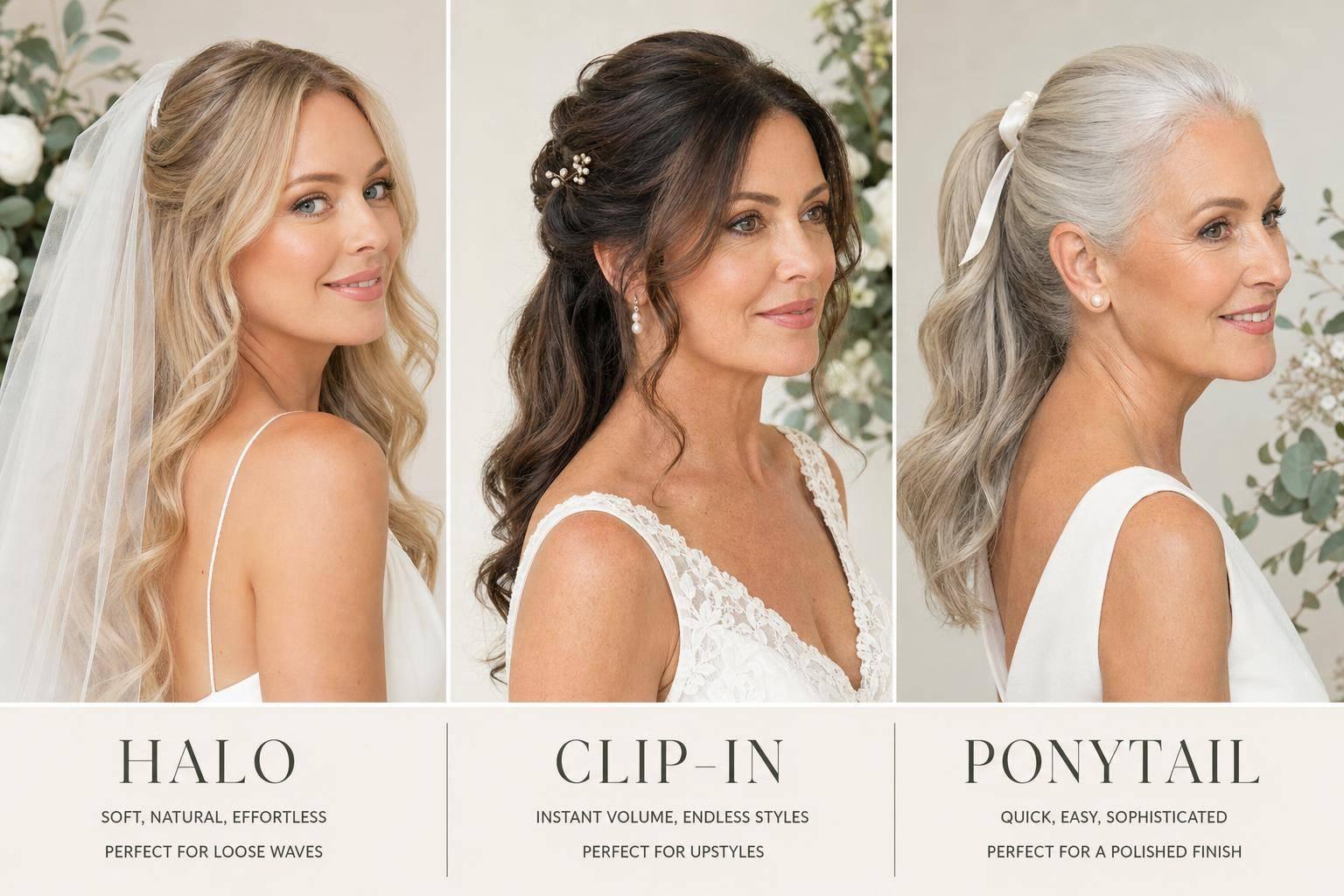
If I had to boil it down to one answer, it’s this: halo suits soft hair worn down, clip-ins suit half-up styles and updos, and a ponytail extension suits sleek ponytails or buns.
I’d choose based on three things: comfort, hold, and style control. For a wedding day that can run from early prep to late-night dancing, a halo is usually the lightest on fine hair, clip-ins give the most control over placement, and a ponytail extension often feels the most locked in for one set style.
- Halo: best for loose waves and soft volume
- Clip-in: best for buns, braids, twists, and half-up hair
- Ponytail: best for sleek ponytails and bun changes later in the day
- 100% Remy human hair: often looks less shiny in flash photos and tends to blend better than synthetic fibre
- Fine hair: halo or low-profile clip-ins usually work best
- Fast DIY option: halo or ponytail
Quick comparison
| Type | Best for | Comfort | Hold | Styling range | Apply time |
|---|---|---|---|---|---|
| Halo | Loose waves, hair down | High | Medium | Lower | 1–3 mins |
| Clip-in | Half-up, braids, updos | Medium | High | High | 10–20 mins |
| Ponytail | Sleek ponytails, buns | High | High | Low | Seconds to a few mins |
If you want hair that looks smooth in photos, feels good for hours, and stays put in wind or on the dance floor, I’d match the extension type to the hairstyle first, then check your hair thickness and how much time you have to get ready.
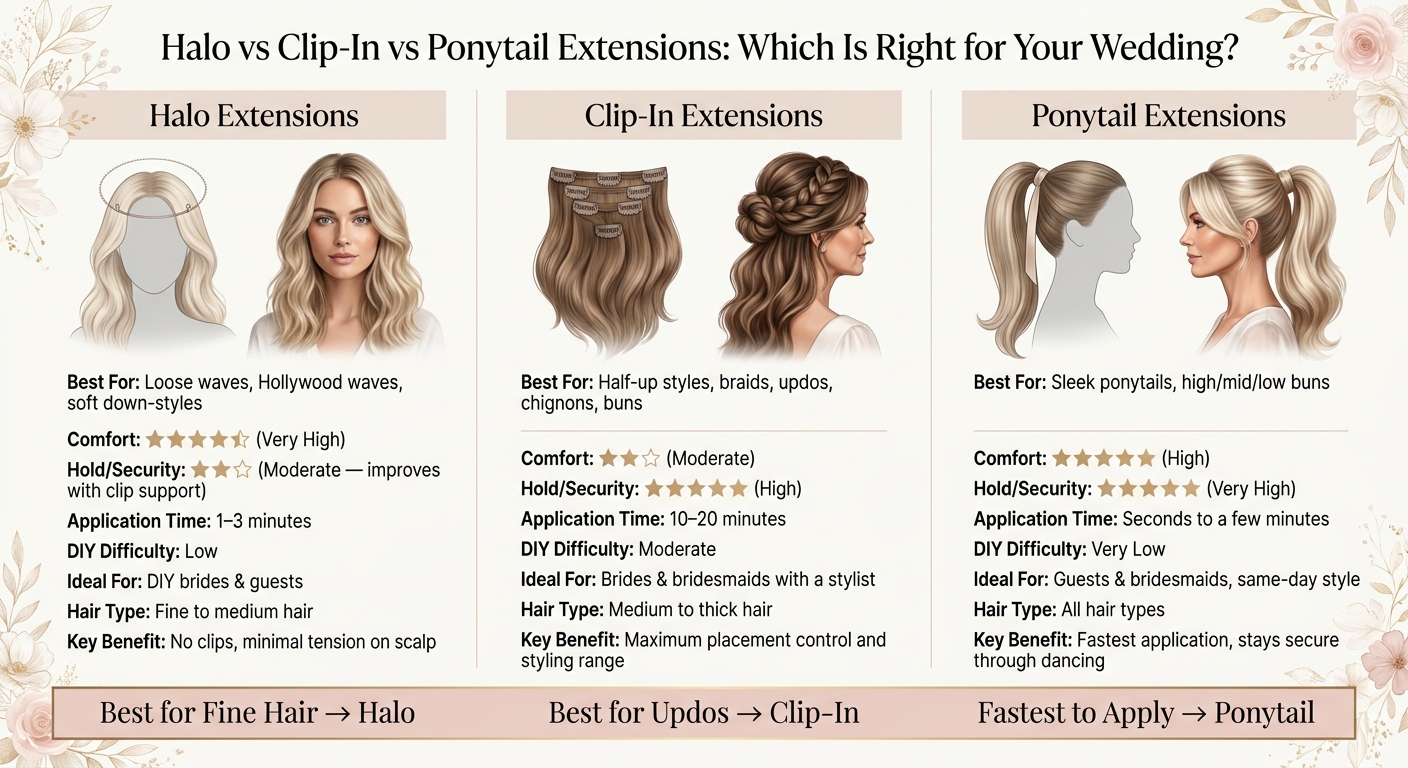
Halo vs Clip-In vs Ponytail Extensions: Wedding Day Comparison
Halo vs clip-in vs ponytail: comfort and security across a full wedding day
Comfort and hold need to last from first photos to the last dance.
How each extension type attaches to fine, medium or thick hair
Hair density changes how each option feels and how well it stays in place.
A halo sits on an invisible wire across the crown, so there are no individual clips tugging at your hair. That makes it the gentlest pick for fine or fragile hair. Silkara's Invisible Wire Halo also includes clip support, which helps limit shifting without adding pressure across the scalp.
Clip-in extensions attach at several points around the head, so you can control exactly where the volume goes. On medium to thick hair, that placement tends to blend neatly and feel secure. If your hair is finer, invisible clip-ins with ultra-flat silicone bases are a better match because they sit close to the scalp and help avoid a noticeable bump at the root [2][3].
A ponytail extension keeps most of its weight in one spot, which can make it feel comfortable while still staying put. Silkara's wrap-around ponytail uses a built-in clip plus a ribbon that wraps around the base of your natural ponytail. That setup helps anchor it in place without adding pressure across the rest of the scalp [7].
Which option holds best during photos, wind and dancing
Outdoor weddings can mean wind, humidity and a lot of movement, so attachment matters just as much as comfort.
For down-styles and loose waves, a halo with clip support works well in standard ceremony and photo settings. If you're planning more movement, clip-ins usually have the edge because each section is locked in separately. A few bobby pins over the clips can add another anchor point for dancing [3].
Ponytail extensions are the most secure choice for a busy wedding day. The clip-and-wrap design helps them stay put through hugs, photos and plenty of time on the dance floor [8].
| Extension Type | All-Day Comfort | Security | Best For | Trade-offs |
|---|---|---|---|---|
| Halo | Very high comfort; minimal tension | Moderate; improves with clip support | Fine hair, down-styles, Hollywood waves | Can shift if not fitted well |
| Clip-In | Moderate; can feel heavy over a long day | High | Updos, braids, targeted volume | May feel bulky or show in very thin hair |
| Ponytail | High; weight is centred in one area | Very high | Sleek ponytails, high buns, reception style changes | Best for one specific hairstyle |
With comfort and hold sorted, the next step is matching the right option to loose waves, half-up styles, ponytails and updos.
sbb-itb-08feb2f
Styling options and natural appearance: matching each extension type to your wedding hairstyle
Which extension type suits loose waves, half-up styles, ponytails and updos
Once comfort and hold are sorted, the next step is simple: pick extensions based on the hairstyle you want. Your wedding look should lead the decision. Brides often lean towards a cleaner, more polished finish, while bridesmaids and guests usually want something faster and easier to style.
Halos work best for soft styles worn down with even volume through the hair. They suit loose waves, Hollywood waves and soft curls. But they’re not a great pick for high updos or slicked-back looks, where the wire or weft can show.
Clip-ins are a good match for pinned styles because the wefts sit flat under the hair. They’re a strong option for low buns, chignons and half-up twists. They also help when you want extra volume in specific spots, like the crown or sides, instead of fullness all over.
Ponytail extensions are built for ponytails, whether high, mid or low. They can also work well for full buns, which helps if your hair is shorter and needs more body for an updo.
| Hairstyle | Best Extension Type | Blend Potential |
|---|---|---|
| Loose waves / Hollywood waves | Halo | High - blends into curls and waves |
| Half-up styles | Clip-in or Halo | High - targeted or all-over volume |
| Sleek ponytail | Ponytail extension | High - wraps around the base |
| Formal updo or bun | Seamless clip-ins | Excellent - flat bases stay hidden under pins |
Natural finish in photos is the next thing to check.
How to make extensions look natural in wedding photos
For natural-looking wedding photos, 100% Remy human hair tends to move more like your own hair, hold curls better and avoid the overly shiny look that synthetic fibre can show under flash [2][1]. For down-styles, match the extensions to the ends of your hair. For updos, match them to the root area that will stay visible.
Before ordering, use Silkara's free colour match and virtual try-on tools. Then, when styling, keep heat tools below 160–185°C and pin curls while they cool for a finish that lasts longer [6][3].
Once the look is locked in, application time becomes the last practical check.
Application time and choosing the right Silkara Hair option for your wedding role
Fastest options for DIY styling at home or a same-day style change
Once you’ve picked the hairstyle, timing is often what makes the call. On a wedding morning, every minute counts. That’s why ponytail extensions tend to win on speed, while halos are a simple pick for first-timers.
| Extension Type | Application Time | DIY Difficulty | Stylist Suitability | Ideal Wearer |
|---|---|---|---|---|
| Silkara Ponytail | Seconds to minutes [7][5] | Very low | Best for sleek looks | Guests & bridesmaids |
| Silkara Halo | 1–3 minutes [2][4] | Low | Best for down-styles | DIY brides & guests |
| Silkara Clip-Ins | 10–20 minutes [2][4] | Moderate | Best for updos, braids and buns | Brides & bridesmaids |
The table makes the choice pretty clear:
- Ponytail for the fastest switch
- Halo for easy at-home styling
- Clip-ins for the most control
If you need to change your look on the same day, the Silkara ponytail extension is the quickest path, especially for a reception ponytail done in minutes [7][2]. Halo extensions are the easiest DIY option for loose waves and soft volume because they use one piece on an invisible wire [2][4]. Clip-ins take a bit more time, but that extra setup gives a stylist better placement for shaped styles like chignons and braids [2][4].
One small tip that can save hassle later: wash your extensions once before the wedding day. Brand-new extensions can be a little too silky, which makes styling harder to hold. One wash helps them grip better and stay in place [3].
Silkara Hair recommendations by hairstyle and hair concern
Start with the hairstyle you want. Then look at any hair issue you’re trying to work around.
For loose waves and soft down-styles, the Silkara Invisible Wire Human Hair Halo is a strong fit, especially for brides. It sits on a hidden wire and blends evenly from ear to ear, with no clips that might show through fine hair [2][6].
For half-up styles and updos, Silkara seamless clip-in extensions give a stylist more control over where volume goes. That matters when you need fullness in certain areas while keeping the weft bases tucked under pins and twists. This option suits bridesmaids well [2][3].
For ponytails, Silkara Ponytail Hair Extensions give you a polished look in minutes. The wrap-around ribbon helps hide the base neatly, which is handy when you want the finish to look clean and smooth [7].
If your main concern is extra coverage around the crown or fringe, Silkara hair toppers and clip-in bangs can add shape and fullness without changing your haircut [7][8].
Leave time for a trial run before the wedding.
Once the style and fitting method are locked in, the next step is picking the option that suits both your hair type and your role on the day.
Conclusion: Choosing the right wedding hair extensions for your style, comfort and hair type
After looking at comfort, hold and styling flexibility, the final pick comes down to your hairstyle. The right wedding extension depends on your style, hair thickness and how long you plan to wear it.
Key takeaways for brides, bridesmaids and guests
| Your Style | Best Silkara Option | Why It Works |
|---|---|---|
| Loose waves or soft down-styles | Silkara Invisible Wire Human Hair Halo | Even volume from ear to ear, no clips, easy to apply yourself |
| Half-up or updo | Silkara Seamless Clip-In Extensions | Place them where you need them, and they stay tucked under pins |
| Ponytail or bun | Silkara Clip-In Ponytail | Fast length and volume for a polished finish |
For brides, bridesmaids and guests, the aim is simple: hair that looks like your own and feels comfortable all day. Silkara's halo, clip-in and ponytail range covers the main wedding looks, and free colour matching helps you get the shade right.
FAQs
Which wedding hair extensions suit thin hair best?
For thin hair, the right pick comes down to the look you want and how much freedom you need when styling.
Silkara halo extensions are a good match for thin to medium hair. They use a secure, damage-free invisible wire, which makes them easy to wear without putting stress on your hair.
If you want an up-do or a more detailed wedding style, clip-in extensions can also work well. The main thing is length: your natural hair should be at least 15 to 18 centimetres long so the extensions blend in smoothly and look natural.
Should I do a hair extension trial before the wedding?
Yes, a hair extension trial before your wedding is well worth doing. It gives you a chance to test your chosen hairstyle ahead of time and make sure you feel at ease with both the look and how the extensions sit in your hair.
It also helps to bring your extensions to the trial. That way, your stylist can check your hair’s texture and condition, then work the extensions into your chosen updo or style so everything blends nicely for a polished, confident finish on the day.
How do I match extension colour for wedding photos?
Match your extensions to the mid-lengths and ends of your natural hair, not the roots. Most hair has a mix of tones, so the roots usually aren't the best guide.
Check your colour in natural daylight for the closest match.
If you want a bit more peace of mind, use Silkara Hair’s free colour match service by sending a photo. You can also try the AI Virtual Try-On tool before you buy.