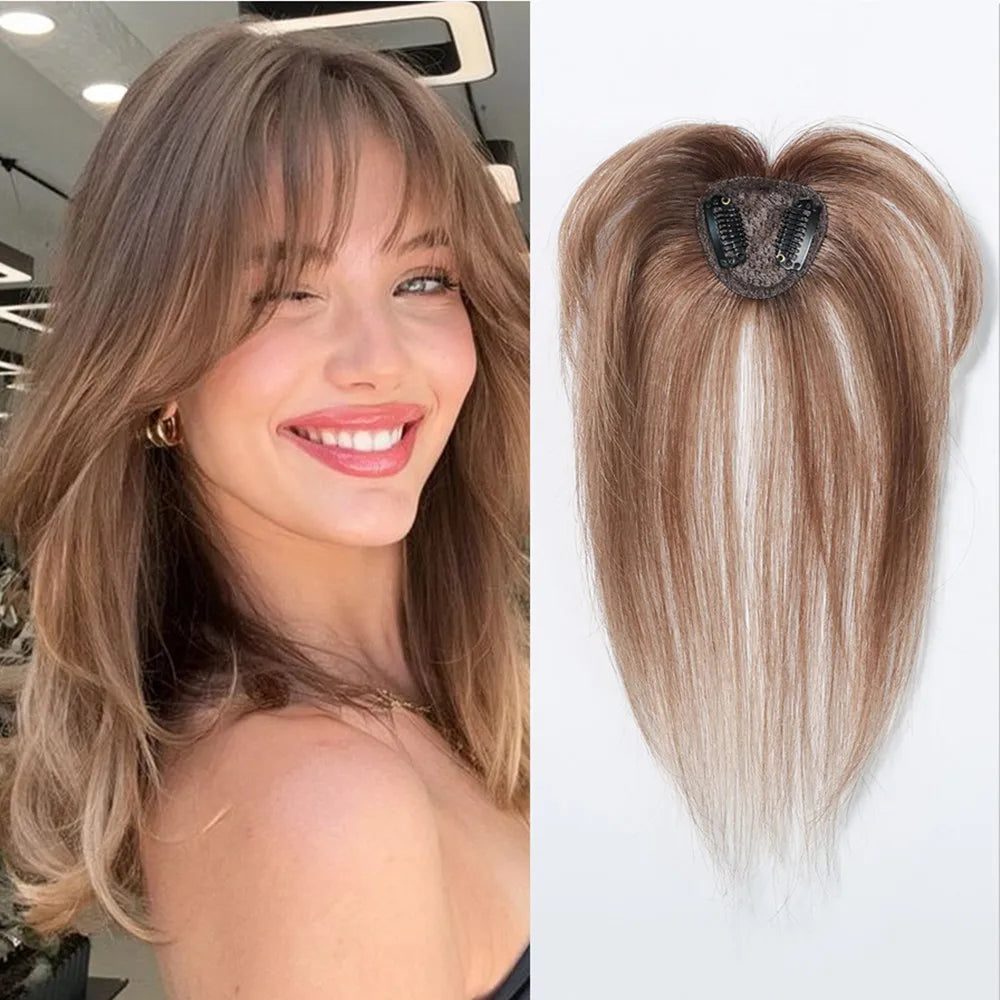

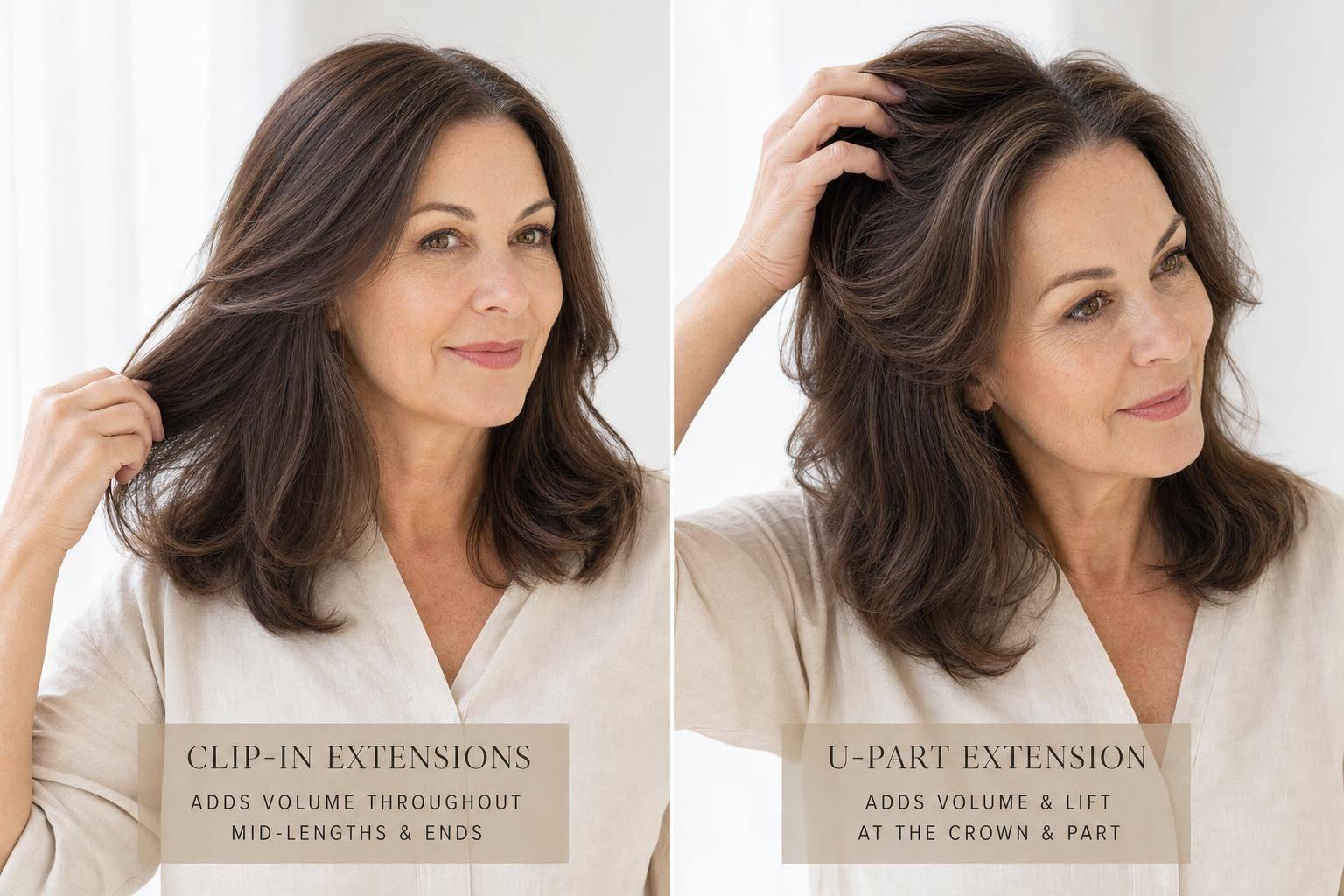
If you want more hair at the crown, I’d pick a U-part. If you want thicker lengths and ends, I’d pick clip-ins. That’s the short answer.
Here’s the simple breakdown:
- U-part extensions put more hair near the crown and upper back
- Clip-in extensions add more thickness through the mid-lengths, sides, and ends
- If your scalp shows at the part or crown, neither may be enough on its own
- In that case, a hair topper often makes more sense because it adds both volume and coverage
Before I choose, I’d check two things:
- Part test: if I can see my scalp in daylight without moving hair, crown coverage is the main issue
- Ponytail test: under 5 cm usually points to low density; 5–7.5 cm is medium; 10 cm+ is high
A few numbers help too:
- Clip-ins: about 5–15 minutes to put in
- U-part: about 10–20 minutes at first
- For fine but not sparse hair, 100–120 g clip-in sets are often enough
- For a closer blend, staying within about 5–10 cm of your own hair length usually looks better
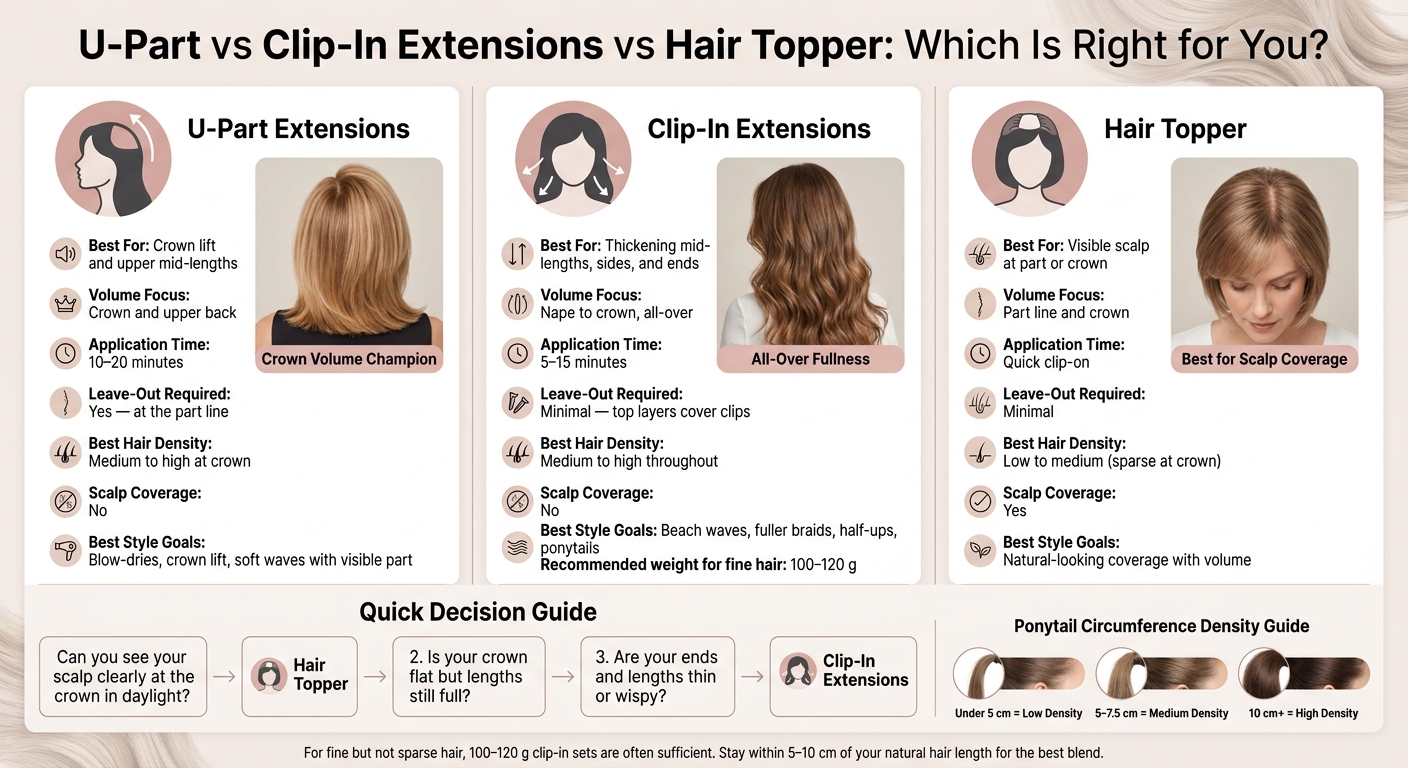
U-Part vs Clip-In Extensions: Which Gives Better Volume?
Quick Comparison
| Option | Best for | Where the volume sits | What you need from your own hair | Best pick if scalp shows? |
|---|---|---|---|---|
| U-Part | Crown lift | Crown and upper lengths | Enough hair at the part to cover the opening | No |
| Clip-Ins | Thickening lengths and ends | Sides, back, mid-lengths, ends | Enough top hair to hide clips | No |
| Hair Topper | Thinning at the top | Part and crown | Less leave-out needed | Yes |
So my rule is simple: if your top looks flat, think U-part. If your ends look thin, think clip-ins. If your scalp is easy to see, think topper.
That makes the choice much easier before you spend time or money on the wrong type.
sbb-itb-08feb2f
Volume, Coverage and Hair Density: What to Know Before You Choose
Volume and Coverage Are Not the Same Thing
Volume and coverage sound similar, but they solve different problems.
Volume is fullness through the lengths. Coverage is how well your hair hides the scalp at the part and crown. That gap matters. It tells you whether you need more body through the mid-lengths and ends, or better cover at the top.
Clip-ins are great for adding fullness through the lengths. But there’s a catch: you need enough hair on top to keep the clips hidden. If your crown is visible, coverage matters more than added length. In that case, a U-part hairpiece is often the better fit.
Once you’ve got that clear, the next step is simple: check your hair density at home.
How to Check Your Hair Density at Home
Use these two quick checks before you choose.
The part test: Wash and dry your hair without heavy product, then let it fall into its natural part. Stand near a window in bright natural light. If you can clearly see your scalp without moving any hair, your density is likely low. If you need to shift hair a bit to see scalp, you’re probably in the medium range. If scalp is hard to spot even when you move hair around, your density is high. This gives you a clear read on whether crown coverage is the main issue.
The ponytail test: Gather all your dry hair into a low ponytail at the nape and wrap a soft tape measure around the base. Less than 5 cm suggests low density; 5–7.5 cm is medium; 10 cm or more is high. [2][3][4] This helps you work out whether clip-ins are likely to blend well.
If your top layer is too sparse to hide clips, coverage at the crown matters more than extra length. Have a close look at that top layer in bright light. If it looks thin, place clip-ins lower on the head.
How U-Part and Clip-In Extensions Work
If density is the first thing to check, fit comes right after.
U-Part Extensions: Crown Volume with Natural Hair Left Out
A U-part extension is one hairpiece with a U-shaped opening at the crown. It adds fullness through the back and mid-lengths while keeping your part visible. You clip it in around the edge, then lay your own hair over the join so it stays hidden.
Because your own part is still showing, the result tends to look more natural. But there’s a catch: your crown needs enough density to cover the base. If the crown is sparse, the opening can show. U-part extensions are best for medium to high crown density.
Put simply, U-part pieces are made to add volume at the crown.
Multi-Piece Clip-In Extensions: All-Over Fullness from the Nape Up
Clip-in sets come with several wefts, each with small clips sewn along the top. You start applying them at the nape, then work upward in horizontal rows. Bigger wefts usually go lower down, while smaller pieces sit higher and closer to the sides. Your top layer of natural hair falls over the wefts and hides the clips.
This setup builds fullness from the bottom up. So instead of putting most of the volume at the crown, it thickens the mid-lengths and ends through the lengths.
Application, Blending and Styling
Clip-ins are often faster to apply, usually taking about 5–15 minutes[8]. A U-part often takes 10–20 minutes at first[1], since the crown section needs more exact placement and the single piece has to sit flat.
When it comes to styling, both can be worn straight, wavy or curled if they’re made from human hair or heat-safe synthetic fibre. For human hair, use heat protectant and start at about 120–150°C, keeping the temperature under 180°C[5][6][7]. With a U-part, the main job is blending your leave-out with the extension hair. With clip-ins, style your natural hair and the extensions together after all wefts are in, then lightly brush through the lengths so the texture blends.
| Feature | U-Part Extension | Multi-Piece Clip-Ins |
|---|---|---|
| Application time (approx.) | 10–20 minutes | 5–15 minutes |
| Volume focus | Crown and upper mid-lengths | Nape to crown, all-over |
| Leave-out required | Yes - at the part line | No - but top layers must cover the clips |
| Scalp visible at part | Yes | Usually no |
| Best density for blending | Medium to high at the crown | Medium to high throughout |
Now that you know how each system sits on the head, the next section shows which one gives better volume in different situations.
Which Gives Better Volume? A Side-by-Side Comparison
Neither option is better across the board. It comes down to where you want more fullness. If your crown needs help, one option makes more sense. If your sides, back, or ends feel thin, the other usually does a better job.
Here’s the quick comparison so you can match the issue to the right pick fast.
| Factor | U-Part Extensions | Multi-Piece Clip-Ins |
|---|---|---|
| Crown volume | Strong | Moderate |
| Side and back fullness | Moderate | Strong |
| Ends thickness | Moderate | Strong |
| Leave-out required | Yes - enough hair at the crown/part line to cover the opening | Minimal - the clips sit under the top layers |
| Scalp visibility | Relies on your natural part to cover the opening | Not designed to cover the part line |
| Best hair density | Medium to high at the crown | Medium to high for reliable blending |
| Best hairstyle goals | Smooth blow-dries and crown lift | Waves, braids, ponytails and length fullness |
When U-Part Extensions Work Better
Go with a U-part if your crown falls flat but your lengths still have enough hair to cover the opening. That’s what this option is made for.
The big thing is crown density. You need enough hair on top to sit over the U-shaped opening and hide the join. If your crown density is medium to high, the blend looks clean and natural. For everyday styles like a straight blow-dry or soft waves with a visible part, a U-part gives strong lift where you notice it most.
When Clip-In Extensions Work Better
Go with clip-ins if the issue is thin ends, sparse sides, or flat-looking lengths. A multi-piece clip-in set adds fullness through the back, sides, and lower lengths. That means curls look rounder, waves look fuller, and styles like half-ups or low ponytails feel thicker.
If you want beach waves, fuller braids, or a blow-dry with more body through the lengths, clip-ins are usually the better fit.
When Neither Option Is the Right Fit
Sometimes volume isn’t the main issue - coverage is. If you can see scalp at your part or crown without pulling your hair apart, either type of extension may fall short. U-parts still depend on your own part to blend, and clip-ins need enough hair on top to hide the wefts.
In that case, a Silkara Hair topper makes more sense. It sits directly over the thinning area, so you get both volume and scalp coverage.
How to Choose the Right Silkara Hair Option
Match Your Choice to Your Hair Density and Scalp Visibility
Start by checking your crown in natural daylight, ideally near a window. That quick check tells you whether you need extra fullness that blends with your own hair, or direct coverage where the scalp shows through.
| Your Situation | Best Silkara Option |
|---|---|
| Medium density at the crown, flat mid-lengths and ends | U-part extensions |
| Thin but not sparse all over, slim ponytail, wispy ends | Multi-piece clip-in set |
| Clearly visible scalp at the crown or along the part line | Silkara Hair Topper |
Use the table as a fast filter, then match the finer details.
If your crown has enough density to hide the U-part opening, go with a U-part extension. If the scalp is visible at the part, a Silkara Hair Topper is the better fit. If your hair is fine but not sparse, a lighter multi-piece clip-in set usually makes more sense. For fine, non-sparse hair, 100–120 g is a workable range [9][10].
Match Your Choice to Your Style Goal and Maintenance Preference
Once you know your density, your style goal becomes the last check.
A U-part works well for everyday crown lift, where most of the volume sits at the top. A multi-piece clip-in set is better when you want fullness from the nape right up through the lengths.
For either option, stay within about 5–10 cm of your natural hair length for the most believable blend [9][11]. Texture matters as much as colour. If the texture is off, the blend can look a bit obvious, even when the shade is close. Pick a texture that matches your natural pattern, use Silkara's free colour match by uploading a clear photo in indirect daylight, and check length and shape with the AI virtual try-on before buying.
Conclusion: The Best Choice Depends on Where You Need Volume
Choose the Silkara piece based on your density, scalp visibility, and styling goal. U-part extensions are best when your crown leave-out can hide the opening. Clip-in sets suit all-over fullness when the scalp doesn't look visibly thin. If thinning shows at the crown or along the part line, a Silkara Hair Topper gives you both volume and coverage in one piece.
Choose by density, scalp visibility, and where you want the volume to sit.
FAQs
Can I wear a U-part with fine hair?
Yes, you can wear a U-part extension with fine hair. The key is to pick a lightweight density and a smaller U-opening so it doesn’t drag down your natural hair or look obvious.
Application matters a lot here. If the extension is too heavy or placed poorly, it can put stress on your hair, lead to breakage, or leave the attachment points easy to spot. But with a lighter piece and careful placement, you can get a natural, comfortable blend.
Will clip-ins show in thin hair?
They can, especially if your hair is thin or fine and the extensions aren’t placed with care. In that case, the clips can show through or add extra bulk.
For a more seamless look, go with lightweight extensions and place the wefts below eyebrow level. That gives your natural hair enough coverage to keep the clips hidden and sitting flat.
When should I choose a topper instead?
Choose a hair topper if you need coverage for thinning hair or hair loss in one spot, like the crown, part line or hairline.
Unlike extensions, which add length and fullness all over, a topper blends into your own hair and gives coverage where it matters most. It’s a non-surgical way to hide sparse patches while keeping the look natural.